Expert analysis of Otto Dix’s Ursus, Sitting
Style: Verism · Genre: portrait
Artwork Analysis: "Ursus, Sitting" by Otto Dix
Style: Verism (a branch of New Objectivity)
Genre: Portrait
Significance of the Work:
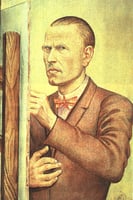
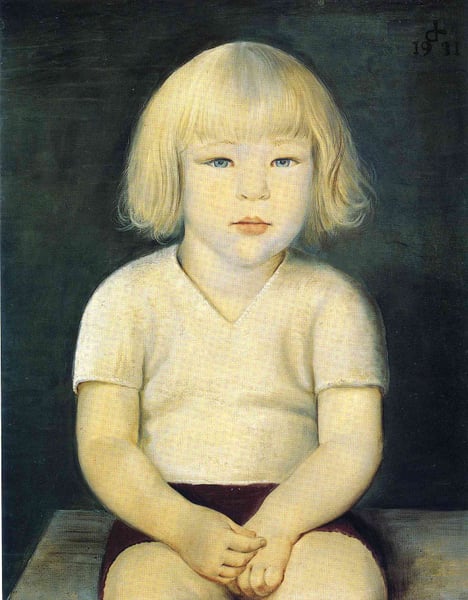
Otto Dix’s “Ursus, Sitting” stands as a quintessential example of Verist portraiture—the unflinching, hyper-realistic branch of the New Objectivity movement that emerged in Weimar Germany after World War I. Unlike the softer, romanticized portraits of earlier eras, Dix’s Verist approach strips away all idealization, presenting the sitter with surgical precision and psychological rawness. The painting’s significance lies in its embrace of the “ugly truth”: every wrinkle, asymmetry, and tension in the subject’s posture is rendered with cold, meticulous clarity, forcing the viewer to confront the physical and mental wear of modern life.
Dix’s treatment of the nameless “Ursus” (possibly a stage name or alias) transforms a simple seated figure into a mirror of societal decay. The composition is severe and confrontational—the subject is planted firmly in the frame, often with a stiff, almost mannequin-like stillness that betrays inner disquiet. Dix’s use of sharp, angular lines and a muted, acidic palette (ochres, grays, and putrid greens) reinforces a sense of estrangement and pathology. Every detail—from the tight lips to the tense hands—conveys a psychological autopsy, revealing the alienation and trauma that haunted post-war Germany.
In “Ursus, Sitting,” Dix refuses to flatter or console. Instead, he elevates the portrait to a social document, indicting a culture obsessed with surface respectability while rotting from within. The work’s significance is not merely technical (its virtuosic draftsmanship and uncanny verisimilitude) but ethical: it demands that we see the unvarnished condition of the human soul in an age of crisis. This painting, like Dix’s best Verist portraits, remains a powerful, unsettling testament to the artist’s conviction that truth—however harsh—is the only valid subject for art.
Visually similar
20 works with related composition and palette
Portrait of a Little Girl
Tsuguharu Foujita
Portrait of a girl
Wenzel Tornøe
Flora Currin
John Currin
Child
Cagnaccio di San Pietro
The boy
Moise Kisling
Portrait of a Girl
Gerda Wegener
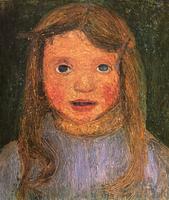
Head of a little girl (Elsbeth)
Paula Modersohn-Becker
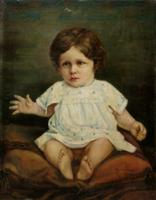
Sitting Child
George Demetrescu Mirea
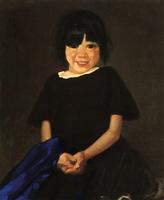
Portrait of a Girl in Black
George Luks
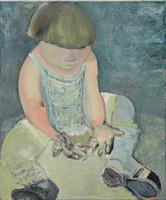
Empty Handed
Marlene Dumas
Portrait of a Young Boy
Edward Burne-Jones
Portrait of Kizette
Tamara de Lempicka
Irina Kustodieva
Boris Kustodiev
Portrait of a Girl
Józef Mehoffer
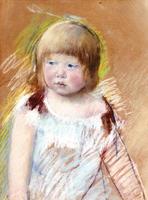
Child with Bangs in a Blue Dress
Mary Cassatt
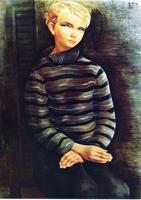
Young blond boy
Moise Kisling
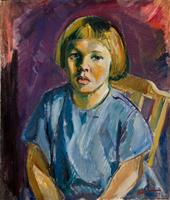
Taju
Sallinen Tyko
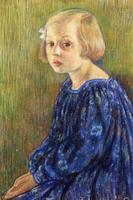
Portrait of Elizabeth van Rysselberghe
Theo van Rysselberghe
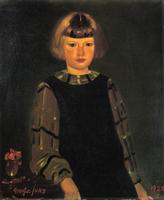
Portrait of Miss Ruth Breslin
George Luks
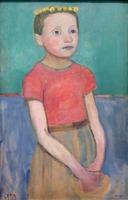
Portrait of an approximately 12-year-old Italian girl
Paula Modersohn-Becker