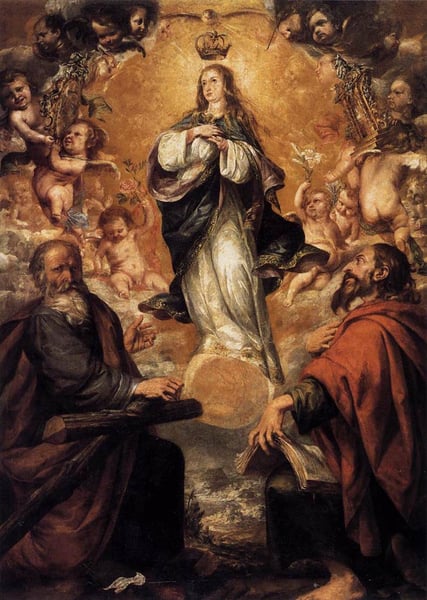
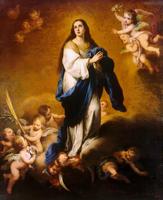
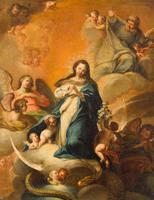
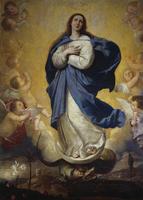
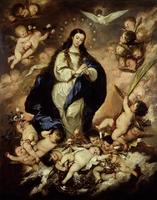
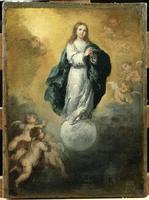
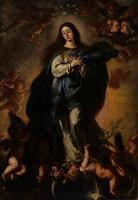
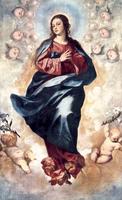
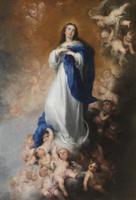
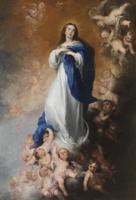
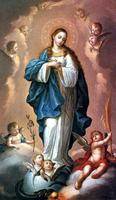
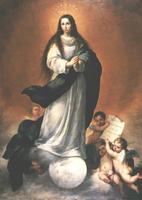
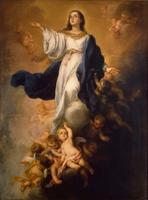
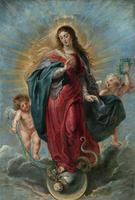
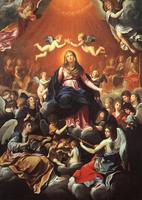
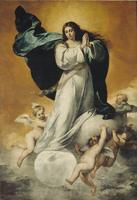
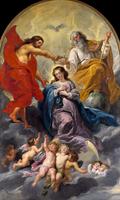
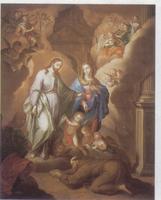
Based solely on the provided facts—a Baroque religious painting titled Virgin of the Immaculate Conception with Sts Andrew and John the Baptist by Juan de Valdes Leal—the work’s significance lies in how it encapsulates two central concerns of the Baroque period: doctrinal advocacy and the intensification of spiritual experience.
The subject itself, the Immaculate Conception (the doctrine that the Virgin Mary was conceived without original sin), was a highly charged and popular theme in Counter-Reformation Spain. By pairing the Virgin with Saints Andrew and John the Baptist, Valdes Leal not only reinforces the intercessory role of saints (a key Catholic tenet against Protestant critique) but also creates a layered theological dialogue. Saint Andrew, the first-called apostle, and John the Baptist, the herald of Christ, both point toward the Virgin as the pure vessel of salvation, emphasizing her unique status—a perfect Baroque device of using recognizable figures to clarify complex dogma.
Furthermore, as a Baroque work, this painting would typify the style’s hallmark strategies: dramatic contrasts of light and shadow (tenebrism), dynamic compositional movement, and an emotionally charged atmosphere. Valdes Leal, known for his intense, sometimes macabre religious imagery, would likely heighten the miraculous nature of the Immaculate Conception through expressive gestures and a sense of ecstatic motion, pulling the viewer into a direct, visceral encounter with the divine. In essence, the painting’s significance within its period is its role as a powerful, visual sermon for the faithful, blending theological precision with the Baroque desire to move the soul.