Expert Analysis: "The 1530 Siege of Florence" by Giorgio Vasari
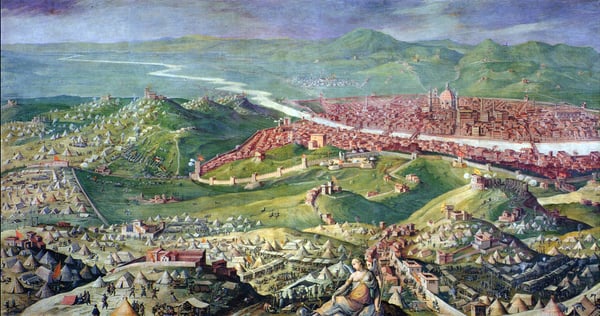
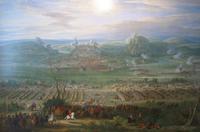
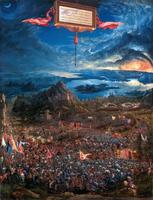
As a Mannerist battle painting, Vasari’s work is significant for its departure from the High Renaissance ideals of naturalism and balanced composition. Instead, it embraces the Mannerist hallmarks of artificiality, spatial complexity, and emotional tension. The siege—a historical event—is rendered not as a literal documentary record but as a dramatic, staged spectacle. Figures are likely elongated and arranged in crowded, serpentine patterns, heightening a sense of chaos and urgency while maintaining an elegant, almost theatrical artifice. This tension between violence and refinement captures the Mannerist fascination with difficoltà (difficulty) and stylistic virtuosity. Vasari’s choice of a contemporary historical subject also signals a shift toward narrating recent political events through a lens of artistic grandeur, blending chronicle with allegory. The painting thus stands as a key example of how Mannerist battle scenes prioritized expressive intensity and compositional dynamism over mimetic accuracy, influencing later Baroque depictions of warfare.