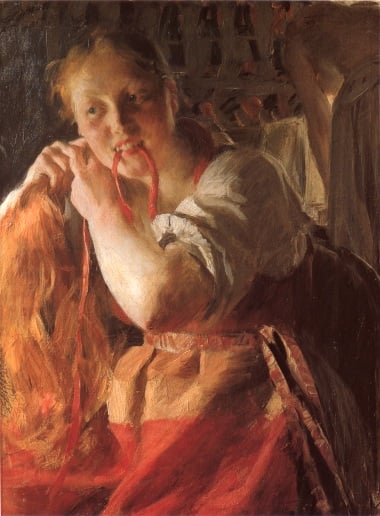
Expert analysis of Anders Zorn’s Margit
Style: Realism · Genre: genre painting
Anders Zorn’s Margit stands as a masterful example of Realist genre painting, capturing a candid, everyday moment with remarkable fidelity. The work’s significance lies in Zorn’s ability to elevate a simple, ordinary scene into a study of authentic human life, avoiding idealization in favor of truthful observation. As a genre painting, Margit focuses on a relatable, domestic or rustic subject—likely a figure absorbed in a common activity—emphasizing the artist’s commitment to portraying the real world as it appears. Within the Realist tradition, Zorn’s handling of light, texture, and atmosphere (inferred from his style) would have been crucial in making the mundane feel immediate and intimate, reflecting the movement’s broader goal of depicting contemporary life without artifice. This piece is especially significant for demonstrating how Zorn, through disciplined observation and technical precision, transformed a fleeting glimpse into a timeless representation of human simplicity.
Visually similar
20 works with related composition and palette
Young mother sleeping next to her baby
Ernst Meyer
The cherry girl
Émile Auguste Hublin
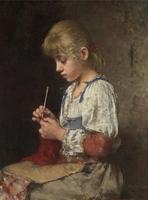
Portrait of a Young Girl
Alexei Harlamoff

LA BUONA NOVELLA
Arturo Ricci
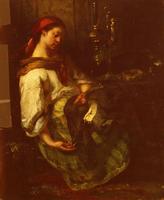
The Sleeping Seamstress
Jean-Francois Millet
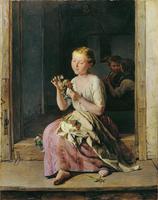
The Wreath Winder
Ferdinand Georg Waldmüller
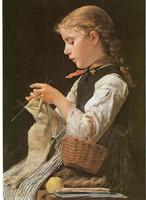
Knitting girl
Albrecht Anker
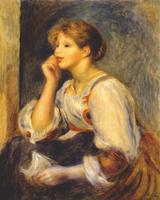
Girl with a letter
Pierre-Auguste Renoir
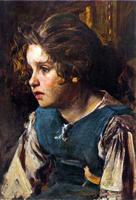
Lucy (Study)
Cesare Tallone

The Spinning Wheel
John Phillip
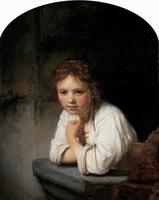
Girl in the Window
Rembrandt
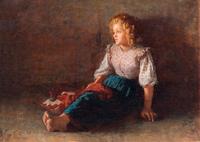
Young girl
Noè Bordignon

Young woman
Jean-Francois Millet
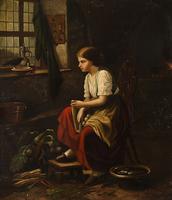
Junge Magd putzt das Gemüse
Anatole Vely French

Portrait of a young girl
Vincenzo Irolli
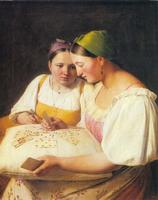
Cartomancy
Alexey Venetsianov

The successful letter
Adolf Eberle
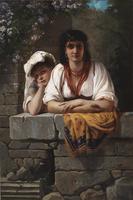
She is waiting for him
Elisabeth Jerichau-Baumann
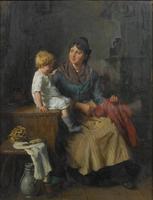
The new dress
Felix Schlesinger
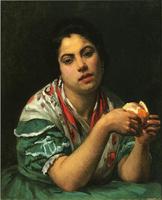
Peasant Woman Peeling an Orange
Mary Cassatt