Analisi esperta di Mulatto di Frans Hals
Stile: Baroque · Genere: portrait, tronie
Expert Analysis of "Mulatto" by Frans Hals
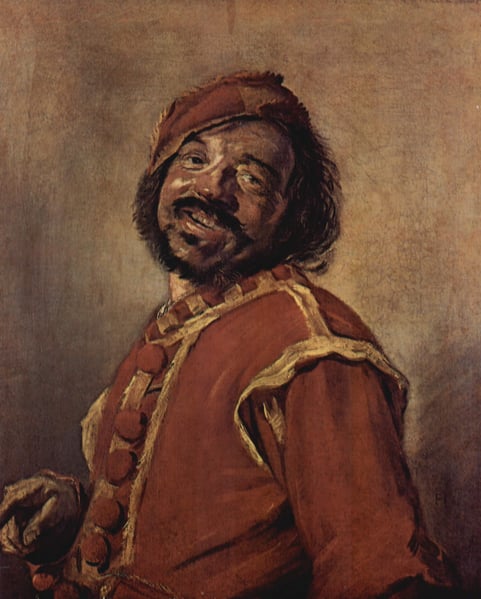
Frans Hals’s "Mulatto" is a striking example of Baroque portraiture, specifically a tronie—a study of a character type rather than a commissioned likeness of a specific individual. Within the Baroque context, Hals is celebrated for his revolutionary loose brushwork and ability to capture momentary expression, and this work exemplifies those traits.
The subject’s identity as a “mulatto” (a term used historically for a person of mixed European and African ancestry) is significant for the period. In the 17th-century Dutch Republic, portraits of non-European individuals were rare outside ethnographic or allegorical contexts. By rendering this figure as a tronie, Hals elevates the subject to the same artistic dignity he afforded to Dutch burghers and peasants, focusing on individual character and emotion rather than exoticism or stereotype. The direct, engaging gaze and subtle play of light across the face—hallmarks of Baroque tenebrism and psychological immediacy—invite the viewer into a moment of shared humanity.
Technically, the painting showcases Hals’s signature energetic brushstrokes, which create a sense of vitality and spontaneity. The skin tones are rendered with nuanced warmth, while the dark background and simple costume push the sitter’s face into prominence. As a Baroque tronie, "Mulatto" stands out not only for its masterful execution but for its inclusive, empathetic vision—a testament to Hals’s ability to find universal character in the particular, and a rare, humanizing portrait of diversity in 17th-century European art.
Museum / Gallery
Visivamente simili
20 opere con composizione e palette affini
Peeckelhaering (The Jolly Reveller)
Frans Hals
The cellist
Maurice Quentin de La Tour
Juan de Pareja
Diego Velazquez
Portrait of a Seated Man
Frans Hals
The Tailor ('Il Tagliapanni')
Giovanni Battista Moroni
Portrait of Vincenzo Mosti
Titian
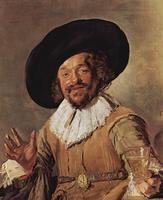
The Merry Drinker
Frans Hals
Portrait of Sir John Mennes
Anthony van Dyck
Portrait Of Joris de Caullery
Rembrandt
Joris de Caullery
Rembrandt
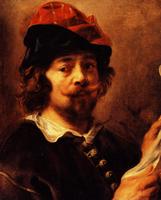
Self-Portrait
Jacob Jordaens
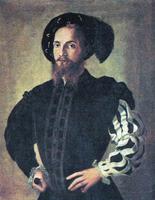
Cesare Borgia
Sebastiano del Piombo
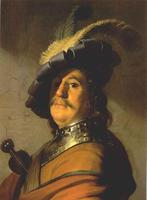
A Warrior
Rembrandt
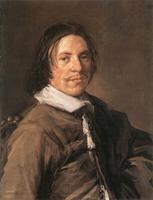
Vincent Laurensz. van der Vinne.
Frans Hals
The broom maker
Francisco Herrera
Portrait of a bearded man, bust length, in a red doublet
Rembrandt
The Warrior
Jean-Honore Fragonard
Lorenzo de Medici 'The Magnificent'
Giorgio Vasari
The Buffoon Calabacillas, mistakenly called The Idiot of Coria
Diego Velazquez
Falstaff
Eduard von Grützner