Analisi esperta di Snow Tree di Eyvind Earle
Stile: Magic Realism · Genere: landscape
Expert Analysis: "Snow Tree" by Eyvind Earle
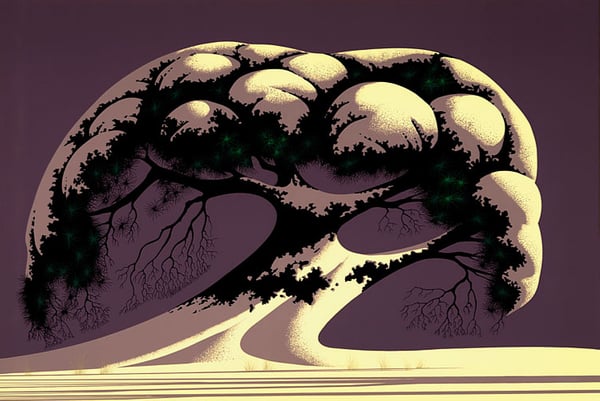
Eyvind Earle’s "Snow Tree" stands as a masterful exemplar of Magic Realism in landscape painting. The work transforms a seemingly ordinary winter scene into a visionary tableau, where the mundane and the miraculous coexist with quiet authority.
Key Significance within Magic Realism:
- Heightened Reality: Earle does not merely depict a snow-covered tree; he elevates it into a sculptural, almost geometric presence. The tree’s branches are rendered with crisp, decisive contours, creating a pattern that feels both organic and meticulously designed. This precision blurs the boundary between observed nature and imagined order—a hallmark of Magic Realism.
- Light as Enchantment: The snow is treated not as cold matter but as a luminous surface, catching an otherworldly light. Shadows are deep and saturated—often with blues, purples, or cools—while highlights glow with an inner radiance. This compositional use of light lends the scene a suspended, timeless quality, as if time itself has crystallized alongside the frost.
- Stylized Detail: Earle’s background in animation and his signature graphic style infuse the landscape with a sense of decorative rhythm. Every branch, every snow-laden bough is articulated with a care that borders on the obsessive, yet the overall effect is lyrical rather than rigid. This tension between meticulous control and dreamlike atmosphere is central to his contribution to Magic Realism.
Genre Significance (Landscape):
- “Snow Tree” redefines the landscape genre by treating nature as a stage for psychological and spiritual presence. Unlike the Romantic sublime or Impressionist transience, Earle’s winter landscape is cool, detached, and deliberately composed—inviting contemplation rather than emotional immersion. The tree becomes an icon, a silent witness, and a symbol of endurance.
- The work also reflects Earle’s unique place in mid-20th-century American art: a bridge between the precision of Pre-Raphaelite detail, the flatness of modernist design, and the narrative wonder of magic realism. His landscapes often feel like inhabited worlds—empty of people, yet full of personality.
Conclusion: In "Snow Tree," Eyvind Earle achieves the core promise of Magic Realism: making the natural world feel enchanted without abandoning its recognizable form. The painting’s significance lies in its ability to make us see snow and bark anew, as if for the first time—through a lens of quiet, deliberate magic.
Visivamente simili
20 opere con composizione e palette affini
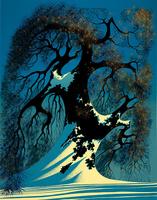
Winter Bonsai
Eyvind Earle
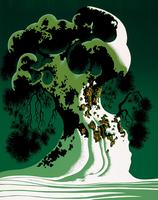
Snow Covered Bonsai
Eyvind Earle
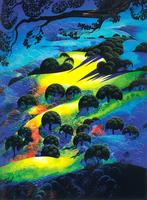
Fading Sunset Flame
Eyvind Earle
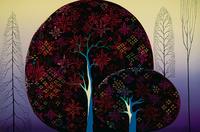
A Tree Poem
Eyvind Earle
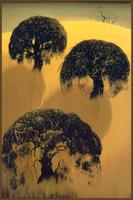
Three Oaks
Eyvind Earle
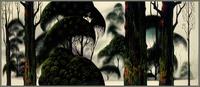
Forest Magic
Eyvind Earle
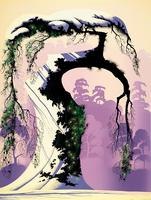
Norway Pine
Eyvind Earle
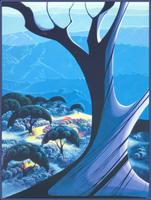
Purple Treeand Mountains
Eyvind Earle

Santa Ynez Oaks
Eyvind Earle
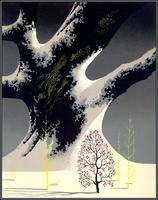
Winter Oak
Eyvind Earle

California Tapestry
Eyvind Earle

Bonsai
Eyvind Earle
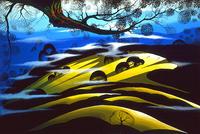
Morning Fields
Eyvind Earle
Climbing Oaks
Eyvind Earle

Morning Mist
Eyvind Earle

Garden of Dreams
Eyvind Earle
Snow Trees
Eyvind Earle

Toccata and Fugue
Eyvind Earle

Cattle Country
Eyvind Earle
Green Forest
Eyvind Earle