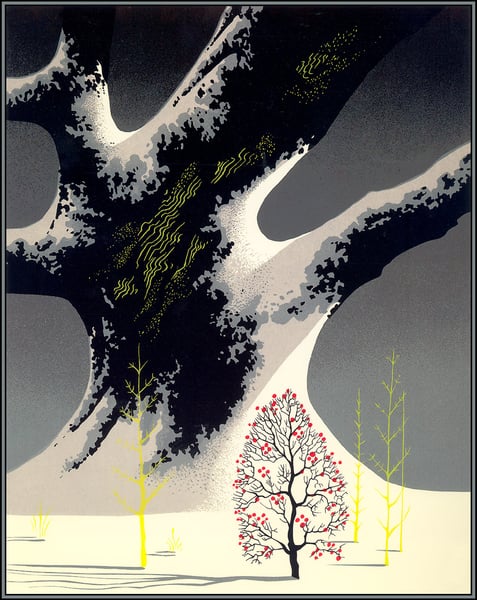
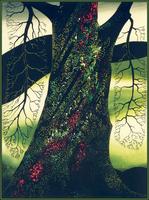
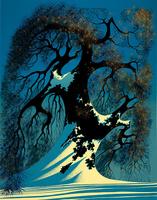
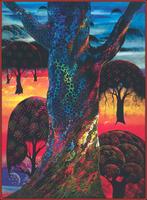
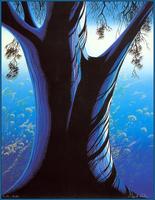
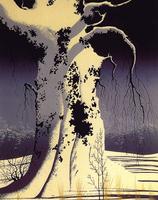
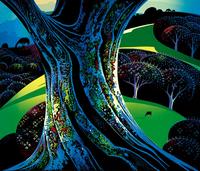
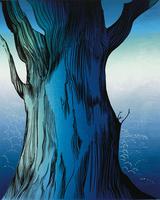
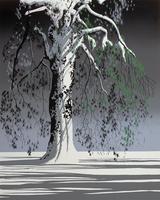
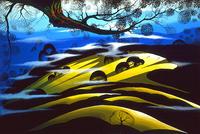
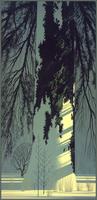
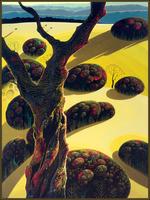
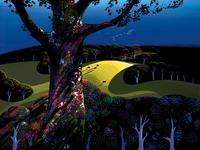
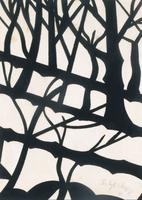
Eyvind Earle’s Winter Oak stands as a quintessential example of Magic Realism in landscape painting. The work transforms a seemingly ordinary winter scene into a realm where meticulous naturalism meets the uncanny. The oak tree is rendered with botanical precision, yet its stark, skeletal form against a luminous, almost unnatural sky imbues the composition with a dreamlike stillness. Earle’s signature use of sharp contrasts—deep shadows against glowing highlights—and his meticulous, flattened sense of space create a hyper-real clarity that feels both tangible and otherworldly. The significance of Winter Oak lies in its ability to fuse the familiar with the fantastical, elevating a simple arboreal subject into a symbol of resilience and mystery. Within the Magic Realist tradition, Earle’s work exemplifies how landscape can be simultaneously grounded in precise observation and elevated by a transcendent, almost meditative atmosphere, marking a unique contribution to mid-20th-century American art.