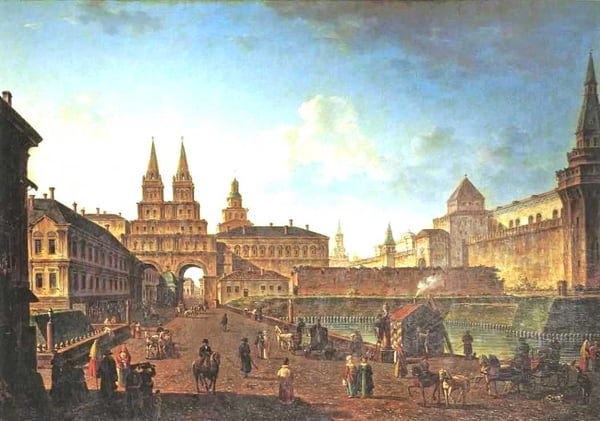
View of the Voskresensky and Nikolsky Gates and the Neglinny Bridge from Tverskay Street in Moscow
Dettagli
Analisi esperta di View of the Voskresensky and Nikolsky Gates and the Neglinny Bridge from Tverskay Street in Moscow di Fyodor Alekseyev
Stile: Neoclassicism · Genere: veduta
This painting, View of the Voskresensky and Nikolsky Gates and the Neglinny Bridge from Tverskay Street in Moscow (c. 1811), by Fyodor Alekseyev, is a quintessential example of the veduta genre within Russian Neoclassicism. Its significance lies in how it masterfully combines topographical accuracy with the ordered, harmonious ideals of the Enlightenment, serving both as a historical document and a work of artistic idealization.
Significance within its Style and Period:
-
Pioneer of the Russian Veduta: Alekseyev, often called the "Russian Canaletto," was instrumental in elevating the cityscape from a simple record to a refined artistic genre in Russia. This painting exemplifies his ability to transform a bustling urban scene—Moscow's Tverskaya Street, the city's main thoroughfare—into a balanced, serene composition. The clear recession of space, the precise rendering of the gates and the bridge, and the warm, even light all reflect Neoclassicism's preference for logic and clarity over Baroque drama.
-
Document of Urban Transformation: Created in the wake of the devastating Fire of Moscow (1812, though painted just before), the work captures Moscow as it was being reshaped by Neoclassical planning. The Voskresensky (Resurrection) Gates, the Nikolsky (St. Nicholas) Gate of the Kremlin, and the Neglinny Bridge are depicted with archaeological precision. This is not merely a pretty view—it is a record of a city in transition, where medieval fortifications (the gates) are integrated into a broader, more rational street plan. The painting thus holds immense historical value, freezing a moment of Moscow's architectural history.
-
Harmonizing Nature and Architecture: True to Neoclassical aesthetics, Alekseyev tempers the stone and brick of Moscow with a human scale. Small figures in period dress animate the foreground, their orderly presence echoing the compositional balance. The sky is placid, and the architecture—particularly the triumphal arch-like gates—evokes the grandeur of ancient Rome, a key Neoclassical reference. By placing these classical allusions in a distinctly Russian context, Alekseyev asserts Moscow's place in a universal, civilized order.
In summary, this artwork is significant because it perfects the Neoclassical veduta in Russia: it is at once a faithful visual chronicle of Moscow's historic core and a calm, idealized vision that aligns Russian urbanity with the timeless principles of classical art.
Museum / Gallery
Visivamente simili
20 opere con composizione e palette affini
View of Voskresenskiye (Resurrection) and Nikolskiye Gates
Fyodor Alekseyev
View of Moscow Near the Iversky Gate of the Kremlin
Fyodor Alekseyev
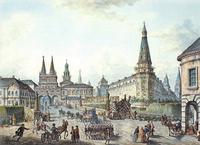
View of Voskresenskiye (Resurrection) and Nikolskiye Gates
Fyodor Alekseyev
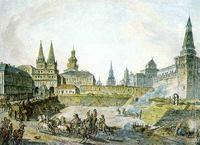
View of Voskresenskiye (Resurrection) Gates of Kitay gorod, Nikolskye Gate of Kremlin and Neglinny bridge.
Fyodor Alekseyev
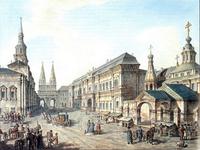
North side of Red Square
Fyodor Alekseyev
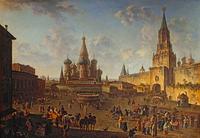
Red Square, Moscow
Fyodor Alekseyev
Church of St. John the Baptist, Borovitskaya tower and Stablings prikaz (department) in the Kremlin
Fyodor Alekseyev
View of Nikolskaya tower and gates of Moscow Kremlin and the moat in place of present day graveyard near Kremlin Wall and part of Red Square
Fyodor Alekseyev
View of the Kremlin from the Troitsky Gate
Fyodor Alekseyev
View of Moscow
Maxim Vorobiev
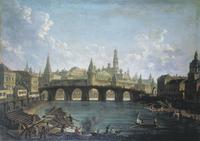
View of the Kremlin and the Kamenny Bridge in Moscow
Fyodor Alekseyev
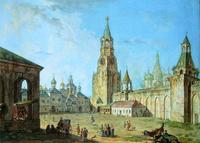
View from the Kremlin's Spassky Gate
Fyodor Alekseyev
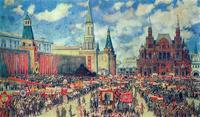
The 1st May Demonstration on The Red Square at 1929
Konstantin Yuon
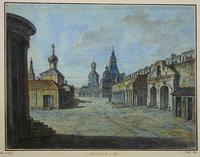
Novaya square
Fyodor Alekseyev
Entry into the Kremlin through the Trinity Gates 2 (15) November 1917
Konstantin Yuon
View of the Sovereign's Palace and the Church of the Annunciation in the Rye yard
Fyodor Alekseyev
View of Vladimirskiye (Nikolskiye) Gate of Kitai gorod
Fyodor Alekseyev
View of Lubyanka
Fyodor Alekseyev
Illumination of Moscow
Vasily Surikov
Terem and Church of Our Savior in a pine forest in the Kremlin
Fyodor Alekseyev