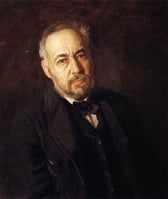
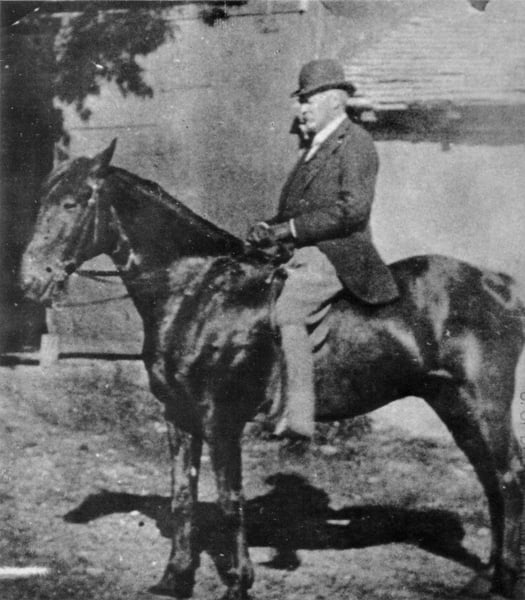
Analisi esperta di Photograph di Thomas Eakins
Stile: Realism · Genere: photo
Expert Analysis: "Photograph" by Thomas Eakins
Thomas Eakins’s “Photograph” stands as a pivotal work within the Realist movement, not because of its subject alone, but because of its revolutionary function within the artist’s practice. While Eakins is celebrated as a painter, his use of the camera was groundbreaking—he treated the photographic medium not as an end in itself, but as a scientific tool for capturing truth, motion, and anatomical precision.
Significance within Realism
-
Realism’s Core Mission: Realism sought to depict contemporary life with unidealized, empirical accuracy. Eakins embraced photography to further this goal, believing the camera could record visual facts with an objectivity that the human eye and hand might miss. His photographs directly informed his most famous paintings, such as The Gross Clinic and The Swimming Hole, providing a rigorous basis for composition, perspective, and musculature.
-
Pioneering Photo-Study Method: Eakins was among the first American artists to systematically use photography as a preparatory tool. He photographed nude models, athletes, and even cadavers to study anatomy in motion. This “Photograph” is likely one such study—a raw, unvarnished record of a figure or scene, stripped of sentimentality. It embodies the Realist ethos by prioritizing documentation over aesthetic manipulation.
-
Intersection of Art and Science: Eakins’s photographic work bridges art and early modern science. He utilized multiple exposures and sequential images to analyze human and animal locomotion (predating Muybridge’s famous studies). This “Photograph” thus serves as both an artwork and a scientific document, reflecting the 19th-century fascination with empirical observation.
Artistic and Technical Innovation
-
Unflinching Directness: Unlike contemporary pictorialist photographers who softened images for artistic effect, Eakins’s photographs are sharply focused, often starkly lit, and devoid of romanticism. This approach aligns with Realism’s rejection of academic artifice.
-
Influence on Later Studies: Eakins’s photo-studies directly influenced his students (including Thomas Anshutz) and validated the camera as a legitimate resource for painters. His work helped normalize photography as a serious artistic and pedagogical instrument.
Conclusion
“Photograph” by Thomas Eakins is significant because it demonstrates the fusion of art, science, and the Realist commitment to truth. It marks a moment when the camera became an extension of the painter’s eye—a tool for capturing the objective world with unprecedented fidelity. In this image, Eakins demonstrates that the photographer’s lens, like the realist painter’s brush, could reveal the fundamental structures of life, movement, and the human form.
Visivamente simili
20 opere con composizione e palette affini
The General at the River
Henri de Toulouse-Lautrec
Robert Bakewell
John Boultbee
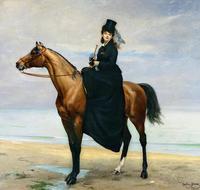
Equestrian Portrait of Mademoiselle Croizette
Carolus-Duran
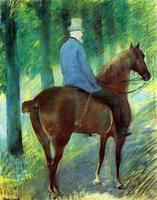
Mr. Robert S. Cassatt on Horseback
Mary Cassatt
GENTLEMAN RIDER
Wojciech Kossak
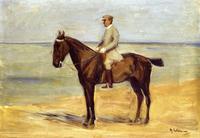
Rider on the Beach Facing Left
Max Liebermann
The Horse
Frank Eugene
Maria Mamontova Riding a Horse
Valentin Serov
Portrait équestre de François Adolphe Akermann
Franz Xaver Winterhalter
Lady in White Dress on Horseback Riding
Max Slevogt
Grey Horse
Algernon Talmage
Anna Margit, Hős 1973
Anna Margit
Rockingham
John Frederick Herring Sr.
Launcelot, Winner of the Great St Leger Stakes at Doncaster
John Frederick Herring Sr.
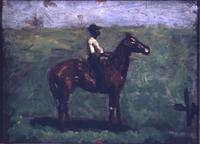
Negro boy on a bay horse
Thomas Eakins
'elis', the Winner of the Great St. Leger Stakes at Doncaster
John Frederick Herring Sr.
King Christian IX on Horseback. Study.
Otto Bache
Portrait of Ludwig Blankenhorn as First Lieutenant
Georg Scholz
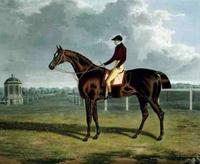
British Racehorse St Patrick
John Frederick Herring Sr.
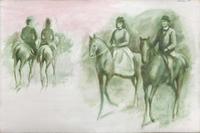
In the Bois de Boulogne
Oleg Holosiy