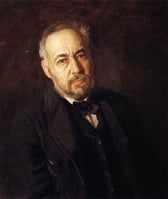
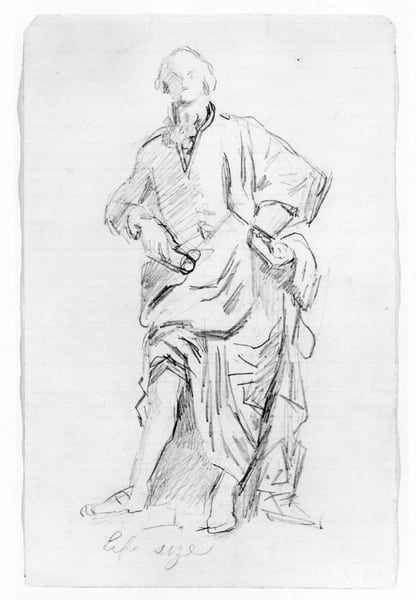
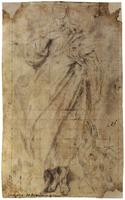
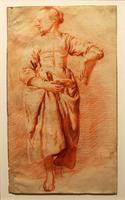
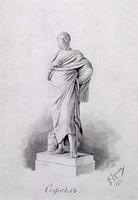
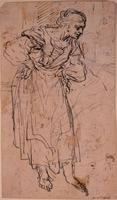
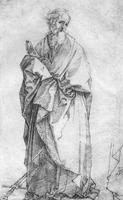
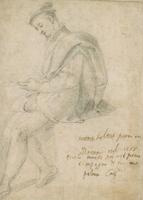
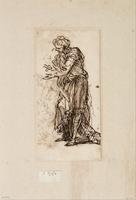
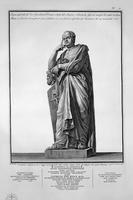
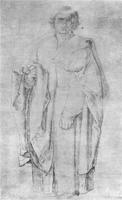
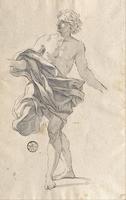
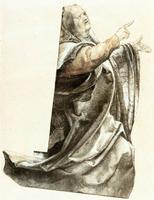
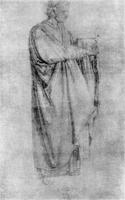
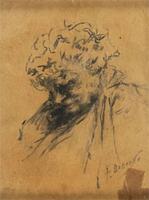
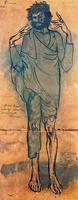
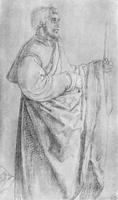
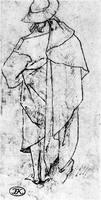
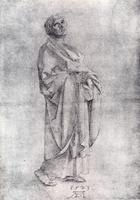
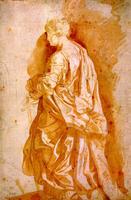
The significance of Studies for William Rush lies in its dual role as both a preparatory exercise and a finished work of art in its own right, embodying Thomas Eakins’ commitment to the principles of Realism. As a sketch and study, it offers direct insight into Eakins’ methodical process—a hallmark of his practice—whereby he painstakingly observed anatomy, light, and spatial relationships before translating them into final compositions. Within the context of Realism, such studies were not mere rough drafts but independent statements of verisimilitude, demonstrating the artist’s refusal to idealize form. The subject matter—preparatory work for a depiction of sculptor William Rush—further underscores Eakins’ fascination with the act of creation itself, merging the genres of sculpture and painting into a meditation on artistic labor. This work thus stands as a key document of Eakins’ rigorous pedagogy and his era’s broader shift toward unembellished, factual representation.