Description
Style: Rococo · Genre: history painting
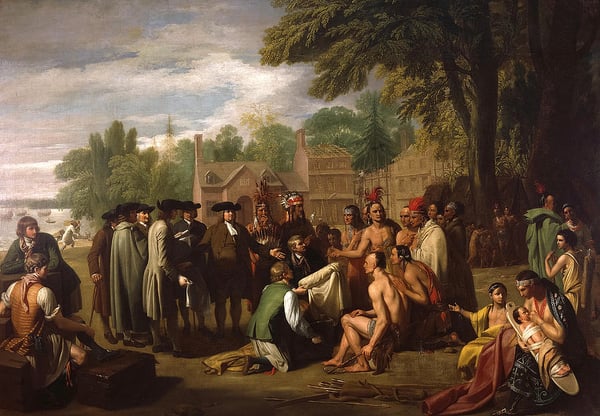
The painting, William Penn's Treaty with the Indians in 1683, by West, commemorates and allegorizes the moment when Quaker William Penn secured a land exchange with members of the Leni-Lenape tribe for the new colony of Pennsylvania. The Neoclassical style, along with the strong verticals of the trees and houses paired with the horizontal arrangement of the figures, creates a sense of harmony and stability. Penn, dressed in brown, stands in the center of the composition with his arms outstretched, surrounded by his fellow Quakers and Merchants. The Native Americans dominate the darker, right side of the painting, and their gestures and postures draw the viewer's eye to the central action. Two merchants kneel and offer the tribal leader a bolt of cream-colored cloth, which was a customary diplomatic gesture at the time. The painting becomes a metaphor for fairness and mutual exchange between Old World and New.
However, West masks and elides the appalling and horrific ways in which colonists and the U.S. government treated Native Americans. The houses in the background, along with the ships in the port, speak to the dramatic and devastating changes that would come to the Native American way of life. As an allegorical representation, West may have been thinking of the increasing tensions between the colonies and the British Crown, hoping for a calm and balanced relationship as depicted in the painting. Colonial theorist Beth Fowkes Tobin argues that the painting is a masterpiece, not only aesthetically but also politically as a powerful piece of propaganda that continues to work its magic on viewers today.
Museum / Gallery
Visually similar
20 works with related composition and palette
An English Merrymaking a Hundred Years Ago
William Powell Frith
General Johnson
Benjamin West
Neapolitan Peasants at a Fountain
Penry Williams
Peasants Merry-Making
David Teniers the Younger
A Village Revel
Jan Steen
The March of the Guards to Finchley
William Hogarth
Genre scene with settlers and wayfarers
Michelangelo Cerquozzi
The Blind Guitar Player
Francisco Goya
A Picnic at a Country Town
Luis Paret y Alcazar
German Artists Make Their Sketches in Rome
Wilhelm von Kaulbach
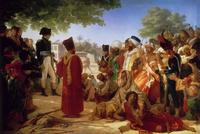
Napoleon Bonaparte Pardoning the Rebels at Cairo, 23rd October 1798
Pierre-Narcisse Guerin
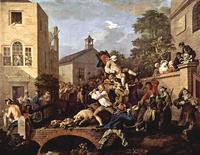
The triumph of Representatives
William Hogarth
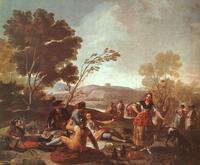
Picnic on the Banks of the Manzanares
Francisco Goya
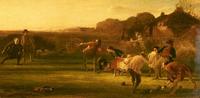
The Bowlers
George Harvey
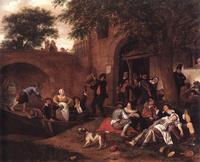
Leaving the Tavern
Jan Steen
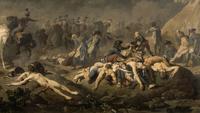
Soldiers Killed in Battle Stripped of Their Weapons, Their Uniforms and Their Personal Belongings During the Italian Campaign in 1797 (Detail)
Nicolas Antoine Taunay
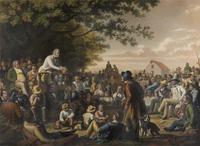
Stump Speaking
George Caleb Bingham
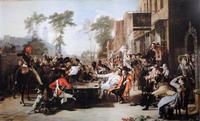
The Chelsea Pensioners Reading the Waterloo Dispatch
David Wilkie
Quack
Jan Steen
Worship of Golden Calf
Jan Steen