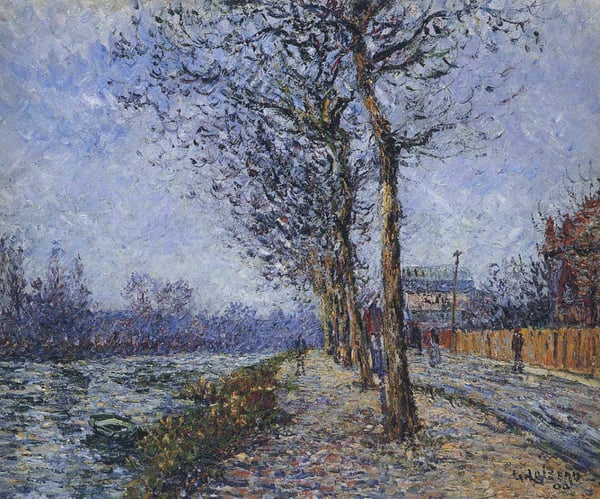
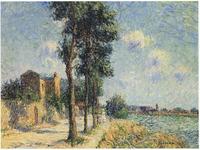
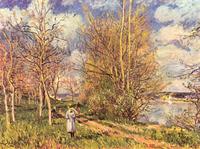
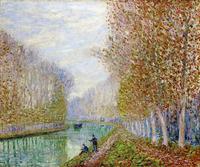
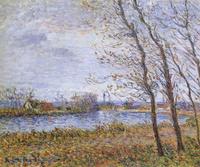
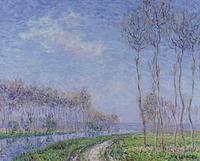
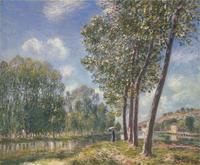
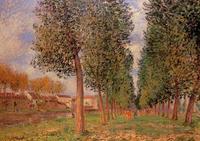
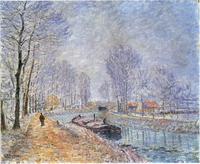
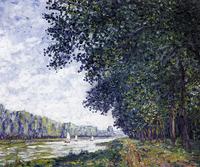
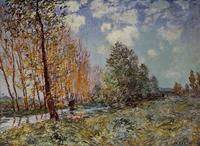
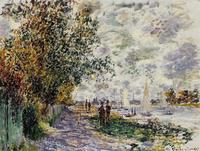
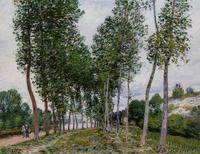
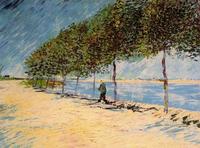
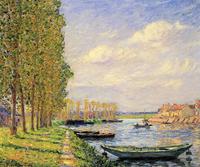
Gustave Loiseau's Oise at Pontoise is a Post-Impressionist landscape that exemplifies the movement's evolution beyond Impressionism's fleeting optical impressions. As a landscape, the work focuses on the serene banks of the Oise River, but its significance lies in Loiseau's dedication to structured composition and rhythmic color harmonies—hallmarks of Post-Impressionism. The painting represents a deliberate synthesis of natural observation and formal arrangement, capturing not just a scene but a sustained, personal vision of the rural environment. In this context, Oise at Pontoise stands as a testament to Post-Impressionism’s broader ambition to infuse landscape with emotional and structural resonance, moving from momentary perception toward enduring pictorial order.