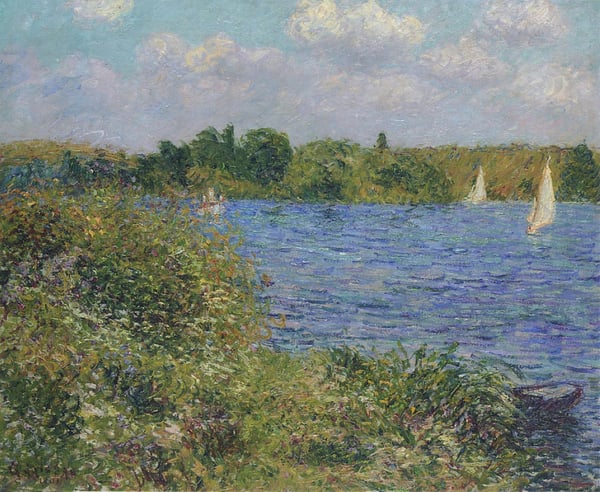
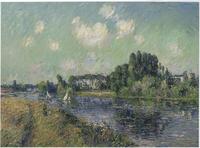
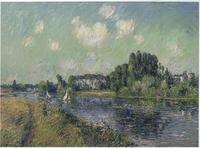
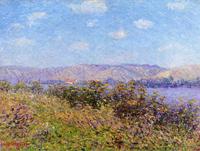
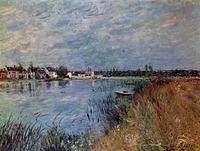
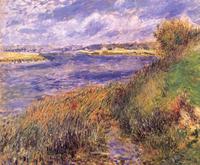
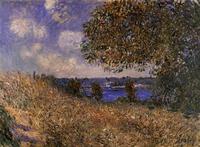
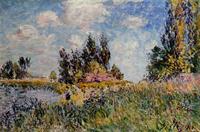
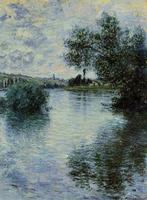
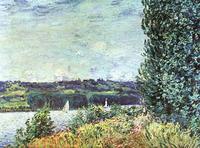
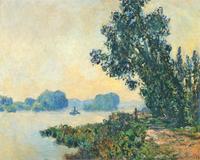
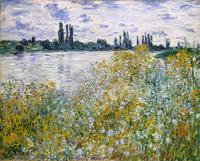
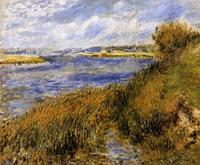
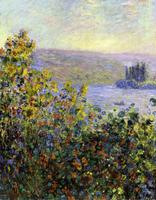
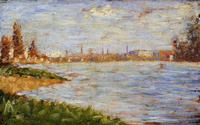
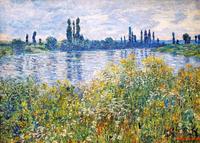
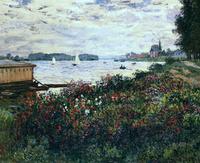
"Port Joie at the Seine" by Gustave Loiseau exemplifies the Post-Impressionist landscape tradition through its structured yet luminous approach to capturing a riverside scene. Loiseau, a French painter associated with the Pont-Aven school and later Post-Impressionism, is known for his series of landscapes that explore the same motif under varying conditions. This work’s significance lies in its technique: Loiseau employs short, hatched brushstrokes that build form and light with a deliberate, rhythmic texture—distinct from the looser, more spontaneous strokes of Impressionism. The composition likely centers on the Seine’s water, boats, and shoreline, rendered in a rich palette of blues, greens, and warm accents. By balancing atmospheric envelope (the enveloppe) with a more structural use of color and pattern, Loiseau transforms a fleeting moment into a meditative study of light and space. "Port Joie at the Seine" thus embodies the Post-Impressionist shift from pure optical sensation to a more personal, tactile expression of nature’s enduring character.