Expert analysis of Gustave Loiseau’s Pothius Quay in Pontoise
Style: Post-Impressionism · Genre: cityscape
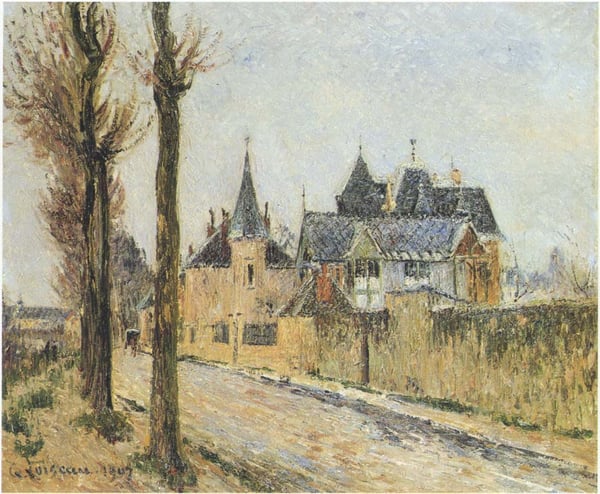
Gustave Loiseau's Pothius Quay in Pontoise stands as a compelling example of Post-Impressionist cityscape painting, bridging the ephemeral light studies of Impressionism with a more structured, rhythmic approach to form and color.
Significance within Post-Impressionism:
Loiseau, though often associated with the Pont-Aven School and later the Salon d'Automne, developed a distinctive style that emphasized the decorative ordering of nature. Unlike the Impressionists' focus on capturing a fleeting moment through broken color, Loiseau's brushwork becomes a deliberate, almost woven pattern—short, hatched strokes that build up the surface like enamel. In Pothius Quay, this technique transforms the everyday view of the Oise River into a tapestry of interlocking touches, giving the water, sky, and architecture a unified, vibrant texture.
Subject and Composition:
The painting depicts a quay in Pontoise, a town northwest of Paris that was famously painted by Camille Pissarro. Loiseau, however, emphasizes the geometric scaffolding of the scene: the horizontal lines of the quay and riverbank, the vertical masts of boats, and the facades of houses. This structural clarity—a hallmark of Post-Impressionism—anchors the work while the restless brushwork animates the surface. The viewpoint likely looks across the water, allowing Loiseau to contrast the solidity of the built environment with the fluid reflections of the river.
Color and Light:
Loiseau's palette here is both luminous and restrained. He avoids the high-key, intense hues of a Fauve, preferring subtle harmonies of blues, grays, ochres, and muted greens. The light is soft, perhaps a cloudy day, diffusing across the canvas and creating a quiet, lyrical mood. The significance lies in how Loiseau uses color to model form not through heavy shadow but through the juxtaposition of warm and cool tones—a technique inherited from Impressionism but applied with greater control and pattern.
Legacy:
Loiseau's cityscapes and riverscapes—including this one—are significant because they represent a conservative yet refined branch of Post-Impressionism. While artists like Seurat pushed toward pointillist science or Van Gogh toward expressive distortion, Loiseau achieved a balanced synthesis: the sensory fidelity of Impressionism married to a decorative, rhythmic intelligence that prefigures aspects of later 20th-century painting. Pothius Quay in Pontoise exemplifies how a familiar subject can be revitalized through a deeply personal technique, making the ordinary feel both immediate and timeless.
Visually similar
20 works with related composition and palette
Church at Notre Dame by the Eure
Gustave Loiseau
The Road to Dieppe
Gustave Loiseau
House of Monsieur de Irvy near Vaudreuil
Gustave Loiseau
Street in Moret(Porte de Bourgogne from across the Bridge)
Alfred Sisley
The Court House, Pontoise
Camille Pissarro
The First Hoarfrost
Alfred Sisley
Houses near the Eure
Gustave Loiseau
Louvier Road in Winter
Gustave Loiseau
The Small Bourgeois House
Gustave Loiseau
Loing at Moret in the rain
Alfred Sisley
House of the Sisters in Pontoise
Gustave Loiseau
Thaw, Pontoise
Camille Pissarro
Street Scene in Marly
Alfred Sisley
The street of the Citadelle, Pontoise
Camille Pissarro
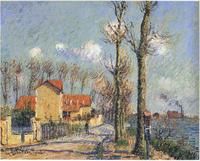
Quay of Pothius in Pontoise
Gustave Loiseau
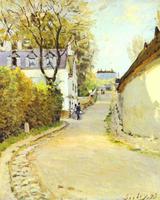
Street in Ville d Avray
Alfred Sisley
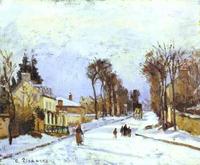
The Versailles Road at Louveciennes
Camille Pissarro
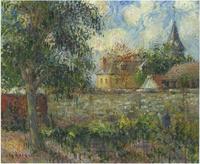
Farm in Normandy
Gustave Loiseau
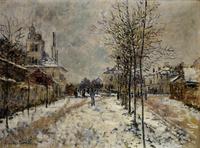
Snow Effect, The Boulevard de Pontoise at Argenteuil
Claude Monet
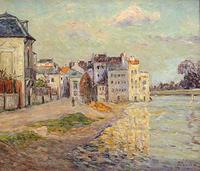
The Embankment of Lagny under Flood Water
Maxime Maufra