Expert analysis of Gustave Loiseau’s Ships at Port
Style: Post-Impressionism · Genre: landscape
Analysis of "Ships at Port" by Gustave Loiseau
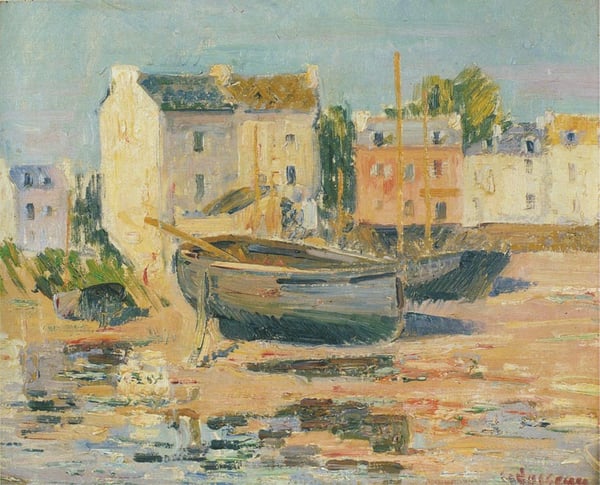
Gustave Loiseau’s “Ships at Port” is a quintessential Post-Impressionist landscape that captures the interplay of light, color, and texture through a distinctive, rhythmic brushwork. Loiseau, a key figure in the transition from Impressionism to the more expressive styles of the early 20th century, is known for his “en treillis” technique—a cross-hatching of short, overlapping strokes that builds form and atmosphere rather than relying on precise outlines. This method allows him to convey the shimmering surface of water, the solid mass of moored ships, and the transient effects of weather with an almost woven, tactile quality.
What makes this work significant within the Post-Impressionist movement is Loiseau’s commitment to capturing the essence of a moment through structured, yet vibrant, color. Unlike the Impressionists’ focus on pure optical sensation, Loiseau emphasizes a more deliberate, constructive use of color, often juxtaposing complementary hues to heighten emotional impact. In “Ships at Port,” the muted grays and blues of a maritime sky are balanced by warm ochres and soft whites in the hulls and reflections, creating a harmonious, lyrical atmosphere. The composition—a diagonal sweep of docks and vessels leading the eye into the distance—demonstrates Loiseau’s skill in organizing a busy harbor scene into a calm, cohesive whole.
Notably, this painting reflects Loiseau’s lifelong fascination with the ports of Normandy and Brittany, where he worked en plein air to capture the ever-changing light over water. His technique influenced later Fauvists, particularly in their use of bold, unmodulated color, yet Loiseau always retained a strong sense of naturalism. “Ships at Port” stands as a testament to his ability to synthesize Impressionist spontaneity with Post-Impressionist structure, making it a compelling example of how the movement evolved toward more personal, expressive interpretations of the landscape.
Visually similar
20 works with related composition and palette
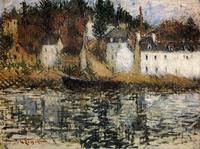
The Quay at Pont Aven
Gustave Loiseau
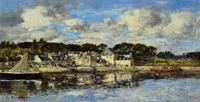
The Village and the Port on the River
Eugene Boudin
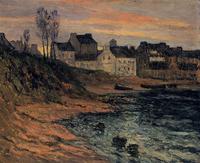
Twilight
Maxime Maufra
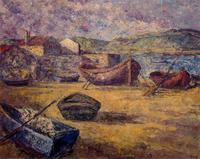
Beached boats
Arturo Souto
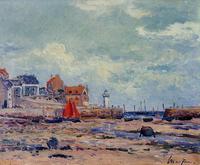
At Low Tide
Maxime Maufra
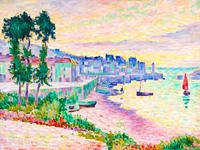
Saint-Tropez
Jean Metzinger
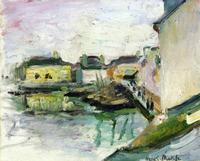
The Port of Palais, Belle Ile
Henri Matisse
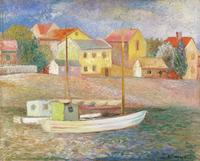
Harbor in Hel
Roman Selsky
Laundresses on the Banks of the Port of Trouville
Eugene Boudin
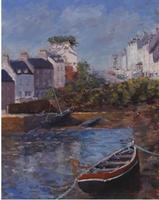
Low tide, Roundstone
Tom Scott
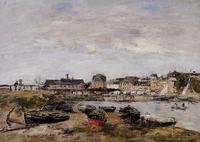
View of the Port, Trouville
Eugene Boudin
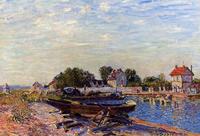
The Loing at Saint Mammes
Alfred Sisley
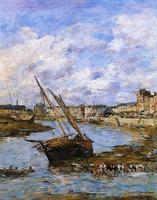
Trouville, the Inner Port, Low tide
Eugene Boudin
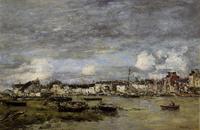
Trouville, the Port
Eugene Boudin
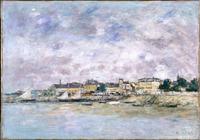
The Port, Trouville
Eugene Boudin
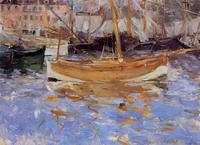
The Port of Nice
Berthe Morisot
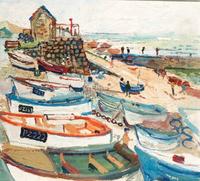
Moored Boats, Penzance
Fred Yates
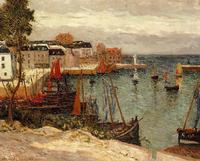
The Port of Sauzon
Maxime Maufra
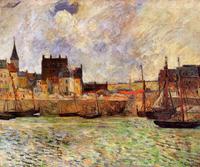
Harbour Scene, Dieppe
Paul Gauguin
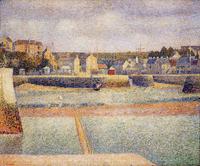
Port-en-Bessin, The Outer Harbor, Low Tide
Georges Seurat