
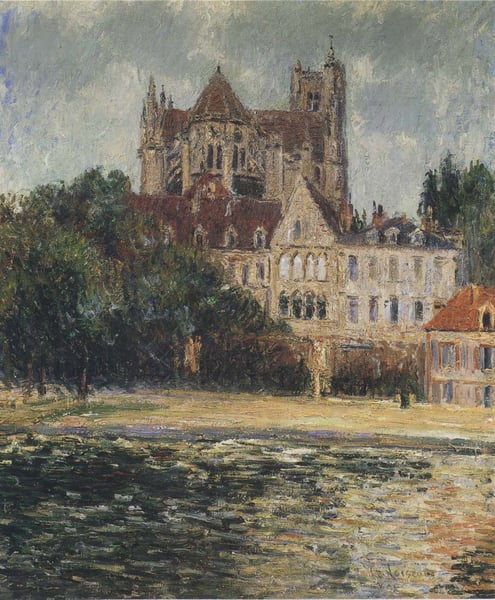
The Auxerre Cathedral
Expert analysis of Gustave Loiseau’s The Auxerre Cathedral
Style: Post-Impressionism · Genre: cityscape
Expert Analysis: "The Auxerre Cathedral" by Gustave Loiseau
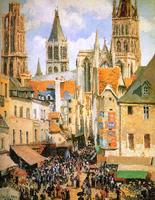
Gustave Loiseau’s The Auxerre Cathedral stands as a compelling example of Post-Impressionist cityscape painting, distinct for its synthesis of structural clarity and atmospheric vibrance. Loiseau, though less widely known than his contemporaries, was a dedicated practitioner of the movement’s core aims: to move beyond Impressionism’s fleeting effects toward more deliberate composition and emotional resonance, while retaining a vivid, broken-color technique.
Significance within Post-Impressionism
The work exemplifies the transition from Impressionism’s focus on natural light to Post-Impressionism’s emphasis on solid form and personal expression. Loiseau employs short, rhythmic brushstrokes and a palette of muted earth tones punctuated by cool blues and soft ochres. This approach—often compared to that of Monet or Pissarro but with a more structured geometry—anchors the cathedral’s Gothic architecture in a tangible, almost weighty presence, while the dappled handling of light on stone prevents the scene from becoming static.
Cityscape as a Genre
As a cityscape, The Auxerre Cathedral transcends mere topographical record. Loiseau frames the cathedral less as a monumental centerpiece and more as an integrated element of the urban fabric, surrounded by modest buildings and sky. The composition leads the eye along a slightly receding street, with the spire rising as both a physical and spiritual anchor. This choice reflects Post-Impressionism’s interest in everyday scenes imbued with enduring significance—a nod to Cézanne’s structural investigations or Van Gogh’s emotional charge, yet tempered by Loiseau’s characteristically serene, balanced harmony.
Artistic Legacy
Loiseau’s contribution lies in his refined handling of the en plein air landscape within a more controlled pictorial order. The Auxerre Cathedral captures a moment of quiet grandeur, where the permanence of architecture meets the transient play of atmosphere—a duality at the heart of Post-Impressionist ambition. The painting thus remains significant for its demonstration of how the movement’s principles could be applied to urban subjects, offering a restrained yet deeply evocative vision of place.
Visually similar
20 works with related composition and palette
The Auxerre Cathedral
Gustave Loiseau
The Auxerre Cathedral
Gustave Loiseau
Auxerre Cathedral
Gustave Loiseau
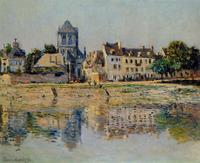
By the River at Vernon
Claude Monet
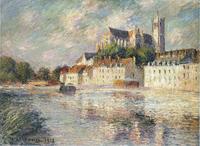
The Auxerre Cathedral
Gustave Loiseau
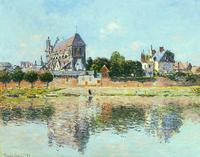
View of the Church at Vernon
Claude Monet
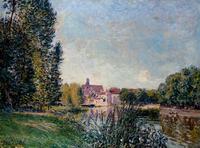
Loing River and Church at Moret
Alfred Sisley
The Quai, Lannion
Childe Hassam
Loing at Moret in the rain
Alfred Sisley
House of the Sisters in Pontoise
Gustave Loiseau
The Church At Vetheuil
Claude Monet
Pont de Moret dans le soleil du matin
Alfred Sisley
Horses being Watered at Marly le Roi
Alfred Sisley
Moret on Loing Autumn
Gustave Loiseau
Tour De Cesar in Beaugency, France
Lili Elbe
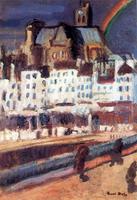
The Saint Gervais Church
Raoul Dufy
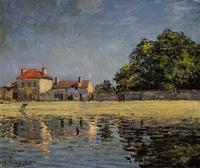
Banks of the Loing, Saint Mammes
Alfred Sisley
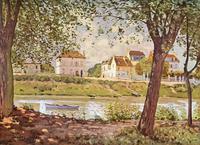
Village on the banks of the Seine
Alfred Sisley
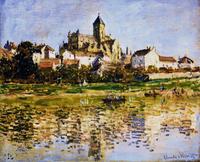
Vetheuil, The Church
Claude Monet
The old market at Rouen
Camille Pissarro