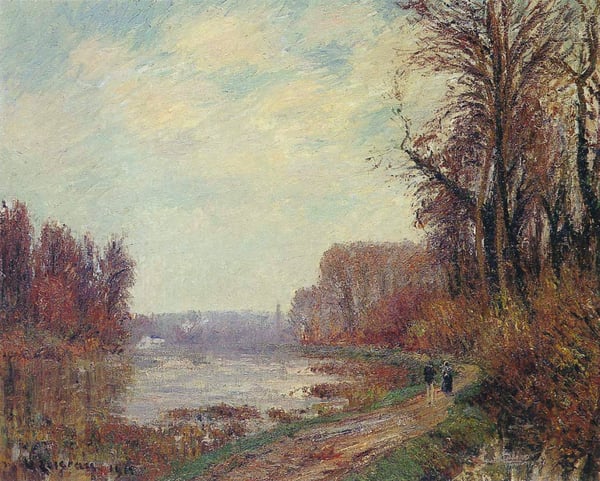
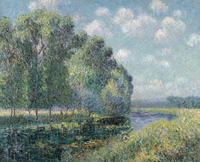
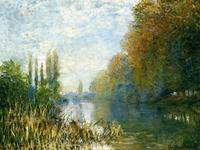
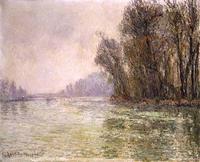
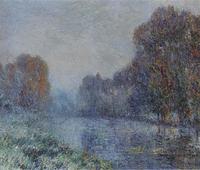
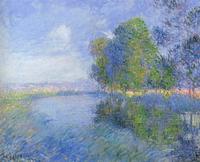
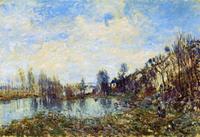
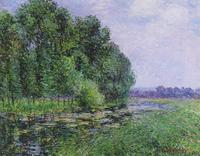
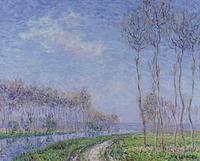
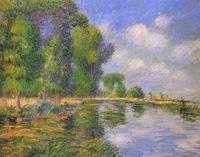
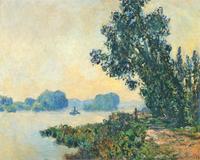
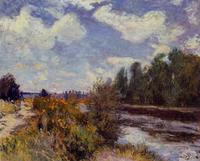
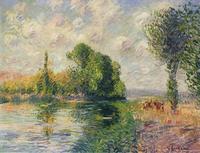
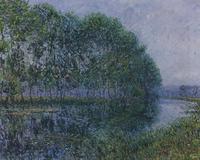
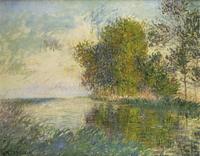
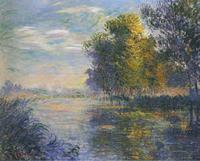
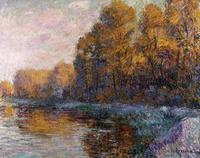
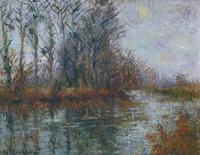
As a Post-Impressionist landscape, Gustave Loiseau's Woods by the Oise River exemplifies the movement’s shift from Impressionism’s fleeting naturalism toward a more structured, emotionally resonant interpretation of nature. While the supplied facts do not detail specific brushwork or palette, the work’s significance lies in its genre and style: Post-Impressionist landscapes often prioritized subjective expression over mere visual accuracy, using color and form to convey mood. Here, Loiseau’s choice of the Oise River—a recurring subject for him—anchors the scene in a specific, tranquil locale, yet the “Post-Impressionism” label suggests a deliberate ordering of the composition and a heightened sensitivity to atmosphere. The painting thus becomes not just a record of a place, but a meditation on the interplay of light, structure, and emotion—core concerns that define the period’s lasting impact on modern landscape painting.