
Expert analysis of Guy Rose’s Monterey Cypress
Style: Impressionism · Genre: landscape
Expert Analysis: "Monterey Cypress" by Guy Rose
Guy Rose (1867–1925) was a leading figure in American Impressionism, particularly known for his luminous landscapes of California. "Monterey Cypress" exemplifies the mature phase of his career, when he had fully absorbed the techniques of French Impressionism (he studied in Paris and at Giverny) and applied them to the distinctive topography of the California coast. The work holds significance as a quintessential example of California Impressionism—a regional movement that adapted the broken-color brushwork and plein-air spontaneity of Monet and Renoir to the intense, clear light and dramatic forms of the Pacific shoreline.
What makes this artwork significant within Impressionism:
-
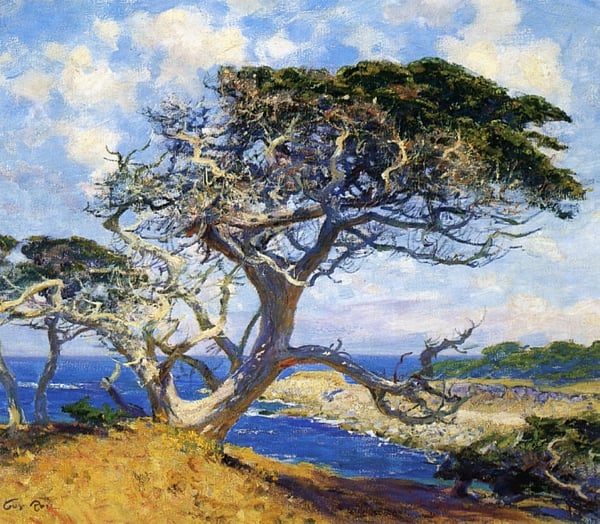
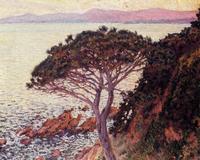
Subject and Place – The Monterey cypress, with its wind-sculpted, twisting silhouette, became an iconic motif for California Impressionists, much like haystacks or water lilies for Monet. Rose captures the tree’s organic, almost architectural presence against a backdrop of sea and sky, blending naturalism with the Impressionist desire to record a fleeting atmospheric moment.
-
Light and Color – Rose uses a high-key, sun-drenched palette—luminous blues, soft greens, and warm earth tones—to evoke the coastal haze and brilliant afternoon light. His brushstrokes are short, vigorous, and often laid side by side, allowing the eye to optically mix colors. The contrast between the dark, gnarled trunk and the shimmering background demonstrates the Impressionist fascination with how light transforms form.
-
Composition and Atmosphere – The cypress anchors the composition, rising dramatically from the foreground, while the distant headlands and water are rendered in softer, dissolving tones. This creates a sense of depth while maintaining the flat, decorative surface quality prized by Impressionists. The painting is not a literal transcription but an optical experience—a record of how the scene felt at a particular hour.
-
Context and Legacy – Rose’s work helped define the "California Style" of Impressionism, which often combined French technique with a Western American sense of spaciousness and intense sunlight. "Monterey Cypress" is significant because it shows an American artist mastering the international Impressionist idiom while forging a distinct regional identity. It stands alongside the work of other California Impressionists like William Wendt and Granville Redmond, yet Rose’s training at Giverny gives his landscapes a particular sophistication in color harmony and brush handling.
In sum, "Monterey Cypress" is not merely a pretty landscape; it is a deliberate exercise in translating natural phenomena—wind, light, the ruggedness of the California coast—into the language of Impressionism. It represents the successful merging of European pictorial innovation with American subject matter, securing Guy Rose’s place as a key figure in the golden age of American Impressionist painting.
Museum / Gallery
Visually similar
20 works with related composition and palette

The Bay of Cavalieri
Henri-Edmond Cross
Out to Sea
Guy Rose

Sea Cove
Albert Bierstadt
Point Lobos Trees
Guy Rose
A Carmel Pine
Guy Rose
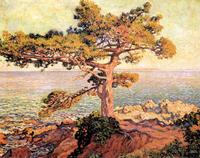
Pine by the Mediterranean Sea
Theo van Rysselberghe

Coast Ledenets
Nicholas Roerich
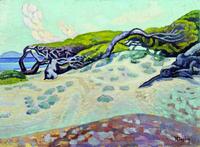
Pines at Rafina
Konstantinos Maleas
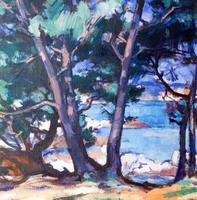
Blue Water, Antibes
Samuel Peploe

California Coast
Albert Bierstadt
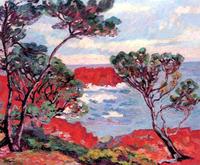
Les rochers rouges
Armand Guillaumin

Coast at Santa Cristina
Joaquín Sorolla
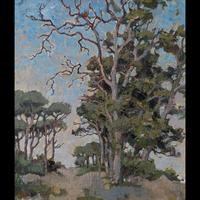
Study of bluegum trees
Gregoire Boonzaier
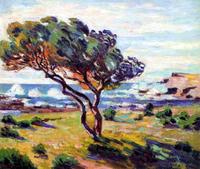
Rafales de vent, Le Brusc
Armand Guillaumin
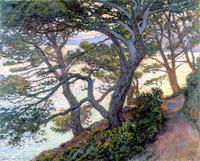
Pines of Rayol
Theo van Rysselberghe

Monhegan Landscape
Edward Hopper

Dans le Midi
Armand Guillaumin

Mist Over Point Lobos
Guy Rose
South of France. Dunes
Ivan Bilibin
Sunset
Theo van Rysselberghe