Analisi esperta di The End of the Day di Guy Rose
Stile: Impressionism · Genere: genre painting
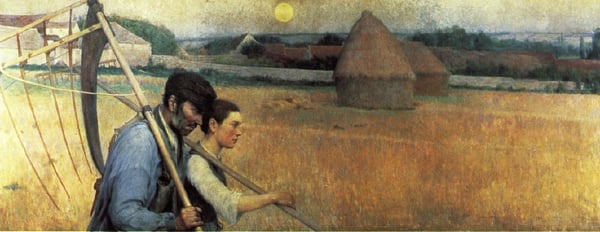
Artwork Analysis: The End of the Day by Guy Rose
Artist & Context: Guy Rose (1867–1925) was a leading figure in American Impressionism and a key member of the California plein air school. Trained in both Paris and Giverny, he absorbed the techniques of French Impressionists while developing a distinctive sensitivity to the luminous, atmospheric effects of the California coast.
Style & Genre: As an Impressionist genre painting, The End of the Day captures an ordinary, transient moment in everyday life—likely a quiet scene of laborers or figures finishing their work as daylight fades. The work exemplifies Impressionism’s core tenet: the pursuit of fleeting light and color over detailed narrative.
Significance & Composition:
- Light and Atmosphere: Rose masterfully renders the “end of day” glow—soft, warm hues of gold, rose, and violet that signal the transition from sunset to twilight. The light appears to dissolve forms, blurring the boundaries between figures and their environment, a hallmark of Impressionist optical realism.
- Brushwork: Short, broken strokes of pure color create vibrancy and movement—the sky may shimmer with dabs of pink and ochre, while shadows are built with complementary blues and lavenders rather than black, adhering to Impressionist color theory.
- Mood and Subject: The title suggests a contemplative, serene closure to labor. By focusing on a humble, unremarkable moment, Rose elevates the quotidian to poetic significance—a departure from academic history painting and a celebration of modern, daily life.
- American Impressionist Identity: While rooted in French technique, Rose’s palette is distinctly Californian: the light is harsher, more brilliant than the muted tones of Monet’s Normandy. The End of the Day captures the specific, clear atmosphere of the Pacific coast, making it a landmark of regional Impressionism.
Why It Matters: This work illustrates how American Impressionists adapted European stylistic innovations to their own landscapes and lifestyles. Rose’s ability to convey the emotional weight of a simple, shared human experience through light and color solidifies The End of the Day as a significant contribution to the genre, bridging the intimate naturalism of Impressionism with the narrative warmth of American scene painting.
Visivamente simili
20 opere con composizione e palette affini
Haymaking at Eragny
Camille Pissarro
Peasant Spreading Manure
Jean-Francois Millet
The gleaners
Léon Augustin Lhermitte
Scenes from harvest
Léon Augustin Lhermitte
Weary
Jules Bastien-Lepage
Harvesters at rest
Léon Augustin Lhermitte
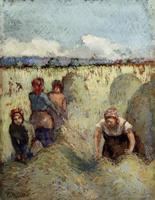
Haymaking
Camille Pissarro
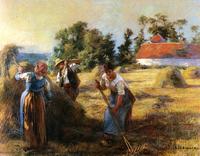
Harvest scenes
Léon Augustin Lhermitte
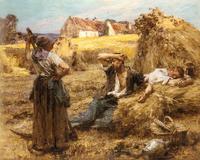
The awakening of the reaper
Léon Augustin Lhermitte
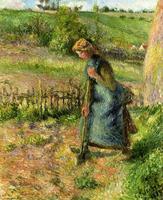
Woman Digging
Camille Pissarro
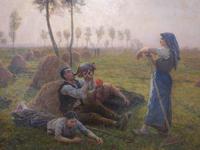
Peasants Resting (June 1882)
Jules Breton
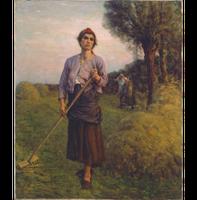
The Gleaner
Jules Breton
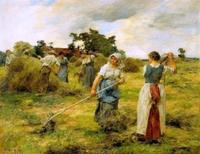
Peasants in a landscape
Léon Augustin Lhermitte
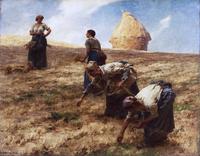
The gleaners
Léon Augustin Lhermitte
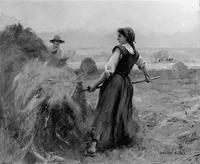
Haymaking
Julien Dupré
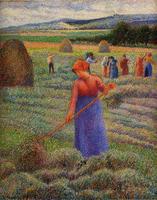
Haymakers at Eragny
Camille Pissarro
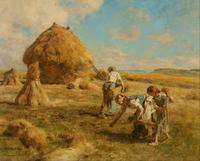
Gleaning Women
Léon Augustin Lhermitte
Gleaning Women
Léon Augustin Lhermitte
Peasant Woman in the Fields
Julien Dupré
Gleaners at sunset
Jules Breton