Expertenanalyse zu Agostino Carraccis Satyr Mason
Stil: Baroque · Genre: mythological painting
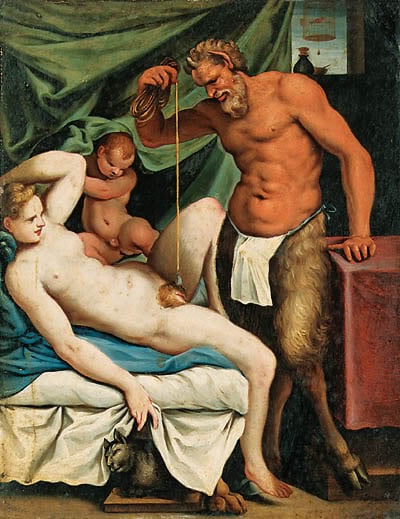
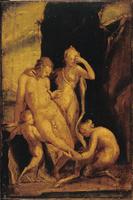
While the title "Satyr Mason" is unusual and may refer to a lesser-known work or an alternative interpretation, the known facts place this piece squarely within Agostino Carracci’s pivotal role in the transition from Mannerism to the Baroque. As a mythological scene in the Baroque style, the work would exhibit the hallmarks of Carracci’s approach: a fusion of idealized classical form with heightened naturalism and expressive drama.
Significance in Context
Agostino Carracci, alongside his brothers Annibale and Ludovico, was a founder of the Bolognese School, which rejected the artificiality of late Mannerism in favor of a return to nature tempered by the study of Renaissance masters. A mythological depiction like this would likely showcase Carracci’s masterful chiaroscuro and dynamic composition—the satyr, a half-human, half-goat creature from Greco-Roman myth, would be rendered with vigorous, muscular anatomy and a sense of imminent movement, typical of Baroque energy. The "mason" element—possibly suggesting a satyr engaged in building or crafting—introduces an unexpected, genre-like twist, blending lowly human labor with divine or mythological figures. This juxtaposition underscores the Baroque fascination with merging the everyday with the heroic, a device Carracci used to make ancient stories feel immediate and tactile.
Artistic Merit
Carracci’s handling of the satyr’s body would demonstrate his academic skill in foreshortening and texture—fur, skin, and stone tools rendered with tactile realism. The lighting, likely from a single strong source, would create dramatic shadows that accentuate the physicality of the scene, a technique that Carracci honed through his engravings and paintings. Mythological works by Agostino often served as foundations for Annibale’s more famous frescoes (e.g., the Farnese Gallery), but Agostino’s own contributions lie in their precise draftsmanship and psychological depth—here, the satyr’s surprised or absorbed expression might hint at a narrative of craft, labor, or even deception, common themes in Baroque mythological cycles.
In summary, "Satyr Mason" exemplifies the Baroque synthesis of classical myth with naturalistic observation, and it underscores Agostino Carracci’s role in establishing a new, emotionally resonant visual language that would influence generations of Baroque painters from Guido Reni to Poussin.
Museum / Gallery
Visuell ähnlich
20 Werke mit ähnlicher Komposition und Farbpalette
The Death of Adonis with Venus Cupid and the Three Graces
Peter Paul Rubens
Jupiter and Olympia
Giulio Romano
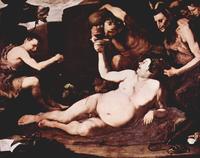
Drunken Silenus
Jusepe de Ribera
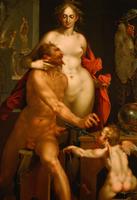
Venus in Vulcan's Forge
Bartholomeus Spranger
Portrait of unknown Bassano
Giovanni Battista Piranesi
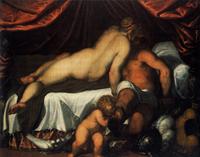
Venus Und Mars
Palma il Giovane
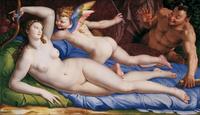
Venus, Cupido and Satyr
Agnolo Bronzino
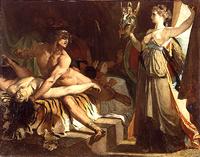
Thétis Apportant À Achille Les Armes Forgées Par Vulcain
Henri Regnault
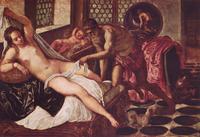
Venus and Mars Surprised by Vulcan
Tintoretto
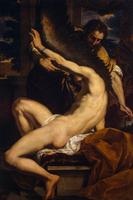
Daedalus and Icarus
Charles Le Brun
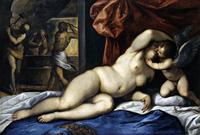
Venus and Cupid at Vulcan's Forge
Palma il Giovane
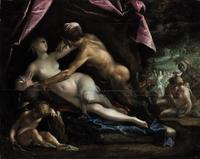
Pan and Selene
Hans von Aachen
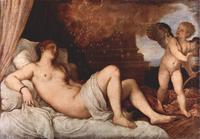
Danae
Titian
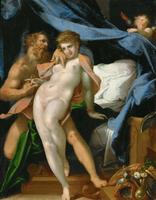
Vulcan and Maia
Bartholomeus Spranger
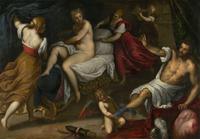
Venus and Mars
Palma il Giovane
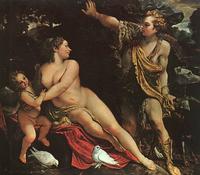
Venus, Adonis, and Cupid
Annibale Carracci
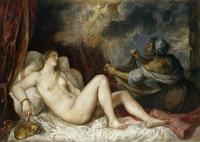
Danae
Titian
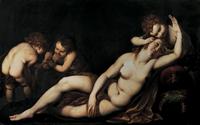
Venus and Cupid
Giulio Cesare Procaccini
Faun with Wounded Foot
Bartholomeus Spranger
Tarquin and Lucretia
Tintoretto