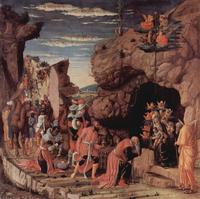
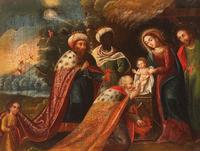
Expert Analysis: "Adoration of the Magi" by Andrea Mantegna
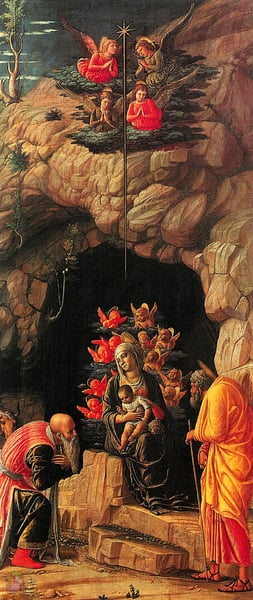
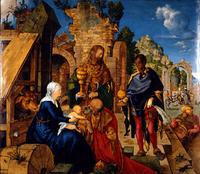
As an Early Renaissance religious painting, Mantegna’s Adoration of the Magi exemplifies the period’s pivotal shift toward naturalism, spatial coherence, and humanist emotion—hallmarks that distinguish the era from the preceding Gothic style. Within the Early Renaissance, Mantegna is celebrated for his rigorous application of linear perspective and sculptural, almost archaeological rendering of figures, which imbues sacred narratives with tangible gravity. This work’s significance lies in how it transforms a traditional biblical scene into a disciplined study of volume, light, and foreshortening, reflecting the period’s growing emphasis on empirical observation and classical ideals. Even without specific compositional details, the painting stands as a testament to Mantegna’s role in advancing the intellectual and visual depth that define the Early Renaissance’s religious art.