
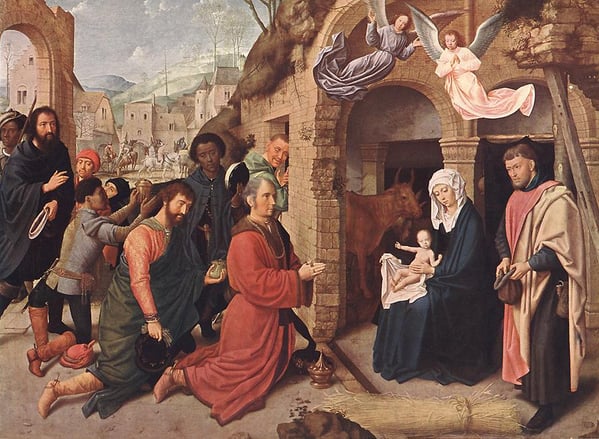
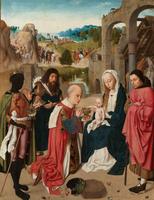
The Adoration of the Magi
Expert analysis of Gerard David’s The Adoration of the Magi
Style: Northern Renaissance · Genre: religious painting
Expert Analysis: "The Adoration of the Magi" by Gerard David
Style: Northern Renaissance | Genre: Religious painting
Gerard David’s The Adoration of the Magi stands as a masterful synthesis of Late Gothic tradition and the emerging naturalism of the Northern Renaissance. David, active in Bruges at the turn of the 16th century, inherited the luminous precision of Jan van Eyck and the emotional restraint of Hans Memling, yet imbued this biblical scene with a distinctive stillness and devotional clarity.
Significance within the Northern Renaissance
-
Meticulous Detail and Symbolism – True to the Flemish tradition, David renders every surface with almost microscopic fidelity: the sheen of silk robes, the texture of fur, the glint of gold vessels. Yet these details are not mere decoration. The three Magi’s gifts—gold, frankincense, and myrrh—are depicted with emblematic clarity, each carrying Christological meaning (gold for royalty, incense for divinity, myrrh for mortality). The ruined stable and distant cityscape allude to the Old Law giving way to the New Covenant.
-
Integration of Landscape and Figure – David composed the scene within a deep, panoramic landscape—a hallmark of Netherlandish painting. The horizon recedes gracefully, with a winding river and blue hills echoing the journey of the Magi. Unlike Italian Renaissance works that often treat landscape as a stage, David’s nature feels continuous with the sacred event: the winter sky softens, and the humble stable becomes a quiet focal point where earth meets heaven.
-
Psychological Serenity and Devotional Focus – While earlier Netherlandish Adorations often featured bustling crowds or exotic pageantry, David’s composition is remarkably serene. The Virgin gently lifts the Christ Child’s cloth, the eldest king kneels in reverent awe, and the other monarchs wait with subdued gravity. This restrained emotion was David’s signature—a meditative quality that invites the viewer into contemplative prayer rather than mere spectacle.
-
Color as Theological Language – David employs a jewel-toned palette: rich crimson, deep cobalt, and burnished gold. The Virgin’s blue mantle symbolizes her purity and humanity; the eldest Magi’s white hair and dark robes suggest both age and the wisdom of the East. The contrast between the warm interior light around the Holy Family and the cooler tones of the landscape outside reinforces the Incarnation as a light entering the world.
Conclusion
Gerard David’s The Adoration of the Magi is significant not for novelty but for its perfection of a mature Northern Renaissance ideal. It balances extreme naturalism with spiritual symbolism, local detail with universal meaning, and the intimacy of a domestic moment with the grandeur of an epic journey. In David’s hands, the Adoration becomes a quiet epiphany—both for the Magi and for the viewer—a moment suspended in luminous, reverent stillness.
Museum / Gallery
Visually similar
20 works with related composition and palette
The Nativity
Gerard David
Adoration of the Magi
Filippo Lippi
Nativity with Sts Lawrence and Andrew
Antoniazzo Romano
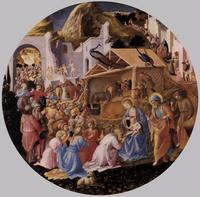
Adoration of the Magi
Fra Angelico
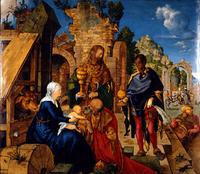
The Adoration of the Magi
Albrecht Durer
Adoration of the Magi (detail)
Filippo Lippi
Adoration of the Magi (detail)
Filippo Lippi
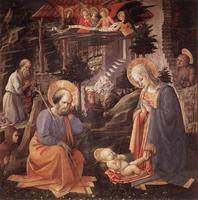
Adoration Of The Child With Saints
Filippo Lippi
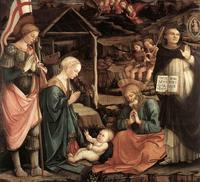
Adoration Of The Child With Saints
Filippo Lippi
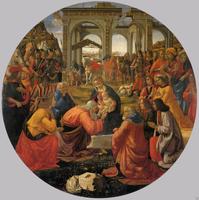
The Adoration of the Magi
Domenico Ghirlandaio
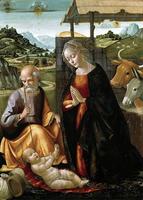
The Nativity
Domenico Ghirlandaio
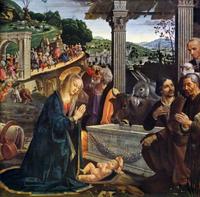
Adoration of the Shepherds
Domenico Ghirlandaio
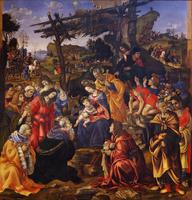
Adorazione Dei Magi
Filippino Lippi
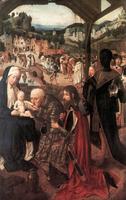
Adoration of the Magi
Geertgen tot Sint Jans
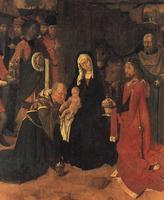
The Adoration of the Magi
Gerard David
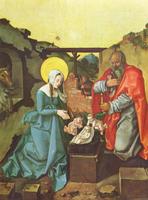
Nativity
Hans Baldung
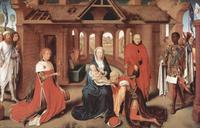
Adoration of the Magi, central panel of the Triptych of the Adoration of the Magi
Hans Memling
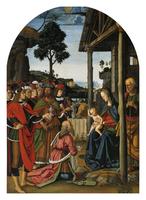
The Adoration of the Magi
Pietro Perugino
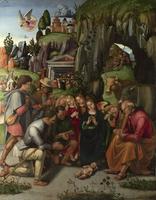
Adoration of the Shepherds
Luca Signorelli
Adoration of the Magi
Geertgen tot Sint Jans