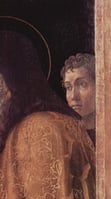
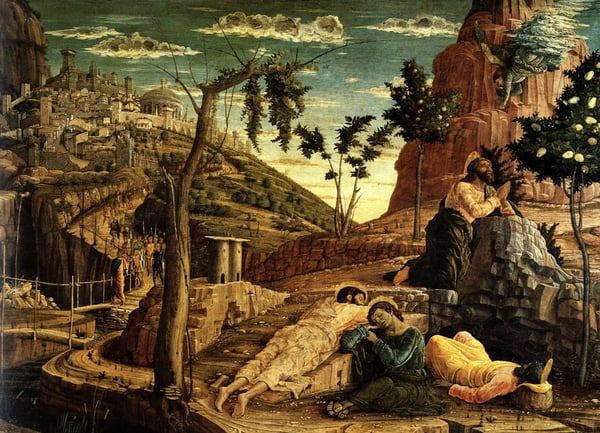
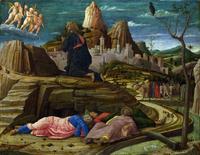
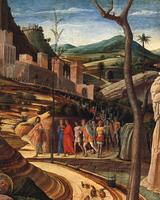
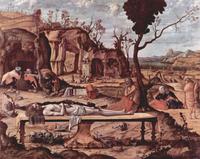
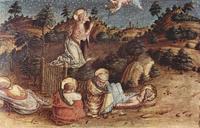
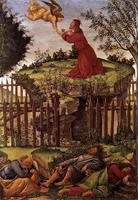
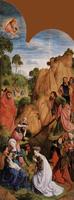
As an Early Renaissance religious painting, Andrea Mantegna's Prayer in the Garden exemplifies the period's shift toward naturalism and emotional immediacy within a devotional context. The work is significant for its masterful integration of classical compositional clarity—a hallmark of Mantegna's style—with a profoundly human treatment of a sacred narrative. The choice of subject (Christ's agony in Gethsemane) allows the artist to explore psychological depth and spiritual tension, while the Early Renaissance style emphasizes spatial logic and detailed observation of the natural world, making the divine scene relatable and tangible. This blend of intellectual rigor and spiritual focus marks the painting as a key example of the era's religious art, where faith and humanism converge.