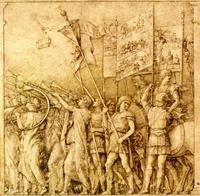
Analisi esperta di Trumpeters di Andrea Mantegna
Stile: High Renaissance · Genere: history painting
Based solely on the supplied facts, here is an expert analysis of Andrea Mantegna's Trumpeters.
Analysis of Trumpeters by Andrea Mantegna
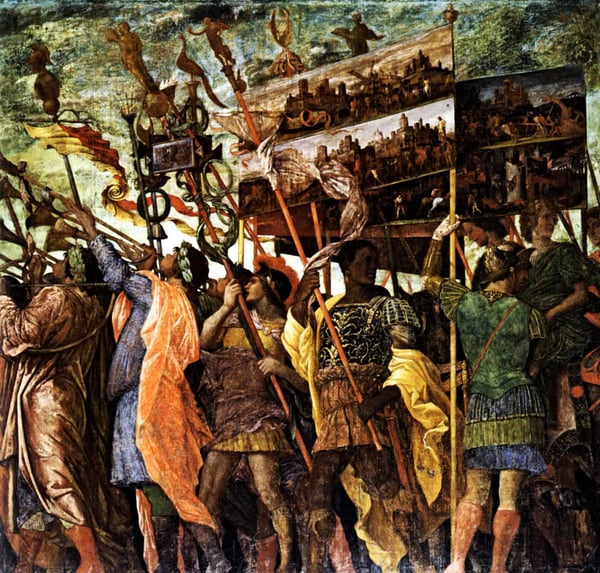
Trumpeters is a history painting executed in the High Renaissance style. Its significance lies in how it exemplifies the core ambitions of this period through its chosen genre.
1. High Renaissance Ideals in a History Painting
The High Renaissance was a moment of supreme synthesis—where naturalism, classical order, and humanist narrative converged. As a history painting (a genre then considered the highest artistic pursuit), Trumpeters would have been expected to convey a noble, morally instructive, or heroic episode. The subject of trumpeters itself is fitting: in Renaissance symbolism, trumpets herald great events—military triumphs, proclamations, or divine messages. This aligns with the High Renaissance focus on civic virtue, glory, and the dramatic public moment.
2. Focus on Monumental Human Form and Composition
While the supplied facts do not describe the specific figures, a High Renaissance history painting would prioritize balanced composition, idealized anatomy, and a sense of gravity. The trumpeters likely appear as sculptural, heroic figures, arranged with the clarity and stability characteristic of Mantegna’s contemporaries. The act of sounding a trumpet—requiring physical tension and breath control—allows for a depiction of dynamic stillness, a hallmark of the period’s mastery of capturing a single, meaningful instant.
3. Connection to Antiquity
The High Renaissance deeply valued classical precedents. Trumpeters appear often in Roman reliefs and military scenes; Mantegna’s work would thus reflect a scholarly engagement with antique sources. The painting’s significance is rooted in its ability to revive ancient themes while infusing them with contemporary Christian or political allegory—a fusion that defines High Renaissance history painting.
Conclusion
Trumpeters is significant as a High Renaissance history painting because it transforms a heraldic motif into a vehicle for the era’s highest ideals: human dignity, classical revival, and narrative clarity. Mantegna’s work stands as a testament to the period’s conviction that art could elevate historical moments into timeless, monumental statements.
Visivamente simili
20 opere con composizione e palette affini
Musicians and teaches Carriers
Andrea Mantegna
Captured statues and siege equipment, a representation of a captured City and inscriptions (Triumph of Caesar)
Andrea Mantegna
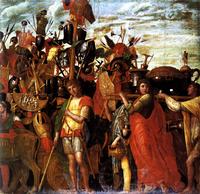
Triumphs of Caeser
Andrea Mantegna
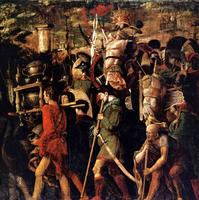
Holders of currencies and gold jewelry, trophies royal armor
Andrea Mantegna
The Triumph of Caesar
Palma Vecchio
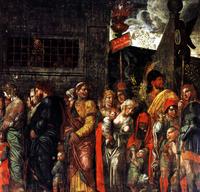
Prisonnniers
Andrea Mantegna
Battle between Heraclius and Chosroes (detail)
Piero della Francesca
Frederick II conquered Parma in 1521
Tintoretto
Exaltação da Santa Cruz
Cristovao de Figueiredo
Martyrdom of St. Andrew (introduction to the Crucifixion)
Guido Reni
The battle of the Taro
Tintoretto
Trumpeters, carrying flags and banners
Andrea Mantegna
Julius Caesar on a triumphal car
Andrea Mantegna
Triumph of Furius Camillus
Francesco de' Rossi (Francesco Salviati), "Cecchino"
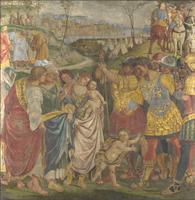
Riconciliazione di Coriolano
Pinturicchio
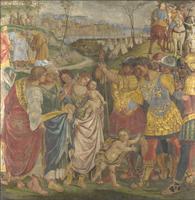
Coriolanus persuaded by his Family to spare Rome
Luca Signorelli
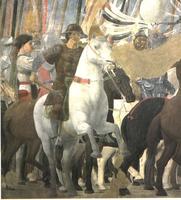
Victory of Constantine at the Battle of the Milvian Bridge
Piero della Francesca
The Deaths of Saul and Jonathan
Francesco de' Rossi (Francesco Salviati), "Cecchino"
Florian result, scenes for legend of St. Florian
Albrecht Altdorfer
Battle Between Constantine And Maxentius
Piero della Francesca