Analisi esperta di Masks di Jose Gutierrez Solana
Stile: Expressionism · Genere: genre painting
Expert Analysis of "Masks" by José Gutiérrez Solana
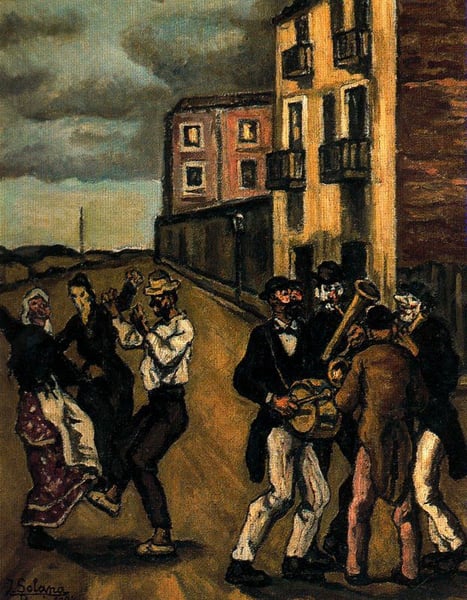
José Gutiérrez Solana’s Masks stands as a quintessential example of Spanish Expressionism, a movement that eschewed idealization in favor of raw, psychological intensity. As a genre painting, it depicts a seemingly everyday scene—a gathering of masked figures—yet Solana transforms this subject into a haunting meditation on human identity, mortality, and the grotesque undercurrents of Spanish culture.
What Makes It Significant
-
Expressionist Distortion and Mood: Solana’s style is defined by thick, impasto brushwork, muddy earth tones, and deliberately awkward compositions. The masks in the painting are not festive accessories but eerie, almost skeletal faces that blur the line between celebration and horror. The figures are compressed into a shallow space, their exaggerated features and stiff postures creating a sense of claustrophobia and unease. This distortion is characteristic of Expressionism’s aim to convey inner emotional truth over visual realism.
-
The Mask as Metaphor: In Solana’s work, masks serve as powerful symbols of societal hypocrisy and the duality of human nature. The carnival tradition in Spain often masked class tensions and repressed desires; Solana strips away the charm, revealing the macabre beneath. The figures’ rigid gazes and pallid skin suggest that the masks are not disguises but extensions of their true, haunted selves—a commentary on the performative nature of existence.
-
Grotesque Realism and Spanish Identity: Solana was deeply influenced by Spanish Baroque painters like Goya and Ribera, but he pushed their chiaroscuro and emotional darkness into a modern, uncompromising idiom. Masks captures the essence of esperpento—a Spanish literary and artistic mode that distorts reality to expose its absurdity and cruelty. The painting’s significance lies in its unflinching portrayal of a nation wrestling with its own traditions, poverty, and mortality, all through the guise of a carnival scene.
-
Genre Painting Subverted: While genre painting traditionally depicted everyday life with warmth or moral instruction, Solana subverts this by infusing the quotidian with existential dread. The viewer is not invited to observe a harmless festivity but to confront the uncanny—where masks become mirrors reflecting our own hidden fears. This inversion makes Masks a landmark in early 20th-century Spanish art, anticipating the surreal and the existential.
In sum, Masks is significant for its powerful synthesis of Expressionist technique, cultural symbolism, and psychological depth. It captures the tension between celebration and decay, revealing Solana as a master of the grotesque who used the carnival as a stage for the human condition.
Museum / Gallery
Visivamente simili
20 opere con composizione e palette affini
Murga Cadiz
Jose Gutierrez Solana
Uprising
Lyonel Feininger
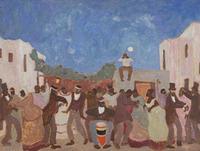
Candombe
Pedro Figari
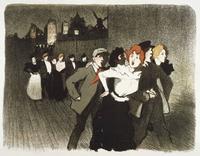
Dans La Rue
Theophile Steinlen
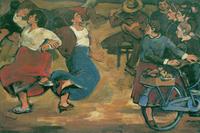
Sonntag
Mario Comensoli
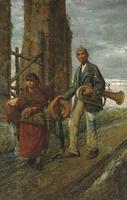
Street musicians
Michele Cammarano
Bal de Barriere drawing
Theophile Steinlen
On the quai
William James Glackens
A spanish couple in front of inn
Pablo Picasso
Acrobats (On a holiday near Paris)
Viktor Vasnetsov
Ball in Paris suburb
Theophile Steinlen
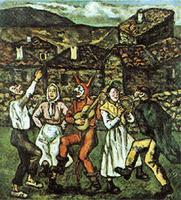
Carnival in a Village
Jose Gutierrez Solana
Dans La Rue
Theophile Steinlen
Man on the street
Théodore Géricault
October Festival Evening Outside the Walls of Rome
Wilhelm Marstrand
Musicians
Vilmos Aba-Novak
Demonstration on October 17, 1905 (Sketch)
Ilya Repin
Night Life
Robert Spencer
Seller singers. Sketch
Vasily Perov
The Ironworkers' Noontime
Thomas Pollock Anshutz