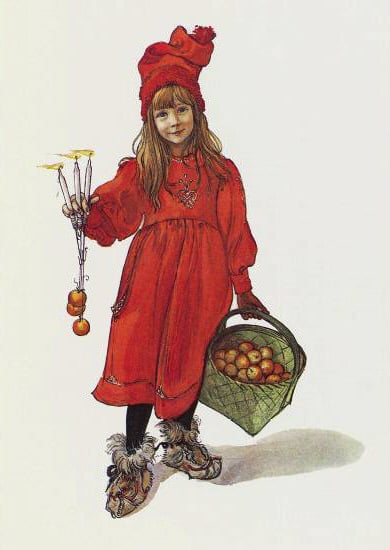
This analysis highlights the significance of Carl Larsson’s Brita as Iduna (Iðunn) within the context of Art Nouveau and its period.
Expert Analysis
As a lithograph serving as the title page for the 1901 Christmas edition of the magazine Idun, this work by Carl Larsson is significant for its seamless integration of commercial print design, mythological revival, and the decorative elegance characteristic of Art Nouveau. The portrait presents the artist’s daughter, Brita, in the guise of the Norse goddess Iðunn—keeper of the golden apples of youth. This choice reflects the period’s fascination with national romanticism and classical mythology, filtered through a distinctly modern, domestic sensibility.
The medium of lithography, used here for a mass-produced holiday edition, underscores Art Nouveau’s ambition to bring fine art into everyday life. Larsson’s composition balances a intimate, gentle portrait with the stylized, flowing lines and flattened decorative space typical of the Jugendstil (the German and Scandinavian branch of Art Nouveau). The work’s significance lies in how it embodies the movement’s core values: the elevation of applied arts, the synthesis of ancient symbols (the goddess Idun) with contemporary family portraiture, and the creation of an accessible, poetic image meant to delight a broad audience during the Christmas season.