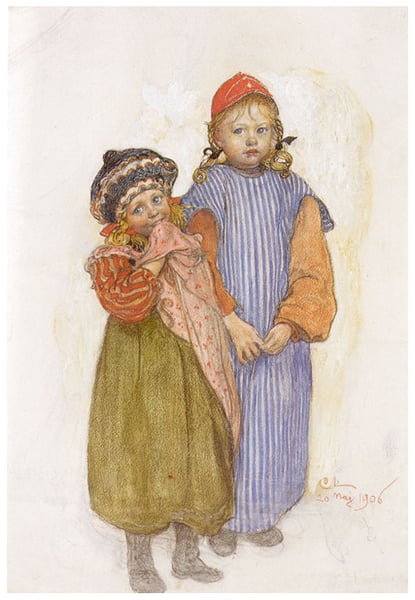
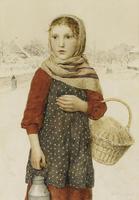
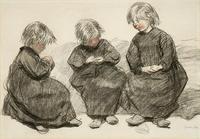
The significance of Carl Larsson's Children of the carpenter Helberg lies in its fusion of the Art Nouveau aesthetic with the intimate, genre-defining characteristics of portraiture. Within the broader Art Nouveau movement—known for its emphasis on organic, flowing lines and decorative harmony—Larsson’s work stands out for its ability to elevate everyday, domestic subjects to the level of modern art. By choosing the children of a carpenter as his sitters, Larsson grounds the stylized, ornamental qualities of Art Nouveau in a relatable, human narrative, bridging the gap between high decorative art and the lived experience of ordinary people. This portrait, therefore, is a key example of how Art Nouveau could be employed not just in architecture or decorative objects, but in capturing the quiet dignity and natural grace of childhood, making it a significant work within the modern portrait tradition.