Expert analysis of Fernando Botero’s After the Arnolfini Van Eyck (2)
Style: Naïve Art (Primitivism) · Genre: portrait
Expert Art Historical Analysis: "After the Arnolfini Van Eyck (2)" by Fernando Botero
Significance within Naïve Art (Primitivism) and Botero's Oeuvre
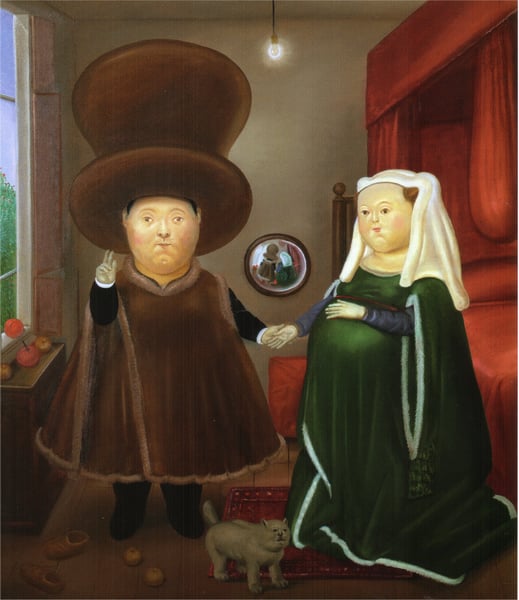
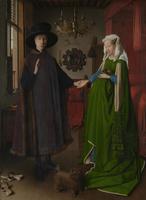
Fernando Botero’s After the Arnolfini Van Eyck (2) stands as a masterful example of how Naïve Art—often characterized by simplified forms, flat perspective, and a childlike directness—can be deployed as a sophisticated tool for parody and homage. The work is a deliberate, inflated reimagining of Jan van Eyck’s iconic 1434 Arnolfini Portrait, one of the cornerstones of Northern Renaissance painting.
What makes this piece significant is Botero’s transformation of a solemn, meticulously naturalistic scene into a playful, volumetric spectacle. True to his signature style—”Boterismo”—every figure, object, and space is swollen to an exaggerated, bulbous roundness. The couple’s faces become plump, their hands and bodies inflated to the point of gentle caricature. This distortion is not crude mockery; rather, it is a celebration of form for its own sake. The original Arnolfini portrait is renowned for its symbolic density (the convex mirror, the dog, the sandals) and its revolutionary use of oil glazes to simulate textures. Botero strips away much of that symbolism, flattening the picture plane and simplifying details, while retaining the iconic pose and setting. The mirror, for instance, becomes a round, almost cartoonish object, and the chandelier is reduced to a basic shape.
In the context of Naïve Art, Botero’s work is significant because it demonstrates that primitivism need not be merely spontaneous or untrained; it can be a deliberate aesthetic choice employed by a fully academic artist. Botero studied the Old Masters extensively, and his distortions are calculated to critique the Western canon’s obsession with realism, proportion, and gravity. By rendering these sacred figures as plush, weightless forms, he invites the viewer to reconsider the original’s seriousness. The portrait becomes a dialogue between the Renaissance’s reverence for detail and the 20th century’s appetite for humor and mass.
Furthermore, After the Arnolfini Van Eyck (2) is a quintessential example of the artist’s lifelong series of “versions after” great works, including Mona Lisa and Las Meninas. These pieces assert that art history is not a fixed monument but a living language that can be re-spoken with new accents. Here, Botero reclaims the Arnolfini couple from the hushed museum environment and gives them a corporeal, almost tactile presence—one that is at once absurd, affectionate, and deeply intelligent. The work’s significance lies in its ability to make us laugh while simultaneously forcing us to see the original with fresh, defamiliarized eyes.
Visually similar
20 works with related composition and palette
The Arnolfini Wedding. Portrait of Giovanni Arnolfini and his Wife Giovanna Cenami (The Arnolfini Marriage)
Jan van Eyck
After Mantegna
Fernando Botero
Portrait of a young woman
Hans Memling
Portrait of the Cuspinian Family
Bernhard Strigel
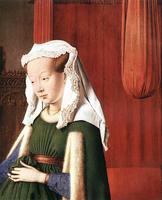
Giovanni Arnolfini and His Wife Giovanna Cenami (The Arnolfini Marriage) (detail)
Jan van Eyck
Portrait of Conrad Rehlinger and his Children
Bernhard Strigel
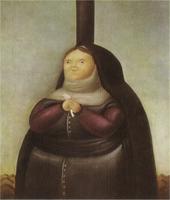
The Dolorosa
Fernando Botero
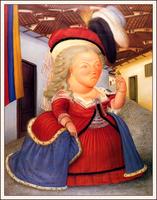
Marie Antoinette on a Visit to Medellin
Fernando Botero
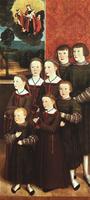
Konrad Rehlinger's Children
Bernhard Strigel
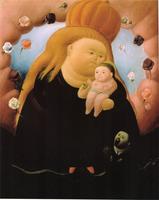
Notre Dame de New York
Fernando Botero
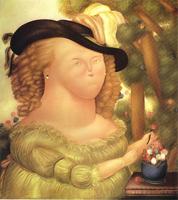
Marie Antoinette
Fernando Botero
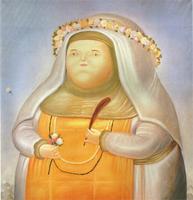
Saint Rose of Lima
Fernando Botero
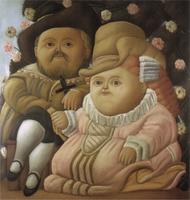
Rubens and His Wife
Fernando Botero
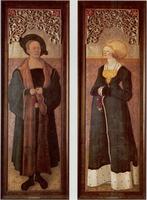
Stifterbild des Frankfurter Patriziers Claus Stalburg des Reichen und seiner Frau Margarethe vom Rhein
Jerg Ratgeb
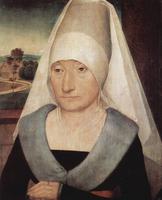
Portrait of an old woman
Hans Memling
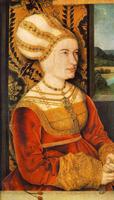
Portrait of Sibylla (or Sybilla) von Freyberg (born Gossenbrot)
Bernhard Strigel
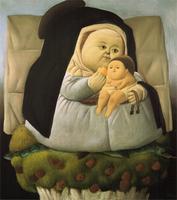
Madonna with Child
Fernando Botero
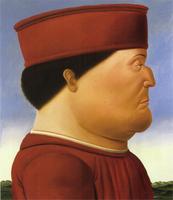
Federico da Montefeltro (after Piero della Francesca)
Fernando Botero
Portrait of Emperor Maximilian and His Family
Bernhard Strigel
Shota Rustaveli and Queen Tamar
Niko Pirosmani