
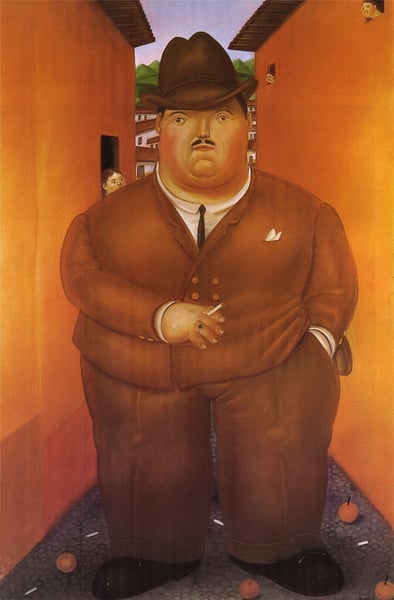
Analisi esperta di The Street di Fernando Botero
Stile: Naïve Art (Primitivism) · Genere: portrait
In analyzing Fernando Botero’s “The Street,” we begin with the supplied classification: it is a work of Naïve Art (Primitivism) in the portrait genre. While Botero is most often celebrated as a master of his own invented style—Boterismo, characterized by exaggerated, voluminous forms—the designation of Naïve Art here directs attention to the work’s affinity with the directness, simplicity, and emotional honesty found in folk or untrained painting. This tension between Botero’s sophisticated training and the “naïve” label is precisely what makes the piece significant.
Significance within Naïve Art and Primitivism:
-
Subversion of “Primitive” Innocence
Naïve Art typically prizes flat perspective, bright local color, and a childlike disregard for anatomical realism. Botero’s “The Street” embraces these traits—the figures are rounded to the point of caricature, their proportions deliberately distorted, yet the composition retains a formal balance that recalls classical portraiture. This self-conscious “primitive” treatment elevates the street scene from mere documentation into a playful critique of both academic painting and modern life. -
Volume as an Expressive Device
In the tradition of Primitivism (e.g., Gauguin, Rousseau), simplified forms often carry symbolic weight. Here, Botero’s famously inflated proportions—the plumpness of every figure—become a signature device. Instead of denoting wealth or excess, the volume suggests a kind of monumental stillness; the street feels populated by statuesque, dignified “everypeople.” This transforms a quotidian scene into a timeless, almost iconic portrait of community. -
Genre as a Window to the Ordinary
Though labeled a portrait, the work likely encapsulates a collective portrait of street life. Botero treats each individual with the same affectionate, unpretentious gaze that Naïve painters reserve for village festivals. The significance lies in how he merges the intimacy of portraiture (the viewer confronts each face) with the broader narrative of public space, all while maintaining the stylistic “flatness” that Naïve Art champions. -
Irony and Accessibility
Botero’s adoption of a “naïve” manner is never naive in the literal sense; it is a deliberate choice to make complex social observations accessible. “The Street” can be read as a gentle satire of bourgeois complacency or as a celebration of everyday resilience—depending on the viewer’s perspective. This ambiguity, couched in an almost cartoonish simplicity, marks the work as a bridge between Primitivism’s search for authenticity and modern art’s appetite for irony.
Thus, “The Street” is significant because it demonstrates how a highly skilled artist can inhabit the stylistic vocabulary of Naïve Art to produce a work that feels both immediate and intellectually layered. It stands as a testament to Botero’s ability to make the “primitive” sophisticated, turning a street scene into a portrait of humanity that is at once humorous, monumental, and deeply empathetic.
Visivamente simili
20 opere con composizione e palette affini
Man in a Tuxedo
Fernando Botero
The Siesta
Fernando Botero
Man Reclining
Fernando Botero
The Poet
Fernando Botero
Trader
Werner Berg
Man Smoking
Fernando Botero
Of Things To Come
Georg Scholz
Family
Fernando Botero
Lovers
Fernando Botero

The Marquis D'Afflitto on a Staircase
Tamara de Lempicka
The Suitor
Charles Blackman
A Letter from New York
Richard Lindner
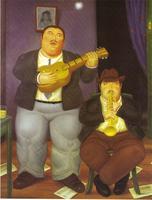
The Musicians
Fernando Botero
Selvportræt
Vilhelm Lundstrom
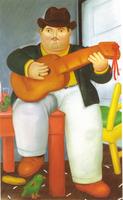
Man with a Guitar
Fernando Botero
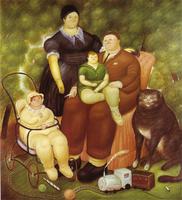
Family Scene
Fernando Botero
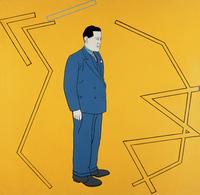
Portrait of Juan Gris
Patrick Caulfield
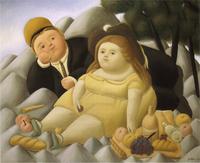
Picnic in the Mountains
Fernando Botero
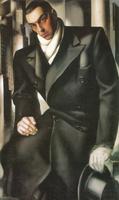
Portrait of a Man or Mr Tadeusz de Lempicki
Tamara de Lempicka
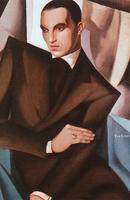
Portrait of Marquis Sommi
Tamara de Lempicka