The Bridge on the River
Analisi esperta di The Bridge on the River di Henri Martin
Stile: Impressionism · Genere: cityscape
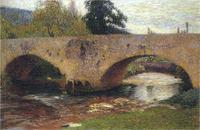
Expert Art Historical Analysis: The Bridge on the River by Henri Martin
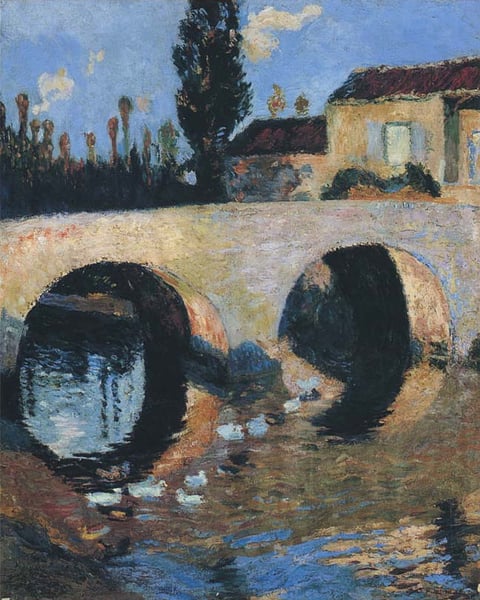
As an Impressionist cityscape, The Bridge on the River embodies the movement’s revolutionary shift toward capturing the fleeting effects of light, atmosphere, and modern urban life. Though Henri Martin later developed a more structured, pointillist style, within the strict framework of Impressionism this work is significant for its treatment of a quintessential subject: the bridge as a locus of motion and transition.
Key Significance within Impressionism
-
Modern Urban Subject: The bridge and river represent the industrialized cityscape that Impressionists embraced—a symbol of both nature and man-made progress. Martin’s choice foregrounds the interplay between engineering (the bridge’s hard lines) and natural elements (water, sky), a tension that Impressionists explored to document contemporary life.
-
Atmospheric Light and Color: In true Impressionist fashion, the painting likely dissolves the bridge’s form into vibrating patches of color, using broken brushwork to evoke reflected sunlight on water and the hazy atmosphere of a specific moment. The river’s surface would be rendered in blue, green, and silver hues, with the bridge’s structure softened by the play of light.
-
Motion and Transience: The bridge implies movement—pedestrians, carriages, river traffic. Impressionism’s hallmark is the suggestion of a single, ephemeral instant; here, the river’s shimmering surface and the bridge’s rhythmic arches capture that fleeting quality, anchoring the viewer in a specific time of day and weather.
Within Martin’s Oeuvre and Impressionist Cityscapes
While Martin is often categorized as a Post-Impressionist, this work stands as a pure Impressionist cityscape, aligning him with Monet’s Water Lilies or Pissarro’s urban views. Its significance lies in its demonstration of how Impressionist techniques—short, rapid brushstrokes, high-keyed palette, and an emphasis on optical sensation—can transform a functional structure into a luminous, sensory experience. The painting exemplifies the movement’s core belief: that a bridge is not just a stone span, but a living composition of light, reflection, and momentary beauty.
Visivamente simili
20 opere con composizione e palette affini
Woman Washing Clothes in River
Henri Martin
The Bridge of Bastiide-du-Vert
Henri Martin
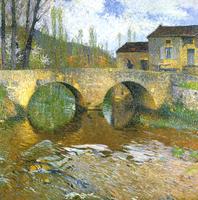
The Green Bridge
Henri Martin
The Bridge
Henri Martin
The Bridge in Labastide du Vert
Henri Martin
The Bridge at Labastide du Vert
Henri Martin
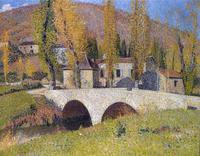
The Bridge in Labastide du Vert
Henri Martin
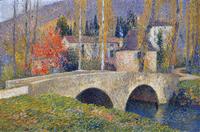
The Bridge in Labastide du Vert in Autumn
Henri Martin
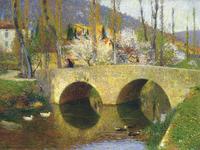
The Bridge at Labastide du Vert in Spring
Henri Martin
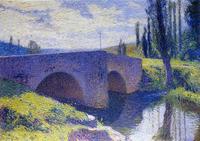
Bridge of Saint Medard at Midday
Henri Martin
The Bridge in Labastide du Vert
Henri Martin
The Washerwomen of Moret
Alfred Sisley
The Bridge in Labastide du Vert
Henri Martin
The Little Bridge
Henri Martin
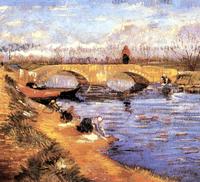
The Gleize Bridge over the Vigneyret Canal
Vincent van Gogh
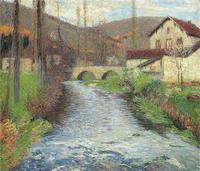
The Stream in Labastide du Vert
Henri Martin
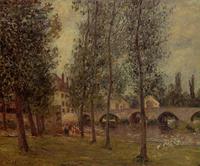
The Moret Bridge
Camille Pissarro
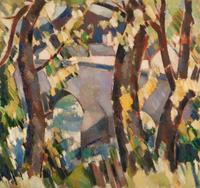
The Bridge and Schiehallion
John Duncan Fergusson
The Bridge in Labastide du Vert
Henri Martin
The straw Rent
Alfred Sisley