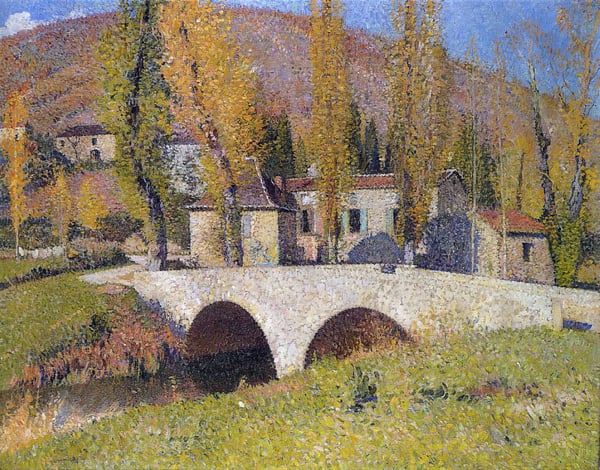
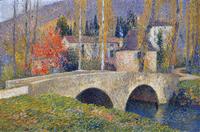
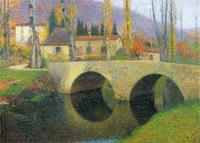
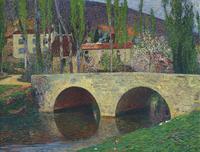
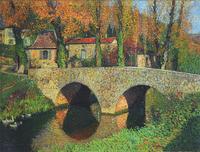
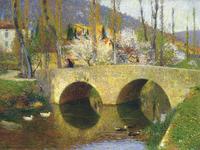
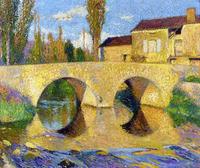
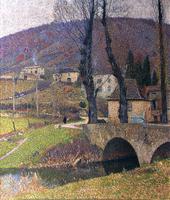
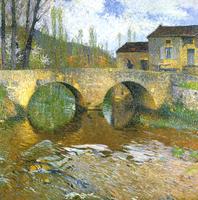
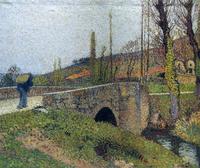
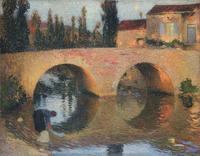
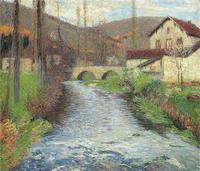
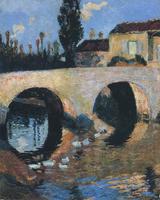
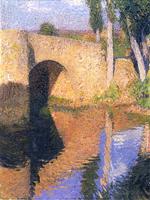
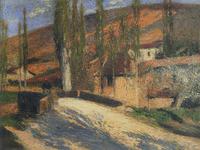
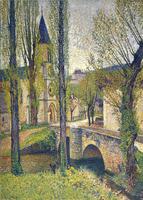
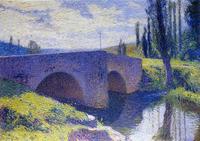
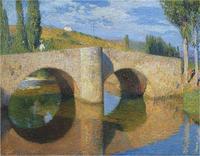
This artwork, The Bridge in Labastide du Vert by Henri Martin, is a significant example of Divisionism applied to the landscape genre. Executed in this precise, post-impressionist style, the painting demonstrates how Martin used systematic, separated strokes of pure color to render a natural scene—in this case, a rural bridge in the French countryside. The work’s importance lies in its embodiment of Divisionist principles: rather than mixing pigments on a palette, Martin builds luminosity and atmospheric vibration through optical mixing, allowing the viewer’s eye to blend the dots of color. By choosing a landscape subject, he aligns Divisionism with the tradition of capturing transient light and air, yet his methodical, almost scientific approach to color application marks a departure from earlier Impressionist spontaneity. This piece thus stands as a testament to how Divisionist technique could elevate a simple, everyday locale into a study of light, structure, and chromatic harmony.