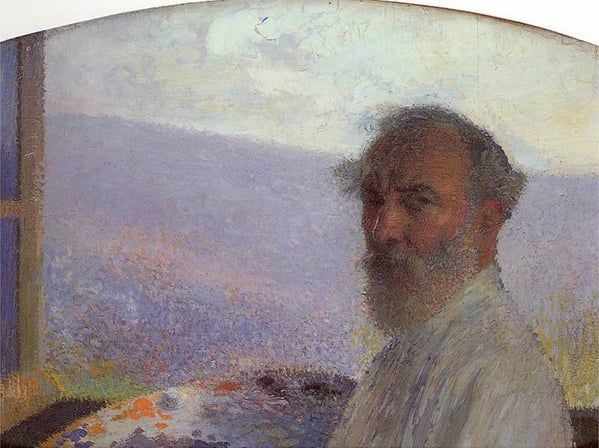
Self Portrait
Expertenanalyse zu Henri Martins Self Portrait
Stil: Post-Impressionism · Genre: self-portrait
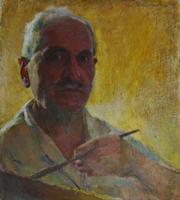
Henri Martin’s Self Portrait is a compelling example of how Post-Impressionist painters used the self-portrait as a vehicle for both technical experimentation and psychological introspection. Executed with Martin’s characteristic modified pointillist technique, the work reveals his deep engagement with Neo-Impressionist color theory while simultaneously asserting a subjective, emotional presence that transcends the detached objectivity of Impressionism.
Significance within Post-Impressionism:
- Synthesis of Divisionism and Personal Expression: Unlike strict pointillists such as Seurat, Martin applies small, distinct dabs of color in a looser, more rhythmic fashion. This creates a shimmering surface that captures the effects of light and atmosphere, but the brushwork is also deliberately expressive—each stroke feels like a mark of the artist’s own hand. In this self-portrait, the technique serves to dissolve the artist’s features into a tapestry of luminous color, suggesting that identity is not fixed but a dynamic interplay of perception and mood.
- Psychological Depth through Palette: The color choices—muted earth tones tempered with cool blues and warm ochres—evoke a reflective, almost melancholic temperament. The face emerges not from precise contours but from the optical blending of adjacent hues, a method that distances the viewer from mere likeness and draws attention to the artist’s inner state. This aligns with Post-Impressionism’s shift toward symbolist and subjective content, where a portrait becomes an exploration of the self rather than a simple record.
- Martin’s Position in the Movement: While often overshadowed by Seurat, Signac, or Van Gogh, Henri Martin was a key figure in the Société des Artistes Indépendants and a celebrated muralist. This self-portrait demonstrates his unique ability to merge the decorative, the scientific, and the introspective—qualities that make his work a vital, if understated, contribution to the period’s avant-garde.
In sum, Self Portrait stands as a testament to Martin’s mastery of Post-Impressionist technique—where color and touch are inseparable from meaning—and as a quiet, dignified meditation on the artist’s own place within the luminous turbulence of modern life.
Visuell ähnlich
20 Werke mit ähnlicher Komposition und Farbpalette
Korovin in Gurzuf
Alexander Roitburd
Self-Portrait
Julian Fałat
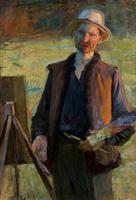
Self-Portrait
Leon Wyczółkowski
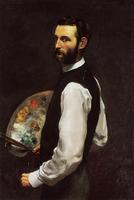
Self-Portrait
Frederic Bazille
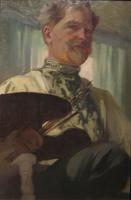
Self-portrait
Alphonse Mucha
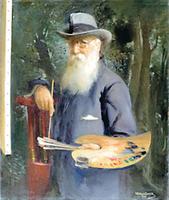
Self-portrait
Ivan Mrkviсka
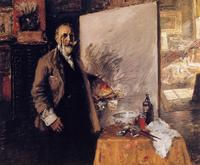
Self Portrait
William Merritt Chase
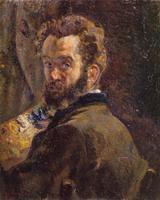
Autoportrait au chevalet
Armand Guillaumin
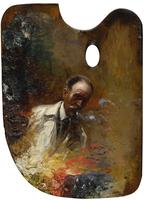
Self-Portrait on a Palette
Delphin Enjolras
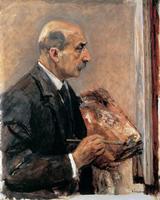
Self-Portrait with Palette
Max Liebermann
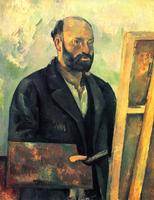
Self-Portrait with Palette
Paul Cezanne
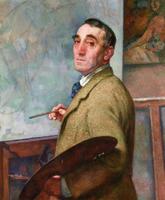
Self Portrait with Palette
Theo van Rysselberghe
Autumn Gold
Tetyana Yablonska
Painter Jan Bakker At Work
Cornelis Vreedenburgh
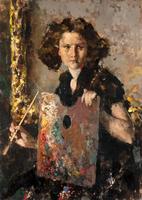
The young painter
Vincenzo Irolli
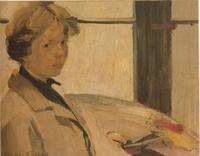
Portrait of painter Maria Hors
Nikolaos Lytras
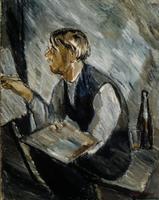
Ruokokoski Maalaa
Sallinen Tyko
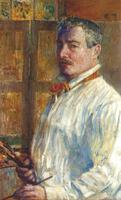
Self-portrait
Childe Hassam
Self Portrait
Yeghishe Tadevosyan
Christian Krohg at the Easel
Oda Krohg