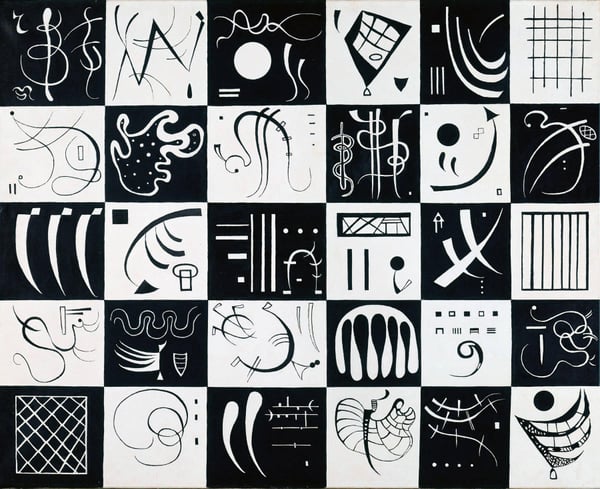
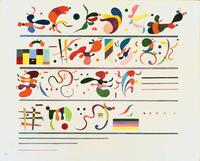
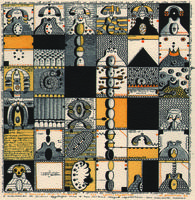
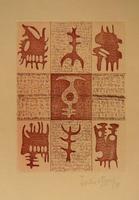
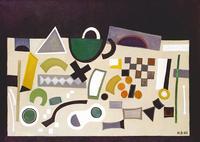
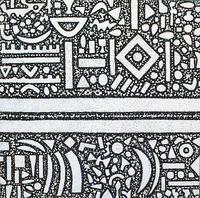
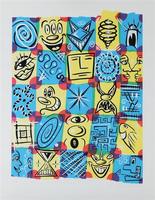
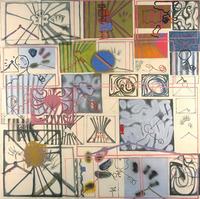
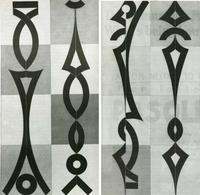
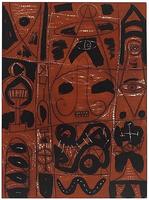
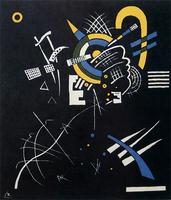
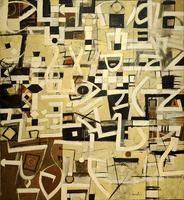
"Thirty" by Wassily Kandinsky holds significance as a key work within the Abstract Art style and the abstract genre. Kandinsky is considered a pioneer of non-representational painting, and this piece exemplifies the movement's core principles: the use of form, color, and composition to evoke emotion and spiritual resonance without depicting recognizable objects. As an abstract work, "Thirty" contributes to the radical departure from traditional artistic conventions that defined early 20th-century modernism, emphasizing pure visual language over narrative or mimetic representation.