Expert analysis of Toshi Yoshida’s Pagoda in Kyoto
Style: Sōsaku hanga · Genre: landscape
Expert Analysis of "Pagoda in Kyoto" by Toshi Yoshida
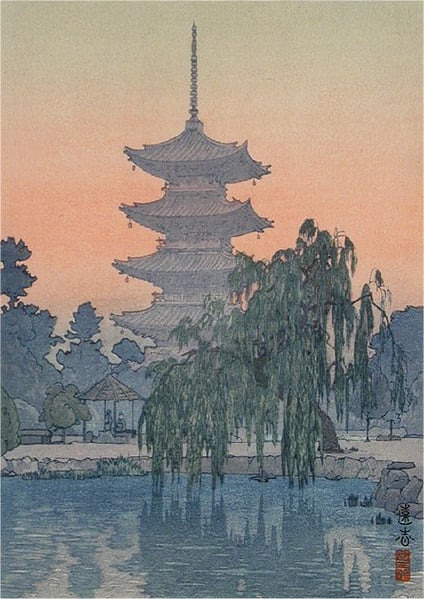
Toshi Yoshida’s Pagoda in Kyoto stands as a compelling example of the Sōsaku hanga movement’s core philosophy—the complete integration of design, carving, and printing by a single artist. Unlike the collaborative ukiyo‑e tradition or even the contemporary shin‑hanga school (with which Yoshida’s father, Hiroshi Yoshida, was famously associated), Toshi embraced the Sōsaku hanga ethos of personal expression through every stage of production.
Stylistic Significance
As a landscape within Sōsaku hanga, this work reflects a deliberate fusion of Western naturalistic observation and Japanese print‑making craftsmanship. Yoshida captures the iconic pagoda—likely the Yasaka Pagoda in Higashiyama—with a refined sense of atmosphere and light. The carving demonstrates bold, expressive line work and carefully modulated color blocks, hallmarks of a movement that prized the artist’s hand over mechanical reproduction.
Context within the Period
Produced during a time when Japanese artists were reasserting individual authorship, Pagoda in Kyoto exemplifies how Sōsaku hanga (literally “creative prints”) redefined the genre. By choosing a familiar subject from Kyoto’s architectural heritage, Yoshida grounds the revolutionary technique in a subject that resonates with cultural memory. The print’s significance lies in its balance: a traditional motif reimagined through a modern, self‑expressive process, marking a pivotal moment in Japanese printmaking’s evolution toward global modernism.
Visually similar
20 works with related composition and palette
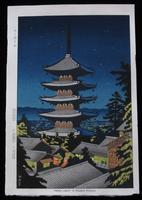
Moonlight in Yasaka Pagoda
Asano Takeji
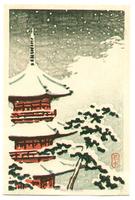
Red Pagoda in the Snow
Hasui Kawase
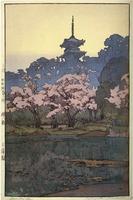
Sankeien
Hiroshi Yoshida
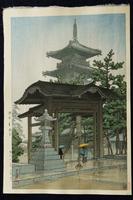
Zenstu Temple in Sanshu
Hasui Kawase
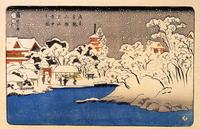
A Snowstorm at Kinryozan Temple
Utagawa Kuniyoshi
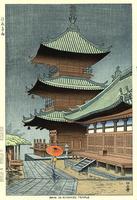
Rain in Kiyomizu Temple
Asano Takeji
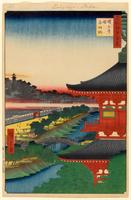
53 (49) The Pagoda of Zōjōji Temple and Akabane
Hiroshige
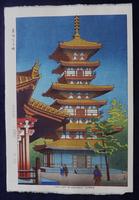
Twilight at Yakushiji Temple
Asano Takeji
Flow
Beeple
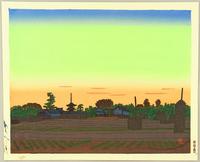
Villege of Horyu Temple in the Sunset Color
Unichi Hiratsuka
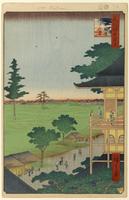
66 (70) The Sazaidō Hall at the Five Hundred Rakan Temple
Hiroshige
Hue Shift
Beeple
Torii and Crow in the Snow
Ohara Koson
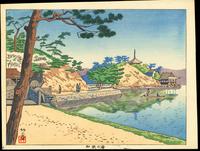
Wakanoura
Asano Takeji
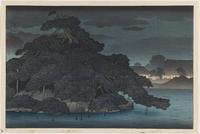
Evening Rain at Karasaki
Hasui Kawase
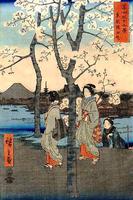
Cherry Tree
Hiroshige
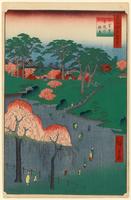
14. Temple Gardens in Nippori
Hiroshige
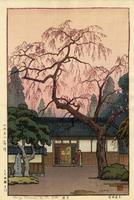
Cherry Blossom by the Gate
Toshi Yoshida
Asakusa Kannon, Tokyo
Shotei Takahashi
Old City in Kudara (Paekche), Korea
Unichi Hiratsuka