
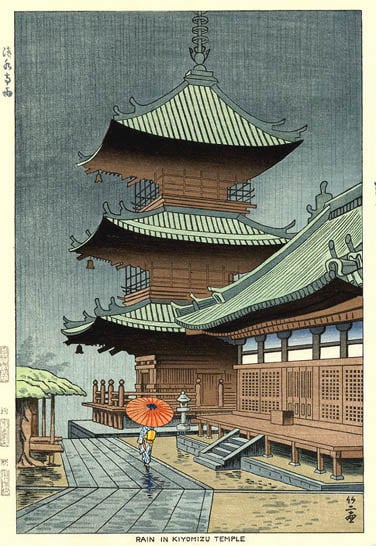
Analisi esperta di Rain in Kiyomizu Temple di Asano Takeji
Stile: Shin-hanga · Genere: cityscape
Expert Art Historical Analysis: "Rain in Kiyomizu Temple" by Asano Takeji
Asano Takeji’s Rain in Kiyomizu Temple stands as a masterful exemplar of the Shin-hanga (New Print) movement, which revitalized the traditional Japanese woodblock print in the early 20th century by blending ukiyo-e conventions with Western pictorial realism and atmospheric effects. Despite being categorized as a cityscape, the work transcends mere topographical record: it captures a specific, ephemeral mood—the quiet drama of rain enveloping one of Kyoto’s most iconic landmarks.
Significance within the Shin-hanga Style:
-
Atmospheric Realism: Shin-hanga artists like Takeji prioritized naturalistic light and weather. Here, the rain is not a decorative motif but a unifying, tactile presence. Diagonal strokes of gray and blue wash over the temple’s vermilion pillars and tiled roof, creating a veil of moisture that softens architectural details. This approach reflects the Shin-hanga debt to Western Impressionism—particularly the study of transient light and atmosphere—while retaining the flat, decorative sensitivity of ukiyo-e.
-
Modern Mood, Traditional Subject: Kiyomizu Temple, a UNESCO World Heritage site, anchors the print in Japan’s classical past. However, Takeji’s treatment—the muted palette, the empty, rain-slicked wooden stage, the solitary figure perhaps sheltering under an umbrella—evokes a modern sense of solitude and introspection. This tension between age-old cultural symbol and contemporary lyrical realism is a hallmark of Shin-hanga’s appeal to both domestic audiences and Western collectors.
-
Technical Mastery: As a woodblock print, the work demonstrates the collaborative production system (artist, carver, printer) that Shin-hanga revived. The subtle gradation of color in the rainy sky (bokashi), the crisp outlines of the temple structure against the softened background, and the delicate rendering of dripping eaves all showcase the printer’s skill. The polished finish—characteristic of Takeji’s oeuvre—lends the scene a near-photographic clarity without losing the handcrafted charm of the medium.
-
Genre Innovation: Within the cityscape genre, Rain in Kiyomizu Temple moves beyond the typical daytime or festive views favored by earlier ukiyo-e masters such as Hiroshige. Instead, Takeji focuses on a liminal weather condition, transforming a famous site into a vehicle for emotional expression. This aligns with Shin-hanga’s broader modernizing impulse: to honor tradition while embracing subjective, personal vision.
Conclusion: Asano Takeji’s print is significant for its seamless fusion of traditional Japanese woodblock artistry with modern atmospheric realism, and for its ability to invest a historic, well-known landmark with a contemplative, almost melancholic beauty. It represents Shin-hanga at its most poetic—a bridge between the floating world of Edo and the introspective sensibility of the 20th century.
Visivamente simili
20 opere con composizione e palette affini
Red Pagoda in the Snow
Hasui Kawase
Twilight at Yakushiji Temple
Asano Takeji
Zenstu Temple in Sanshu
Hasui Kawase
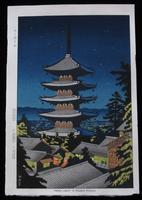
Moonlight in Yasaka Pagoda
Asano Takeji

Flow
Beeple
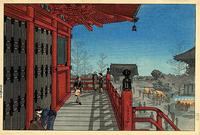
Asakusa Kannon, Tokyo
Shotei Takahashi
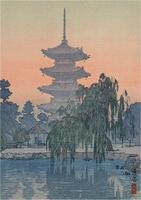
Pagoda in Kyoto
Toshi Yoshida
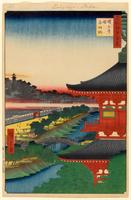
53 (49) The Pagoda of Zōjōji Temple and Akabane
Hiroshige

Novaclustr
Beeple
Kawase Hasui
Hasui Kawase
Rain in Higashi-Honganji Temple, Kyoto
Asano Takeji
The Cherry Tree in Kawagoe
Hiroshi Yoshida
Chion-in Temple Gate
Hiroshi Yoshida
Sankeien
Hiroshi Yoshida
Untitled
Keisai Eisen
Snow Scene at Sensô-ji Temple at Kinryûzan in the Eastern Capital
Keisai Eisen
Rain in Sanjyusangendo Temple, Kyoto
Asano Takeji
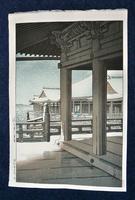
Snow Fall at Kiyomizu Temple, Kyoto
Hasui Kawase
相互尊重
Obnubilant
Old City in Kudara (Paekche), Korea
Unichi Hiratsuka