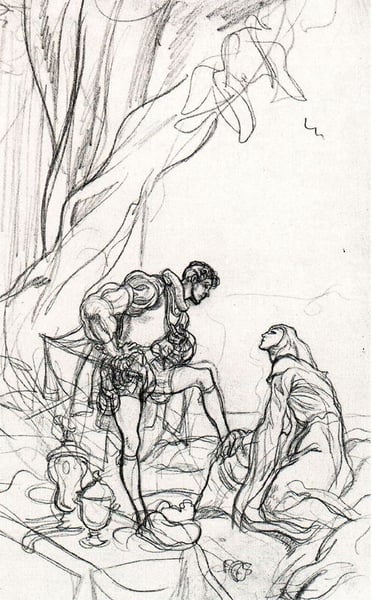
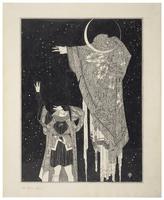
Expert Analysis of "Don Juan. Study of illustration." by Carlos Saenz de Tejada
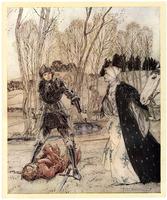
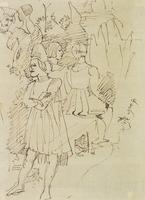
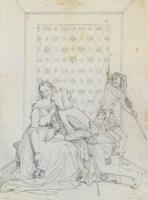
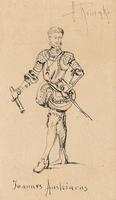
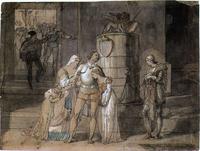
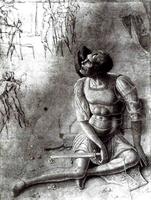
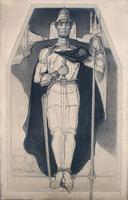
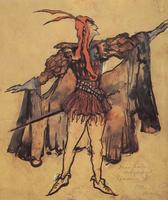
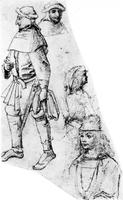
As a sketch and study executed in the Art Nouveau (Modern) style, this work holds significance by revealing the iterative, design-focused process central to the movement. Art Nouveau prized ornamental unity and flowing, sinuous lines—qualities that often originated in preparatory studies like this one. Here, the artist’s exploration of composition and line for a final illustration of the iconic Don Juan character exemplifies how Art Nouveau blurred the boundaries between fine art and commercial illustration.
The choice of subject—Don Juan, a figure of romantic intrigue and theatrical legend—aligns with Art Nouveau’s fascination with literary, mythological, and symbolic themes. As a study, the piece offers a rare glimpse into the artist’s hand and the deliberate construction of decorative elegance: the likely emphasis on rhythmic contour, elegant pose, and stylized drapery would be typical of the period’s aesthetic. This work is significant not as a finished product, but as a testament to the thoughtful, craft-oriented genesis of Art Nouveau’s celebrated visual language—where every sketch was a step toward the seamless integration of art into everyday life.