Expert Analysis:
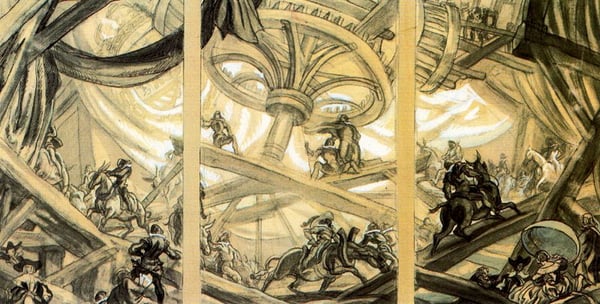
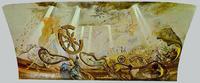
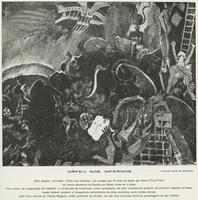
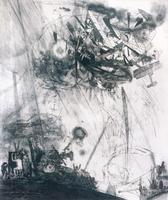
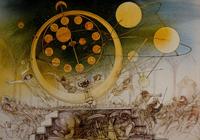
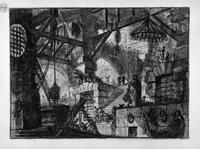
Carlos Saenz de Tejada’s Sketch of decoration for the ceiling of The Royal Mint of Spain is a compelling example of Art Nouveau’s ambition to unite fine art with functional architecture. As a preparatory study, it reveals the artist’s deliberate process of integrating organic, flowing ornament—hallmarks of the Modernismo movement—into a national institutional space.
The work’s significance lies in its genre: a sketch and study that captures the transitional moment between conceptual design and executed decoration. Art Nouveau celebrated total works of art (Gesamtkunstwerk), where every architectural surface became a canvas. Here, the ceiling of a state mint is envisioned not merely as a utilitarian covering, but as a dynamic compositional field of sinuous lines, stylized plant forms, and rhythmic symmetry. The Royal Mint—a symbol of monetary authority—was thus transformed into a space of aesthetic modernity, elevating craft to the level of high art.
Saenz de Tejada’s sketch also reflects the Spanish variant of Art Nouveau, which often fused international stylistic vocabulary with local decorative traditions. Though only a study, it embodies the movement’s core ethos: that beauty should permeate daily life, even in the most institutional of settings. This work stands as a testament to the way Art Nouveau blurred boundaries between preparatory design and finished masterpiece, between ornament and architectural identity.