Expert analysis of Gene Davis’s Untitled
Style: Color Field Painting · Genre: abstract
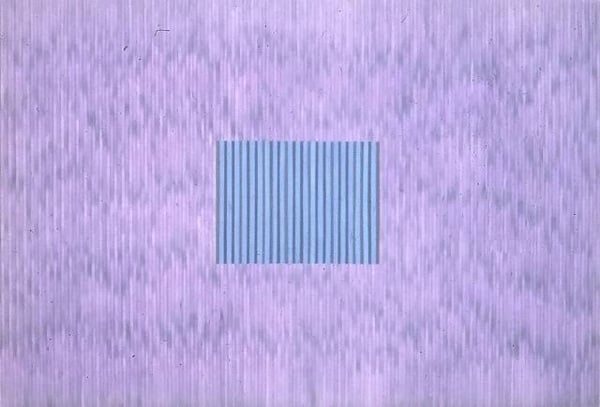
Expert Art Historical Analysis: "Untitled" by Gene Davis
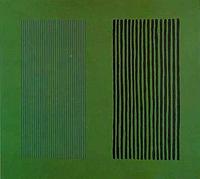
Gene Davis’s Untitled exemplifies the core tenets of Color Field Painting, a movement that emerged in the 1950s–60s as a radical departure from Abstract Expressionism’s gestural intensity. Davis was a leading figure of the Washington Color School, a group that prioritized pure, optically charged color over narrative or form.
What makes this work significant within its style/period:
- Stripes as pure optical experience: Davis is best known for his rigorous, repeating vertical stripes—a signature device that transforms the canvas into a field of vibratory color. In Untitled, the absence of a title directs focus entirely onto the chromatic relationships. The stripes are not symbolic; they exist solely to generate perceptual tension and harmony.
- Color as subject: Unlike earlier abstraction that retained vestiges of landscape or emotion, Davis’s stripes are non-referential. The colors—often high-key and synthetic—seem to push forward and recede simultaneously, creating a flat yet optically active surface. This aligns with Color Field’s rejection of illusionistic depth in favor of “open” or “expansive” color.
- Repetition and the “all-over” composition: Davis’s evenly spaced, unmodulated bands echo Jackson Pollock’s all-over drip technique but replace physical energy with chromatic resonance. The stripe motif becomes a vehicle for exploring how adjacent hues affect one another—a direct application of Josef Albers’s color theory, which influenced Davis deeply.
- Scale and immersion: Many of Davis’s works, including Untitled, are large-scale, intended to fill the viewer’s peripheral vision. This immersive quality embodies Clement Greenberg’s ideal of “opticality,” where paint is absorbed into the canvas rather than applied as a tactile surface.
In summary, Untitled is significant because it distills Color Field painting to its essence: a rigorous, non-hierarchical arrangement of saturated vertical bands that activate the viewer’s perception. Davis’s work here is not about representation or expression, but about the pure, relational power of color—making him a pivotal figure in the Washington Color School and a master of the stripe as an abstract visual language.
Visually similar
20 works with related composition and palette
Fisicromía 2250
Carlos Cruz-Diez
Sunset Veils
Richard Anuszkiewicz
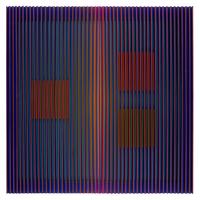
22.05.16, Lyric Composition
Andrzej Nowacki
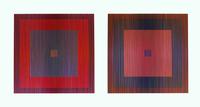
05.05.16, The new composition I
Andrzej Nowacki
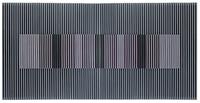
30.11.15
Andrzej Nowacki
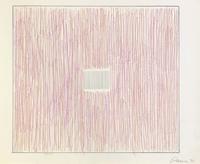
Untitled (Pink Stripes-Gray Box)
Gene Davis
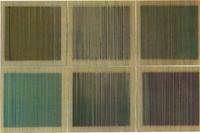
Physichromie No. 326
Carlos Cruz-Diez
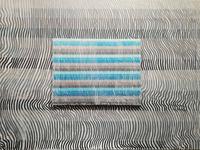
Dionysus
Giovanni Guida
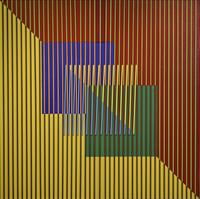
Drei Quadrate
Max Coor
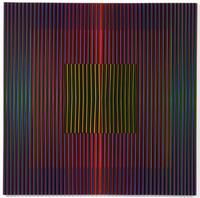
03.06.13
Andrzej Nowacki
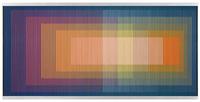
Physichromie 625
Carlos Cruz-Diez
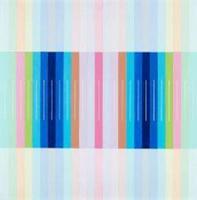
Chromographie V-Violet
Gregorio Vardanega
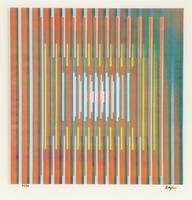
In Deep Prayer
Yaacov Agam
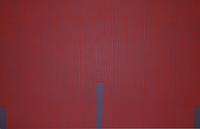
Ecriture No. 050319
Park Seo-Bo
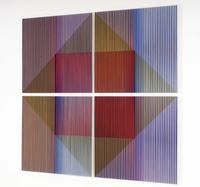
15.01.17
Andrzej Nowacki
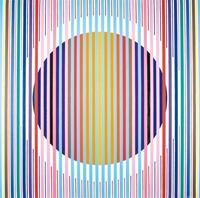
Graphisme Vertical Sur Rond
Gregorio Vardanega
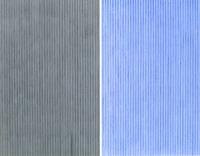
Yukon Sonata
Gene Davis
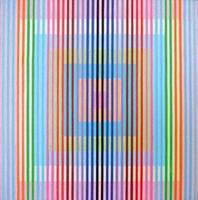
Chromographie x4: Graphisme chromatique sur carrés
Gregorio Vardanega
Green Giant
Gene Davis
Ecriture No. 051128
Park Seo-Bo