Analisi esperta di The Japanese Mask di Alfred Stevens
Stile: Realism · Genere: genre painting
Expert Analysis: "The Japanese Mask" by Alfred Stevens
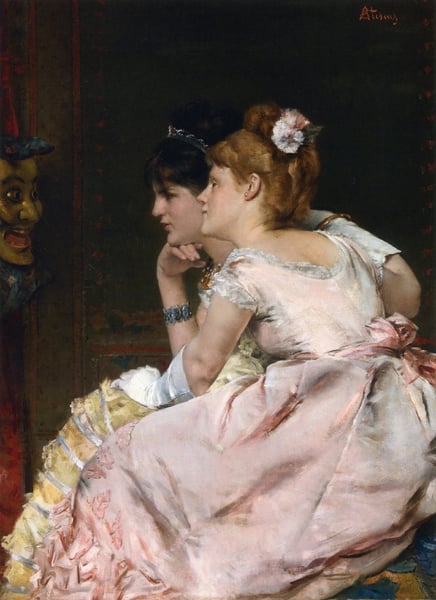
Alfred Stevens was a leading figure in 19th-century Belgian Realism, celebrated for his exquisite depictions of modern life, particularly the intimate, fashionable interiors of upper-class women. The Japanese Mask exemplifies his mastery of this genre while marking a crucial intersection between Realist fidelity and the burgeoning wave of Japonisme—the European craze for Japanese art and culture that swept the second half of the 19th century.
Significance within Realism and Genre Painting:
-
Precision and Materiality: Stevens’ Realism is characterized by an almost photographic attention to texture and light. In The Japanese Mask, the sheen of silk, the softness of lace, and the polished surface of the mask itself would be rendered with scrupulous clarity. This aligns with the Realist mandate to depict the tangible world without idealization, yet it elevates a simple domestic scene into a visual study of surfaces and reflections.
-
Psychological Ambiguity: Unlike many purely anecdotal genre scenes, the inclusion of a Japanese mask introduces a layer of narrative intrigue. The woman’s interaction with or contemplation of the exotic object suggests a dialogue between the familiar and the foreign, the self and the persona. This psychological depth—inviting the viewer to speculate on the sitter’s thoughts—distinguishes Stevens’ work from mere decorative illustration.
Significance within its Period (Japonisme and Modernity):
-
Cultural Exchange: The mask is not merely a prop but a symbol of the artist’s engagement with global aesthetics. Stevens, like his contemporaries Whistler and Tissot, used Japanese objects to signal cosmopolitan taste and to experiment with asymmetrical composition, flat areas of color, and decorative patterning—elements that would later influence Post-Impressionism. The Japanese Mask thus serves as a historical document of how Realist painters mediated cross-cultural fascination while remaining grounded in their meticulous observation of contemporary life.
-
Fashioning Identity: The juxtaposition of a Western woman with an Eastern artifact also hints at the period’s interest in performance and masquerade. The mask (literally a face covering) resonates with the Realist interest in social roles: the sitter’s own expression may be as guarded as the mask itself, blurring the line between authentic emotion and societal expectation.
In sum, The Japanese Mask is significant because it crystalizes Alfred Stevens’ contribution to Realism as a style that was both rigorously observational and receptive to the exotic currents of its time. It demonstrates that genre painting could be a vehicle for exploring modernity’s complex visual and cultural exchanges, making Stevens a pivotal link between academic Realism and the avant-garde movements that followed.
Visivamente simili
20 opere con composizione e palette affini
The conversation
Francesco Didioni
The toilet
Raimundo de Madrazo
Portrait Of Mrs Charles Wyllie
Sir Lawrence Alma-Tadema
The Wyndham Sisters
John Singer Sargent
The letter
Wladyslaw Czachorski
The reluctant bride
Auguste Toulmouche
Poor Congratulations
Ferdinand Georg Waldmüller
Mrs. Carl Meyer, later Lady Meyer, and her two Children
John Singer Sargent
Young woman in pink with her child
Pascal Dagnan-Bouveret
Spanish Beauty
Charles Hermans
A Testing Question
Frederick Morgan
Portrait of a Woman in White
Eva Gonzales
Mrs. Thomas Wodehouse Legh
John Singer Sargent
An Afternoon Idyll
Auguste Toulmouche
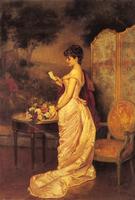
The Love Letter
Auguste Toulmouche
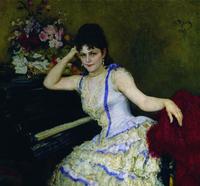
Portrait of pianist and professor of Saint Petersburg Conservatory Sophie Menter
Ilya Repin
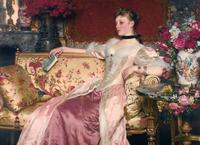
A Moment of Repose
Wladyslaw Czachorski
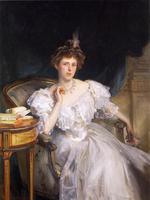
Margherita Goldsmid, later Mrs Raphael
John Singer Sargent
The Yellow Screen
Lilla Cabot Perry
Sweet Doing Nothing
Auguste Toulmouche