Expert analysis of Kurt Schwitters’s The And-Picture
Style: Dada · Genre: abstract
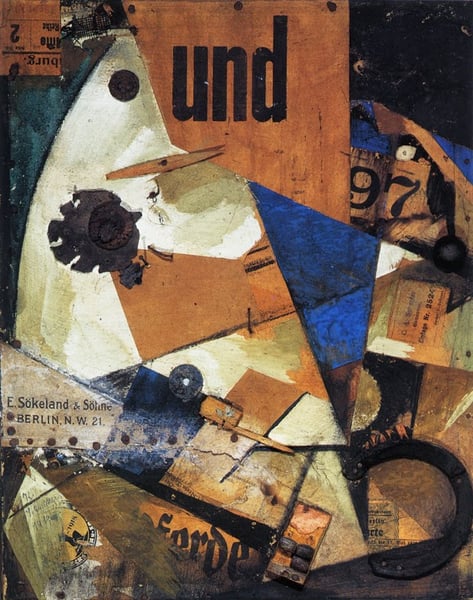
Kurt Schwitters’ The And-Picture is a quintessential Dada work that leverages abstraction to dismantle traditional artistic hierarchies. As an abstract collage—assembled from discarded printed matter, typographic fragments, and ephemera—it epitomizes the Dada embrace of chance, everyday materials, and anti-art sentiment. The title itself, with its conjunction “And,” suggests an open, additive process rather than a singular or resolved image, mirroring Dada’s rejection of fixed meaning. Schwitters’ “Merz” practice, which this work exemplifies, elevates refuse to the status of art, challenging bourgeois notions of beauty and permanence. The abstract composition—a dynamic interplay of textures, torn edges, and skewed typography—emphasizes process over representation, aligning with Dada’s assault on logic and reason in the wake of World War I. Within the movement, The And-Picture is significant for its radical redefinition of artistic materials and its insistence on abstraction as a vehicle for intellectual and sensory disruption. It stands as a landmark of early 20th‑century collage, influencing later avant‑garde practices from Surrealism to Conceptual Art.
Museum / Gallery
Visually similar
20 works with related composition and palette
Still Life with Ephemeris
Louis Marcoussis
Merz Picture 25A: The Star Picture
Kurt Schwitters
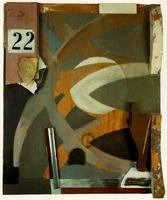
The Spring Door
Kurt Schwitters
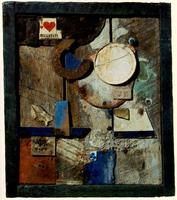
Merzbild Rossfett
Kurt Schwitters
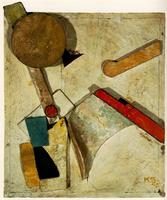
Heavy Relief
Kurt Schwitters
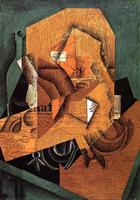
The Packet of Coffee
Juan Gris
Relief
Vladimir Tatlin
The musician's table
Georges Braque
New Merzpicture
Kurt Schwitters
Lady at the Poster Column
Kazimir Malevich
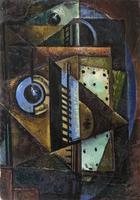
Vertical Construction
M. H. Maxy
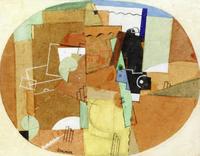
Cubist Composition
Georges Valmier
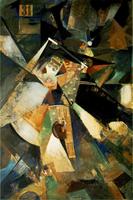
Merzpicture Thirty-One
Kurt Schwitters
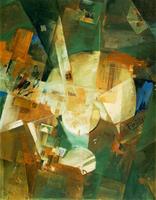
Picture with Light Center
Kurt Schwitters
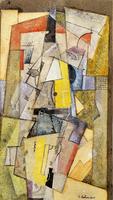
Cubist Composition
Georges Valmier
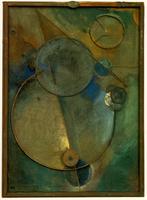
Revolving
Kurt Schwitters
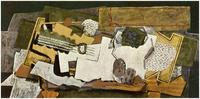
Still Life with a Guitar
Georges Braque
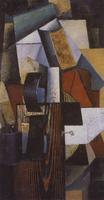
Station Without a Stop. Kunzevo.
Kazimir Malevich
Composition Constructiviste
Toyen
Composición de tres círculos
Fernando García Ponce