Expert Analysis: "The Musician's Table" by Georges Braque
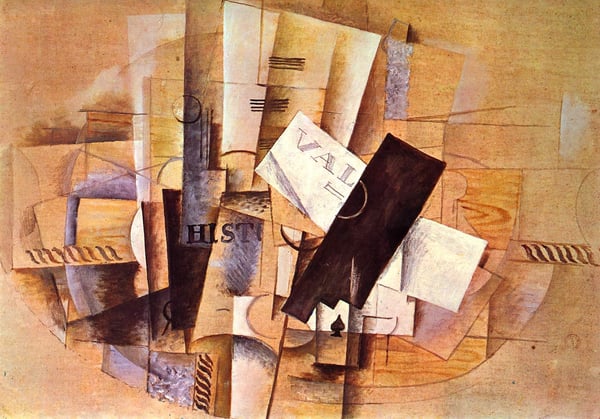
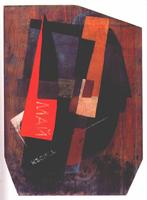
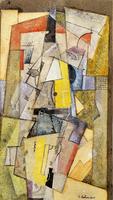
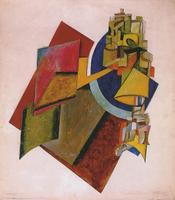
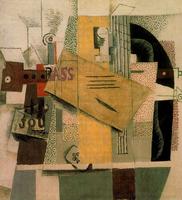
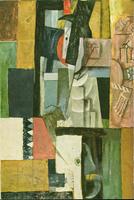
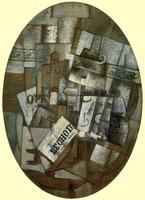
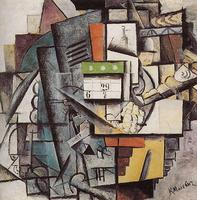
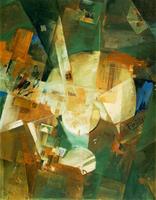
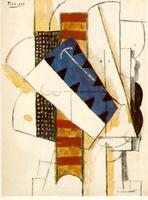
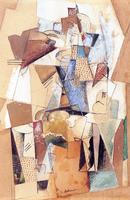
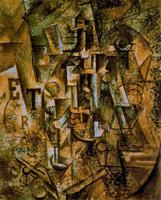
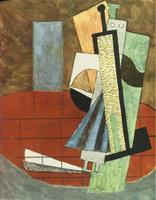
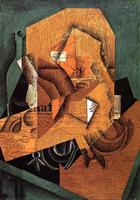
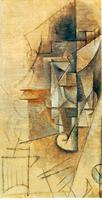
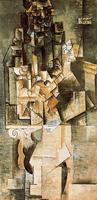
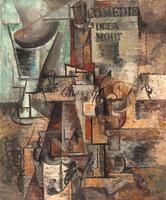
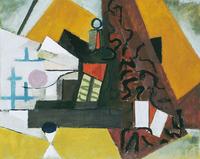
As a seminal work of Synthetic Cubism, Georges Braque’s The Musician’s Table (c. 1918) exemplifies the movement’s shift from the fractured, monochromatic analysis of objects to a flatter, more decorative synthesis of form and color. Painted in the still-life genre, the work is significant for its bold use of geometric simplification, interlocking planes, and a muted yet warmer palette—typical of Braque’s post-1912 phase. Here, musical instruments, a sheet of music, and a tabletop are fragmented and reassembled into a harmonious, almost architectural composition that suggests depth without traditional perspective. The inclusion of text (often stenciled letters) and trompe-l’œil elements like wood grain reflects synthetic cubism’s playful incorporation of papier collé techniques and everyday references. By reducing the still life to its essential forms—ovals, rectangles, and angled lines—Braque not only redefined representation but also asserted the painting as a constructed, independent object rather than a window onto reality. This work stands as a key example of how Braque and Picasso advanced Cubism toward a more expressive, decorative language that influenced later abstract and modernist art.