
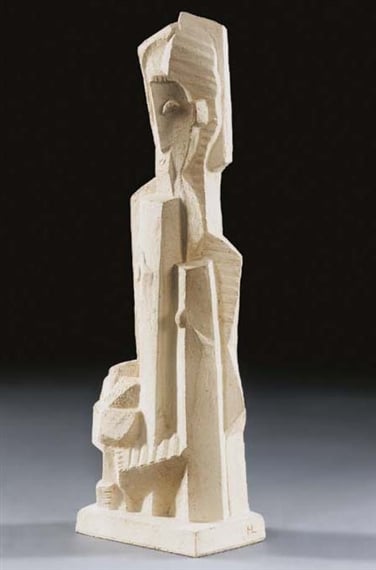
Expert analysis of Henri Laurens’s Femme au compotier
Style: Cubism · Genre: sculpture
This Cubist sculpture by Henri Laurens represents a pivotal moment in the translation of Cubist painting principles into three-dimensional form. Executed in the artist’s signature style, Femme au compotier (Woman with a Compote Dish) dismantles the human figure and still-life motif into a dynamic interplay of geometric planes, echoing the fragmented perspectives pioneered by Picasso and Braque.
What makes this work significant within Cubist sculpture is its radical departure from traditional sculptural representation. Rather than modeling a naturalistic figure, Laurens constructs an architectural assemblage of convex and concave surfaces, allowing the viewer to perceive the woman and the dish from multiple viewpoints simultaneously—a hallmark of Cubist space. The sculpture’s rhythmic, balanced composition of interlocking solids and voids exemplifies how Laurens translated Cubist analytical decomposition into a tactile, volumetric language. By defying classical sculpture’s emphasis on mass and silhouette, Femme au compotier asserts the Cubist ambition to not just depict reality but to reinvent its visual grammar in space.
Visually similar
20 works with related composition and palette
Sculpture
Jacques Lipchitz
Figura
Henri Laurens
Man with Clarinet
Henri Laurens
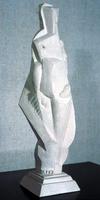
Standing Female Nude (Femme nue debout)
Henri Laurens
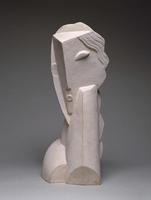
Head of a Young Girl
Henri Laurens
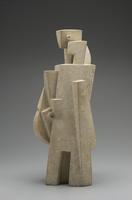
The Man with the Mandolin
Jacques Lipchitz
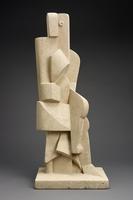
Seated Figure
Jacques Lipchitz
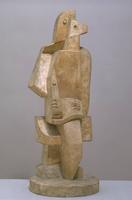
Seated Man with Clarinet I
Jacques Lipchitz
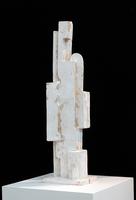
Figure
Jacques Lipchitz
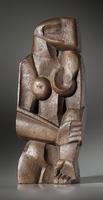
Woman standing
Ossip Zadkine
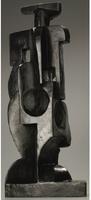
Harlequin
Juan Gris
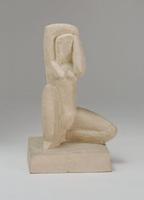
Seated Woman
Henri Laurens
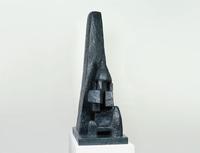
Sculpture Architecturale
Otto Freundlich
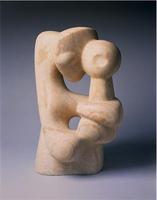
Mother and Child
Noguchi Isamu
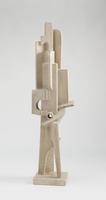
Man with a Guitar
Jacques Lipchitz
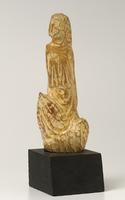
Untitled (Seated Woman)
Pierre Daura
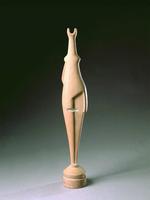
Vase Figure
Olexandr Archipenko
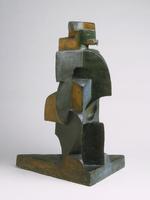
Harlequin
Juan Gris
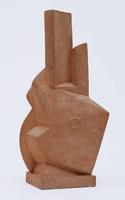
Guitar
Henri Laurens
Book Pages 8
MAUREEN QUIN