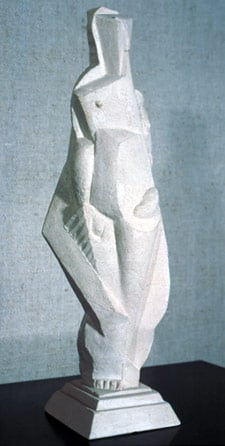
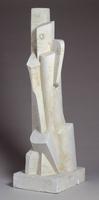
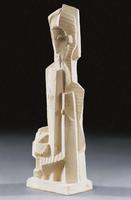
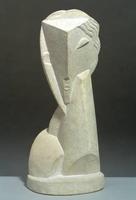
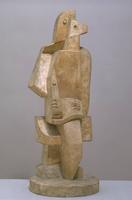
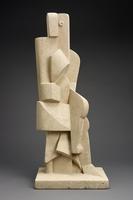
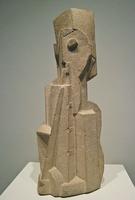
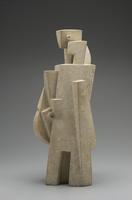
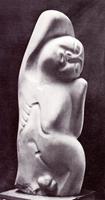
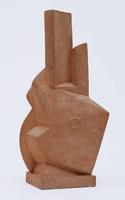
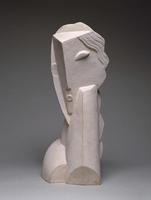
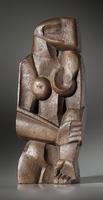
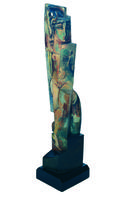
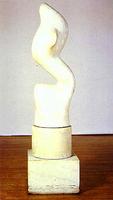
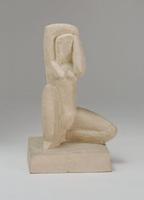
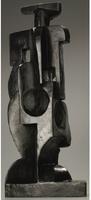
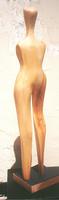
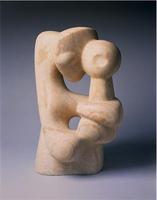
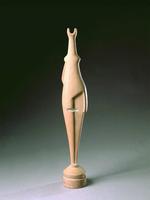
This sculpture, Standing Female Nude (Femme nue debout), is a significant example of Cubist sculpture. As a work in the Cubist style, it fundamentally reimagines the traditional female nude—a classical subject in Western art—through the movement’s core principles of geometric fragmentation and multiple perspectives. Unlike naturalistic sculpture that seeks to replicate the human form, Laurens reduces the figure into a composition of intersecting planes, blocks, and concave-convex volumes. This approach synthesizes the subject from various viewpoints into a single, unified abstract structure. The work’s significance lies in its translation of Cubist painting’s revolutionary visual language into three dimensions. By doing so, it challenges conventional notions of mass, space, and representation in sculpture, emphasizing the interplay of light and shadow across faceted surfaces. As a Cubist sculpture, it marks a pivotal moment where modernist abstraction is fully realized in a physical, tangible form, expanding the boundaries of the medium.