The Laundress
Expert analysis of Stefan Luchian’s The Laundress
Style: Impressionism · Genre: genre painting
Expert Analysis: "The Laundress" by Stefan Luchian
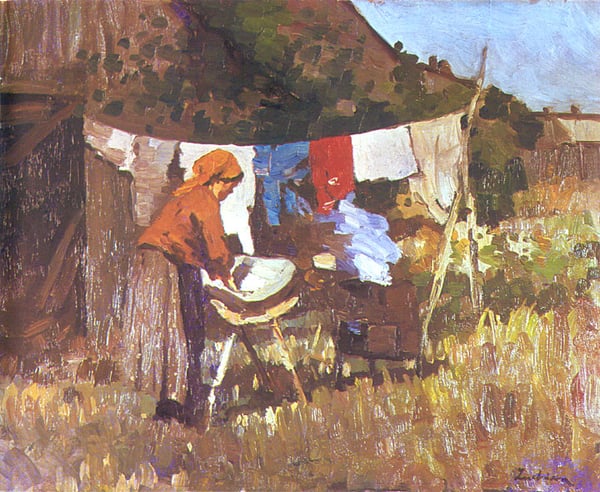
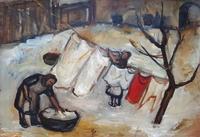
Stefan Luchian’s The Laundress stands as a compelling example of how Impressionist principles were adapted to a distinctly Romanian context, while also reaffirming the movement’s core fascination with everyday life. Executed in the genre painting tradition—a category that elevates scenes of ordinary people to fine art—the work captures a laundress at her labor. Its significance lies in Luchian’s application of Impressionist techniques to a humble, intimate subject, thus bridging the Parisian avant-garde’s interest in light and fleeting moments with the realities of early 20th-century Romanian society.
Impressionist Treatment of Light and Atmosphere
Luchian uses broken brushwork and a luminous palette to dissolve the figure of the laundress into her surroundings, emphasizing the play of natural light on fabric and water. The scene is not merely a documentary record of domestic work but a study of how light transforms a mundane activity into a shimmering, almost lyrical moment. This aligns with Impressionism’s goal of capturing the fleeting impression—here, the transient effect of sunlight on wet clothes and the laundress’s bent posture.
Elevating the Ordinary through Genre
By choosing a laundress as his subject, Luchian continues the Impressionist tradition of finding beauty in the quotidian, much like Degas’s milliners or Morisot’s domestic scenes. However, his treatment carries a weight specific to Romanian art: the laundress is not romanticized or exoticized but presented with a quiet dignity. The genre painting format allows Luchian to integrate social realism with Impressionist aesthetics, making the work significant as both a technical achievement and a window into the lives of working women in his homeland.
Cultural and Historical Significance
Luchian is often regarded as a key figure in bringing Impressionism to Romania. The Laundress exemplifies how he adapted the style’s sensitivity to atmosphere and color while infusing it with local subject matter. The painting’s loose handling and focus on natural light mark a departure from academic conventions, yet its genre roots ground it in the ordinary rhythms of Romanian village or urban life. This duality—European technique meeting regional identity—makes the work a milestone in Luchian’s oeuvre and a testament to Impressionism’s global resonance.
In summary, The Laundress is significant for its masterful synthesis of Impressionist light and color with the realism of genre painting, capturing a fleeting moment of labor with both sensitivity and painterly innovation. It stands as a vivid record of Luchian’s role in modernizing Romanian painting while honoring the universal Impressionist quest to immortalize the everyday.
Genre
Style
Visually similar
20 works with related composition and palette
The Washing
Pierre Bonnard
Woman Hanging out the Wash
Berthe Morisot
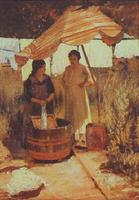
Lavando Roupa
Alfredo Andersen
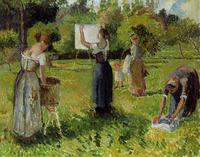
Laundresses at Eragny
Camille Pissarro
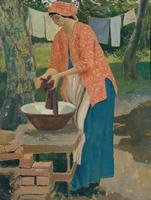
Washing Day
Augustus John
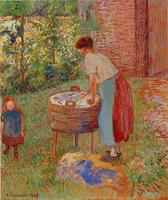
Washerwoman, Eragny
Camille Pissarro
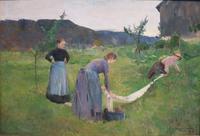
Drying Cloths
Harriet Backer
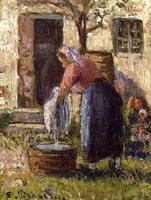
The Laundry Woman
Camille Pissarro
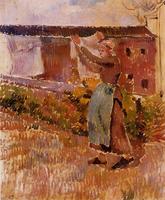
Women Tending the Laundry (study)
Camille Pissarro
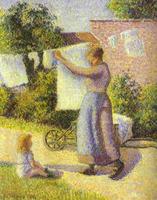
Woman Hanging up the Washing
Camille Pissarro
Message of May
Anna Airy
Wash Day - A Back Yard Reminiscence of Brooklyn
William Merritt Chase
Study for 'Rural Love'
Jules Bastien-Lepage
The Laundry Woman
Camille Pissarro
Sunny Day
Emile Claus
Drying the Laundry
Harriet Backer
Untitled
Daniel F. Gerhartz
Peasant Women
Victor Borisov-Musatov
The Laundry is Drying
Biruta Baumane
Fishing Nets
Joaquín Sorolla