
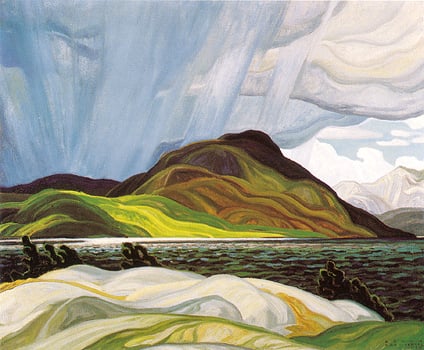
Expertenanalyse zu Franklin Carmichaels Lake Wabagishik
Stil: Art Nouveau (Modern) · Genre: landscape
Expert Analysis of "Lake Wabagishik" by Franklin Carmichael
Franklin Carmichael’s Lake Wabagishik is a remarkable synthesis of landscape painting and the decorative elegance of Art Nouveau, a departure from the more rugged, post-Impressionist style typically associated with the artist. Working within the framework of Art Nouveau—a style defined by organic, flowing lines, asymmetrical compositions, and an emphasis on ornamental natural forms—Carmichael transforms a Canadian wilderness scene into a rhythmic, almost calligraphic study of nature.
Significance within Art Nouveau and Landscape Genre:
-
Integration of Decorative Line and Natural Form: Unlike the straightforward topographical depiction common to many landscape traditions, Carmichael’s Lake Wabagishik prioritizes sinuous, curving outlines. The shoreline, tree branches, and even the water’s edge are rendered with the characteristic “whiplash” curves of Art Nouveau, creating a sense of continuous, living movement. This elevates the landscape from a mere record of place to a decorative composition where every line contributes to an overall harmony.
-
Modernist Emphasis on Pattern and Flatness: The work embraces the Art Nouveau tendency toward flattened pictorial space. Colors are applied in broad, unmodulated washes, and perspective is subtly compressed. The lake itself becomes a decorative field of color, while the surrounding foliage forms repeating, stylized motifs. This reflects the movement’s drive to modernize art by breaking with academic naturalism—a key step toward abstraction.
-
Symbolist Undertones: Art Nouveau often carried symbolic or spiritual associations with nature. In Lake Wabashik, the rhythmic lines suggest the perpetual flow of water and wind, evoking a sense of the sublime and the interconnectedness of all living things. This aligns with the fin-de-siècle fascination with the organic world as a source of inner truth.
-
Contribution to Canadian Modernism: While Carmichael is best known as a member of the Group of Seven, this work’s Art Nouveau lens offers a distinctive interpretation of the Canadian landscape—one that values grace and decorative unity over raw, nationalistic vigor. It demonstrates that the same wilderness could be rendered with sophisticated, cosmopolitan style, bridging regional subject matter with international modernist aesthetics.
In summary, Lake Wabagishik is significant for its bold fusion of landscape observation with Art Nouveau’s ornamental logic, creating a work that is both a serene natural portrait and a dynamic, stylized design. It stands as a compelling example of how turn-of-the-century decorative principles could revitalize the traditional landscape genre, pushing it toward a more abstract, rhythmic sensibility.
Visuell ähnlich
20 Werke mit ähnlicher Komposition und Farbpalette
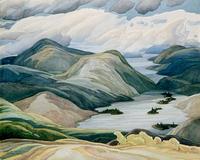
Grace Lake
Franklin Carmichael
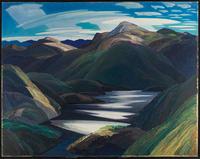
Light and Shadow
Franklin Carmichael
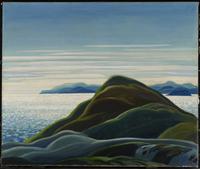
North Shore, Lake Superior
Franklin Carmichael
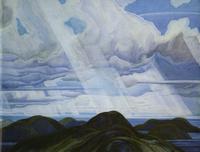
Snow Flurries, North Shore of Lake Superior
Franklin Carmichael
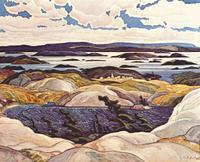
Bay of Islands
Franklin Carmichael
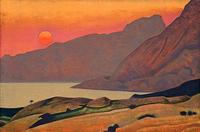
Monhegan
Nicholas Roerich
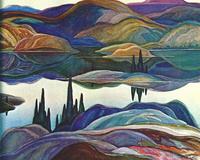
Mirror Lake
Franklin Carmichael
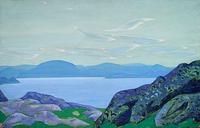
Messengers of morning
Nicholas Roerich
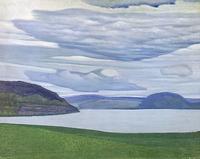
Karelian landscape
Nicholas Roerich

Pic Island, Lake Superior
Lawren Harris
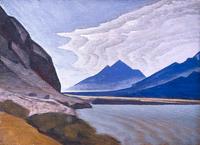
Nubra Valley
Nicholas Roerich
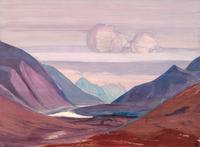
River Chandra
Nicholas Roerich
Lahaul
Nicholas Roerich
Lake and Blue Mountains of Connemara
Paul Henry
Lago de Patzcuaro
Carlos Orozco Romero
Morocco
Nicholas Roerich
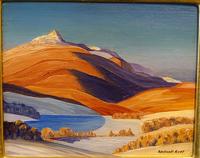
Vermont Study
Rockwell Kent
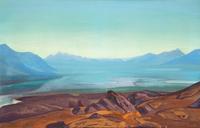
Dogra Yumtso
Nicholas Roerich
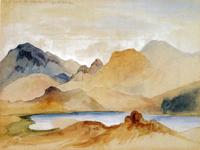
Cinnabar Mountain, Yellowstone River (watercolour)
Thomas Moran
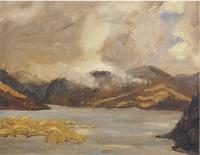
Loch on the Duke of Sutherland's Estate
Winston Churchill