

Expert analysis of Gene Davis’s Long John
Style: Color Field Painting · Genre: abstract
Expert Analysis: "Long John" by Gene Davis
Gene Davis’s Long John stands as a quintessential example of Color Field painting, a movement that emerged in the 1950s and 1960s, emphasizing flatness, large areas of unmodulated color, and the primacy of optical experience. Davis, a leading figure in the Washington Color School, is renowned for his signature use of vertical stripes — a structure he employed to strip painting of narrative, figuration, and conventional composition.
Significance within Color Field Painting
- Pure chromatic interaction: Long John relies entirely on the juxtaposition of saturated, evenly applied stripes. There is no brush texture, no central focal point, and no illusionistic depth. The painting’s entire meaning resides in the tension and vibration between adjacent hues — a direct exploration of color theory reminiscent of Josef Albers but pushed into large-scale abstraction.
- Repetition as radical simplicity: By repeating a single formal device (vertical bands), Davis eliminates any suggestion of hierarchy or gesture. This aligns with Color Field’s goal of presenting color as autonomous and self-sufficient, freed from representational or emotional baggage. The title Long John may allude to the painting’s tall, narrow proportions, reinforcing the idea of an endless, rhythmic sequence of stripes that continues beyond the canvas edge.
Why It Matters
- Bridge between Abstract Expressionism and Minimalism: While Abstract Expressionists like Pollock used gesture to express inner states, Davis’s stripes are precise, impersonal, and machine-like — anticipating Minimalist and Post-Painterly Abstraction. Yet the vibrant palette and optical shimmer keep the work firmly rooted in the sensual, transformative power of color.
- Expansion of painting’s boundaries: Long John (like much of Davis’s oeuvre) challenges the viewer to see color not as a property of objects but as a dynamic, relational field. The stripes seem to advance and recede, creating a rhythm that engages peripheral vision and invites prolonged looking. This approach redefines abstraction as a direct perceptual event rather than a symbol or story.
In short, Long John is a masterclass in reduction: by limiting himself to vertical stripes and pure color, Gene Davis demonstrates that the most radical innovation can lie in disciplined restraint. The work remains a touchstone for understanding how Color Field painters transformed abstract art into an immersive, optical experience.
Visually similar
20 works with related composition and palette

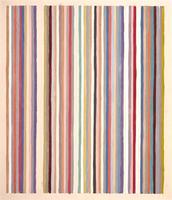
Firecracker
Gene Davis
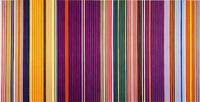
Circus
Gene Davis
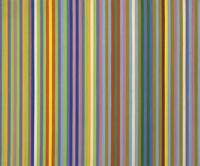
Dr. Peppercorn
Gene Davis
Lemon Ice
Gene Davis

Gothic Jab
Gene Davis
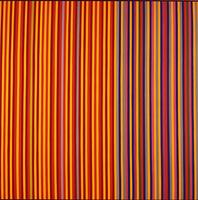
Equinox
Gene Davis
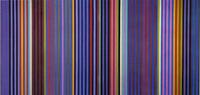
Red Witch
Gene Davis
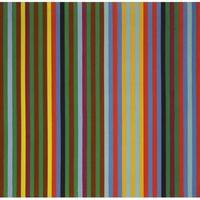
Circus Sounds
Gene Davis
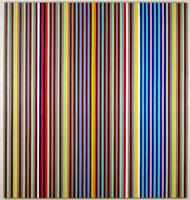
Untitled (P280)
Gene Davis
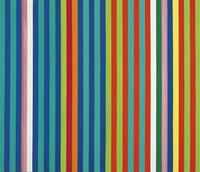
Orange Twitter
Gene Davis
Red Chatterbox
Gene Davis
RA 2
Bridget Riley
Flamingo
Gene Davis
Hot Beat
Gene Davis
Mohawk
Gene Davis
Split Beat
Gene Davis
Alice Tully Hall Sampler
Gene Davis
Sour Ball Beat
Gene Davis
Red Baron
Gene Davis
King Kong
Gene Davis