Luke Chueh sanatçısının The Alchemist eseri hakkında uzman analizi
Tarz: Lowbrow Art · Tür: figurative
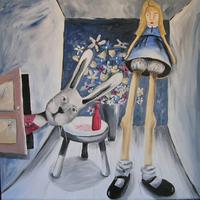
Expert Art Historical Analysis: "The Alchemist" by Luke Chueh
Context & Stylistic Significance
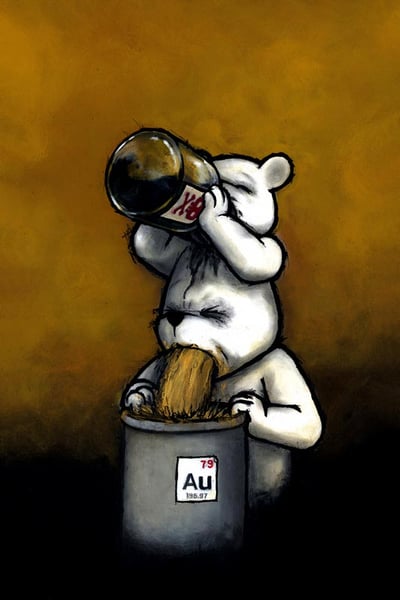
Within the Lowbrow Art movement, Luke Chueh occupies a distinctive position by merging the movement’s signature pop-surrealist vocabulary with a stark, emotional figuration. The Alchemist exemplifies this synthesis: it is a figurative work that uses a simplified, cartoon-like figure (often a bear or animal proxy in Chueh’s oeuvre) to explore complex themes of transformation, isolation, and the duality of creation and destruction.
What Makes the Work Significant
-
Subversion of Innocence via Figuration
Lowbrow art frequently appropriates childlike or comic-book imagery to critique contemporary culture. Chueh deepens this trope by placing a solitary figure—the alchemist—in a moment of ambiguous intent. The figurative genre here is not merely representational but psychological: the alchemist’s blank expression and isolated composition evoke the melancholy and absurdity of the human condition, a hallmark of Chueh’s practice that distinguishes his work within the broader lowbrow canon. -
Alchemy as Metaphor in Lowbrow Visual Language
The title directly invokes the medieval pursuit of turning base metals into gold, but Chueh reframes alchemy as an emotional or existential process. The figure’s interaction with symbolic objects (often a beaker, a glowing substance, or a dark fluid) suggests a failed or deeply personal transmutation. This intellectual layering—pairing a high-concept metaphor with lowbrow’s accessible aesthetic—creates a tension that is central to the painting’s impact. -
Emotional Displacement
Unlike much lowbrow art that relies on overt humor or kitsch, Chueh’s figurative works carry a palpable sense of pathos. The Alchemist likely employs a muted palette and stark lighting to foreground the figure’s psychological weight. This melancholic turn is significant because it expands lowbrow’s emotional register, proving that the style can accommodate quiet, introspective narratives alongside its more flamboyant, cartoonish roots.
Conclusion
In The Alchemist, Luke Chueh demonstrates how the figurative genre can be harnessed within Lowbrow Art to produce a work that is simultaneously accessible and deeply ambiguous. Its significance lies in its ability to use a deceptively simple visual vocabulary to interrogate themes of transformation, failure, and solitude—thereby elevating lowbrow from mere pastiche to a vehicle for genuine emotional and intellectual inquiry.
Tür
Stil
Görsel olarak benzer
İlişkili kompozisyon ve renk paletine sahip 20 eser
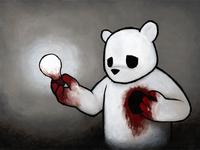
Inspiration (Bright Ideas from the Hole in My Soul)
Luke Chueh

C'mon Baby Light My Fire
Luke Chueh
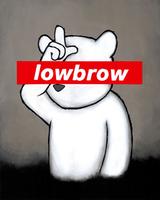
Lowbrow (And Still the Loser) (Label Series)
Luke Chueh
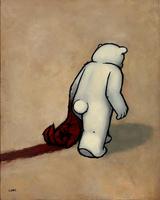
Southpaw
Luke Chueh
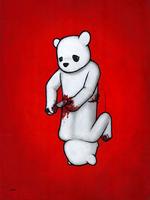
Stitch & Cut
Luke Chueh
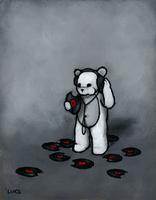
Sound-Bite
Luke Chueh
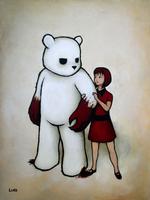
The Crush
Luke Chueh
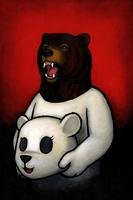
Bear in Mind
Luke Chueh
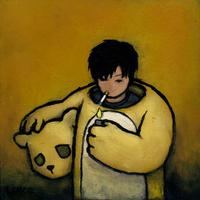
Self-Portrait (Smoke Break)
Luke Chueh
The White Rabbit
Charles Blackman
Pensive hare
Oleg Holosiy
Uncle Sam And Company (Toy #3)
Gabriele Munter
The Soundtrack (To My Life)
Luke Chueh
Jacked
Luke Chueh
Jesus pause
Christian Attersee
El sol se apago
Martin Pereira
Sometimes I drink to forget art
Ben
Study for Illustration for 'Poems, 1937–1942' by David Gascoyne
Graham Sutherland
Pom'po pom'po pon po pon pon
Rene Magritte
Alice
Charles Blackman