
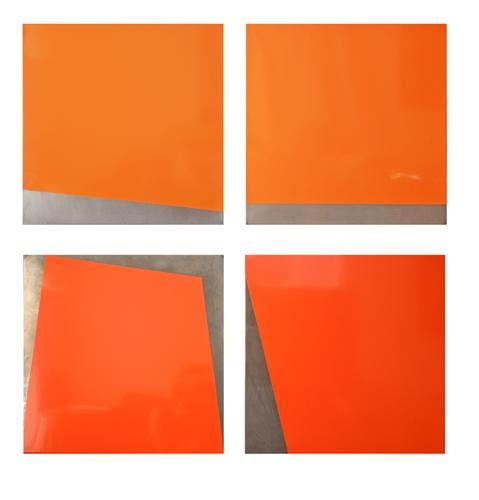
Expert analysis of Marjan Eggermont’s Zo kon het zijn (It could have been this way)
Style: Neo-Minimalism · Genre: abstract
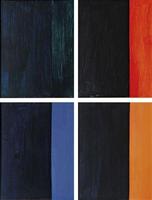
Expert Analysis: "Zo kon het zijn (It could have been this way)" by Marjan Eggermont
As a work of Neo-Minimalism, this abstract piece occupies a critical intersection between the austerity of 1960s Minimalism and a contemporary reimagining of its core principles. The title — It could have been this way — signals a key departure from orthodox Minimalism’s insistence on non-referential, self-sufficient form. Here, Eggermont introduces a speculative, almost narrative dimension: the artwork proposes an alternative reality, a "what if" that invites the viewer to consider not just what is present, but what might have been.
Significant within the Neo-Minimalist canon, this piece challenges the movement’s historical rejection of metaphor. Where classic Minimalism (Judd, Morris) sought to purge all external meaning, Eggermont’s title frames the visual experience as a counterfactual — a subtle conceptual gesture that retains Minimalist restraint while injecting a philosophical question about perception and possibility. The abstract forms, presumably reduced to essential geometric or material elements, are thus not merely objects in space but carriers of latent meaning.
Eggermont’s contribution lies in bridging Minimalist purity with a postmodern openness to interpretation. In an era where Neo-Minimalism often grapples with the legacy of its predecessor, Zo kon het zijn marks a significant step: it proves that extreme reduction can coexist with poignant ambiguity, and that the cleanest lines can house the most compelling uncertainties.
Visually similar
20 works with related composition and palette
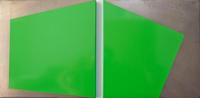
Le Plat Pays
Marjan Eggermont
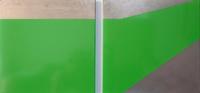
Ultraflat
Marjan Eggermont
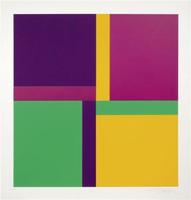
4 x 4 Bewegungen um eine Achse
Richard Paul Lohse
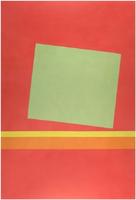
Homage to Milton Avery - Sun-Box III
Theodoros Stamos
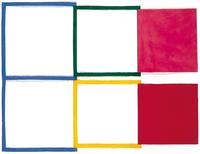
Toile découpée
Louis Cane
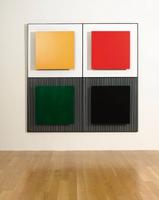
Mariche 2
Jesus Rafael Soto
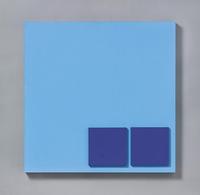
1-1979
Henryk Stazewski
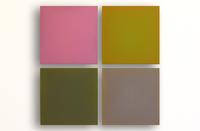
Redbud
Anne Appleby
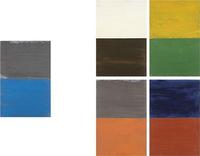
Untitled (in 5 parts)
Gunther Forg
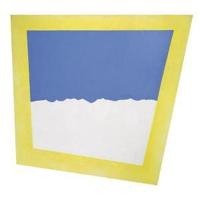
Skyline In Yellow Frame
JCJ Vanderheyden
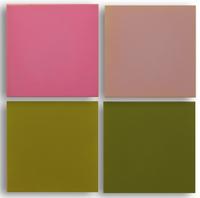
Faded Sweet Pea
Anne Appleby
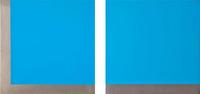
The Deep
Marjan Eggermont
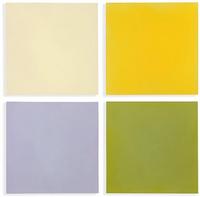
Crocus
Anne Appleby
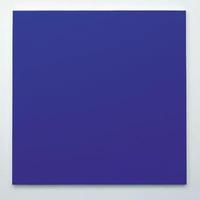
Painting 98-19
Rudolf de Crignis
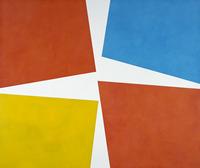
1-II-5-G
Angelo de Sousa
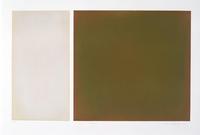
Jasmine
Anne Appleby
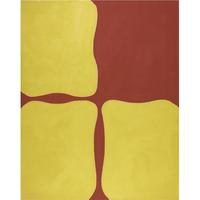
Abstract (Red and Yellow)
Paul Feeley
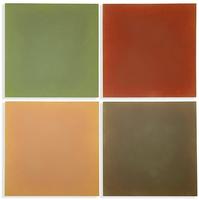
Requiem for a Ponderosa Pine
Anne Appleby
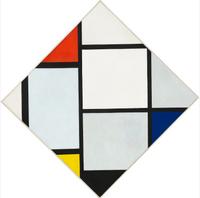
Tableau No. IV - Lozenge Composition
Piet Mondrian
Vertigo
Gunther Forg