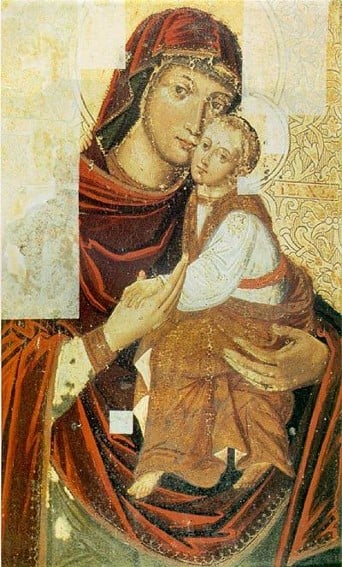
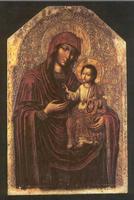
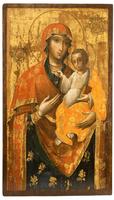
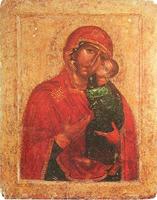
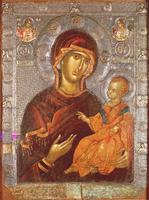
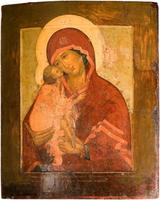
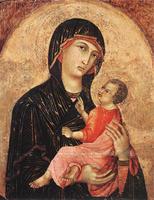
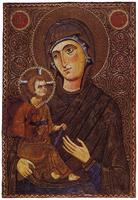
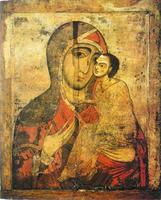
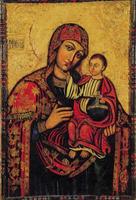
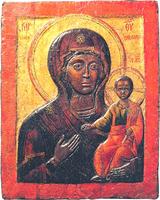
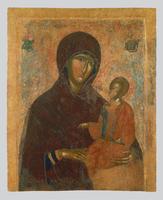
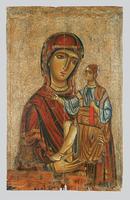
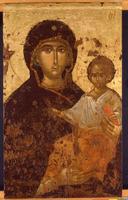
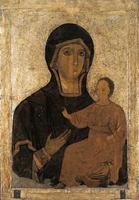
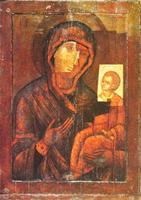
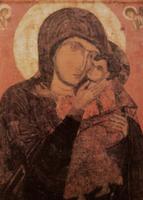
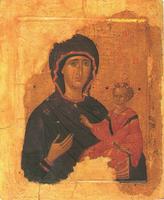
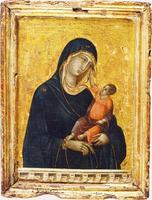
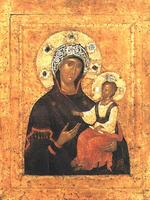
This icon is significant as a prime example of the Ukrainian Baroque tradition, which skillfully blended the spiritual formalism of Eastern Orthodox iconography with the dramatic dynamism of Western Baroque art.
Created for the iconostasis (the altar screen) of the Bilostok Monastery, Yov Kondzelevych’s work demonstrates how Baroque sensibilities were adapted to the sacred, hieratic needs of Orthodox worship. Unlike the static, otherworldly figures typical of earlier Byzantine icons, this Mother of God likely exhibits a more naturalistic, humanized tenderness and a sense of movement, often expressed through flowing drapery and a warm, emotionally resonant gaze.
Kondzelevych was a master of this fusion: he retained the traditional iconographic schema (the Virgin as Hodegetria or Eleousa, perhaps) but enhanced it with Baroque chiaroscuro (contrasts of light and shadow), rich, vibrant colors, and ornate decorative details reminiscent of Western European religious painting. The work’s significance lies in its role as a cultural bridge—preserving the sacred, liturgical function of the icon while embracing the Baroque’s emphasis on emotional engagement and visual splendor, thereby revitalizing the icon tradition for an early modern audience.