Expert analysis of Anne Truitt’s One
Style: Minimalism · Genre: sculpture
Expert Analysis: One by Anne Truitt
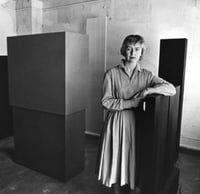
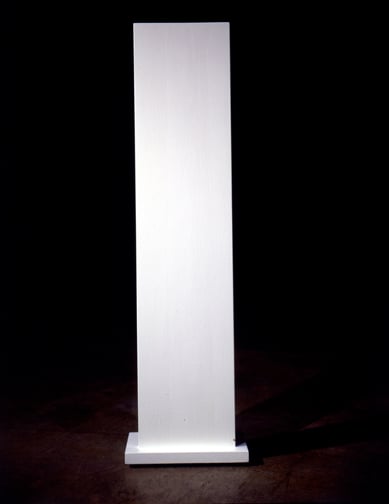
Anne Truitt’s One is a landmark work within the Minimalist sculptural tradition, distinguished by its rigorous fusion of pure geometry with painterly color and phenomenological presence. Created in 1962—a pivotal year for the emergence of Minimalism—One exemplifies Truitt’s radical departure from both Abstract Expressionist gesture and traditional sculptural mass.
Form and Materiality:
The sculpture consists of a single, upright wooden post or plank, meticulously painted by hand in a flat, even coat of a single, unmodulated color (often white or a pale hue in Truitt’s practice). Its rectilinear, columnar shape adheres to Minimalism’s preference for simple, repetitive, and industrially derived forms. Yet unlike the machine-finished surfaces of Donald Judd’s boxes or Carl Andre’s floor grids, Truitt’s hand-painted finish introduces subtle variations in texture and sheen—a nuanced, almost intimate quality that sets One apart.
Color and Perception:
Truitt’s primary innovation lies in treating color as a structural, volumetric element rather than a decorative afterthought. The painted surface does not simply coat the sculpture; it becomes the sculpture’s “skin,” actively shaping how light interacts with the form. In One, the single, saturated hue—often applied in multiple thin layers—creates a field of optical vibration, causing the solid wooden post to appear at once flat and volumetric, present and dematerialized. This manipulation of perceptual tension is central to Truitt’s significance: she bridges Minimalism’s desire for objecthood with the immersive, experiential concerns of color-field painting.
Context and Influence:
One is among Truitt’s earliest mature works, produced while she was developing her signature “totemic” or “plinth-and-post” vocabulary. It predates her celebrated “White Stones” series and establishes her unique position within Minimalism—a movement dominated by male artists who often eschewed color and handcraft. Truitt’s insistence on color as a primary carrier of meaning, combined with her embrace of subtle, handmade imperfections, introduced a subjective, almost psychological dimension to the otherwise stark, impersonal Minimalist aesthetic. Critics like Clement Greenberg recognized her ability to “make the object a vehicle for feeling without sacrificing its literalness.”
Significance within Minimalism:
One is a quintessential demonstration of Minimalism’s core tenet: the work’s meaning resides not in representation or narrative, but in the viewer’s direct, bodily encounter with an object in real space. By limiting herself to a single, upright form and a single color, Truitt forces attention to the specificities of scale, light, surface, and the relationship between the sculpture and the surrounding environment. The piece challenges the boundary between sculpture and painting, between object and perception, and between machine-like neutrality and human touch. In doing so, One reaffirms Minimalism’s ambition to strip art to its essential components while paradoxically enriching the experience of that reduction.
Legacy:
Today, One is recognized as a prescient work that anticipated later developments in post-Minimalism, process art, and the continued exploration of color as spatial material. Truitt’s approach—intellectual yet sensuous, rigorous yet personal—broadened the possibilities of Minimalist sculpture, ensuring her place as a key, if often understated, figure in the movement’s history.
Visually similar
20 works with related composition and palette
Pith
Anne Truitt
Prima
Anne Truitt
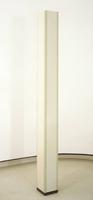
Sentinel
Anne Truitt
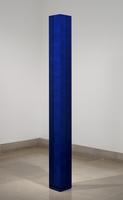
Come Unto These Yellow Sands II
Anne Truitt
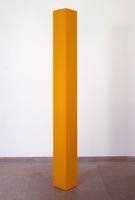
Swannanoa
Anne Truitt
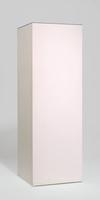
Australian Spring
Anne Truitt
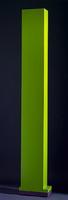
17th Summer
Anne Truitt
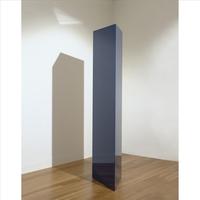
Glacier
John McCracken
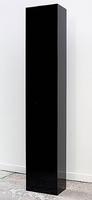
Energy
John McCracken
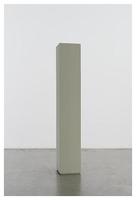
Twilight Fold
Anne Truitt
Kian
John McCracken
Mineral
John McCracken
Twining Court II
Anne Truitt
Toth
Anne Truitt
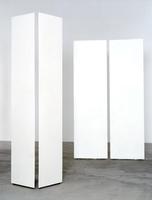
Untitled (Triangular Columns)
Mary Corse
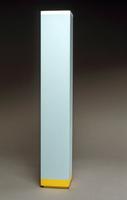
Parva XXVIII
Anne Truitt
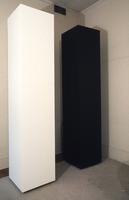
Seed and Root
Anne Truitt
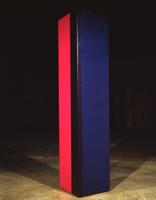
Quipe
Anne Truitt
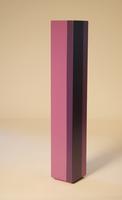
Parva XXXVIII
Anne Truitt
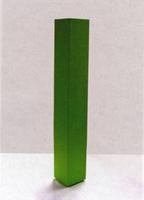
Parva LXX
Anne Truitt